

Results for: Nutrigenomics
Nutrigenomics – Not Ready for Prime Time
Quackery in medicine takes many forms – use of bad science (pseudoscience), fraud, and reliance on mysticism are a few examples. Perhaps the most insidious form of dubious practice, however, is to use genuine and promising medical science to promote treatments that are simply not at the point of clinical application. New treatments, and especially new approaches to treatment, in medicine often...

“Personalized” dietary recommendations based on DNA testing: Modern astrology
GenoPalate is a company that claims to give "personalized" dietary recommendations based on DNA testing. Unfortunately, what is provided by such companies is more akin to astrology than science.

Facebook, Google, and social media vs. medical misinformation: An update
Over the last couple of weeks, there have been two major stories on the efforts of social media companies to combat health misinformation on their platforms. What are they doing, and are they succeeding? Dr. Gorski decided to look into these questions.

Be careful what you wish for…
A "naturopathic oncologist" on Twitter challenged me to examine the work of his two "naturopathic oncology" mentors. It did not go well...for him.

What’s the Truth behind The Truth About Pet Cancer?
The Truth About Pet Cancer (TAPC) is a slick bit of propaganda. Although it contains some interesting, even promising ideas, these are unfortunately served with a heavy seasoning of misinformation and fear-mongering. Hypotheses and opinions are presented as established facts, and anyone who disagrees is suggested to be ignorant at best, venal and corrupt at worst.
“Dr. Amy” Yasko’s Autism Protocol: Unproven, Complicated and Expensive
"Dr. Amy" Yasko isn't a real doctor and her autism protocol is unproven, complicated, and expensive. Her claims of success are contradicted by autism, nutrition, and genetics experts.
Dubious MTHFR genetic mutation testing
Naturopaths, along with some chiropractors, acupuncturists and a few “integrative” physicians, are advising patients that they should be tested for MTHFR genetic mutations. Typically, the naturopath will start with the pitch that “conventional” medical doctors are ignoring your genes as a possible source of your health problems. (And it is mostly naturopaths who are doing this – just Google “naturopath MTHFR genetic mutation”...
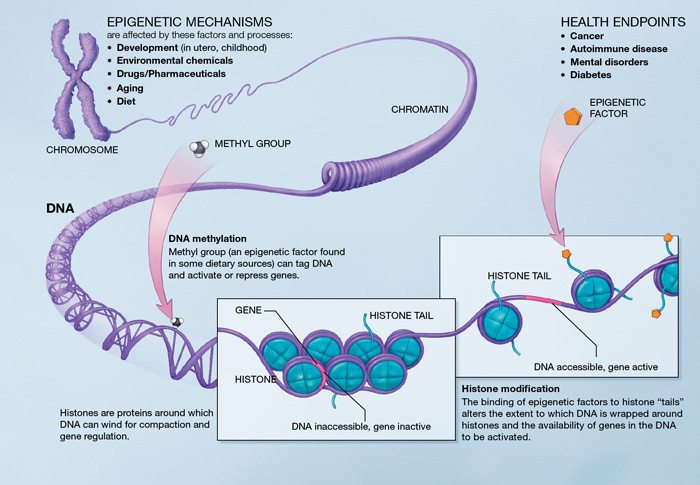
Epigenetics: It doesn’t mean what quacks think it means
Epigenetics. You keep using that word. I do not think it means what you think it means. I realize I overuse that little joke, but I can’t help but think that virtually every time I see advocates of so-called “complementary and alternative medicine” (CAM) or, as it’s known more commonly now, “integrative medicine” discussing epigenetics. All you have to do to view...
Eat To Save Your Life: Another Half-True Diet Book
I am hesitant to review diet books because they are so often a tangled mess of fact and fiction. Teasing out their truth from falsehood is about as exhausting as delousing a long-haired elementary school student. However, after being approached by the authors’ PR agency with the promise of a book that contains science-based nutrition information I decided to agree to the...
The Science Fiction of Nutritional Genomics
EDITOR’S NOTE: Dr. Gorski is currently in Chicago attending the American College of Surgeons Clinical Congress. As a result, he has not prepared a post for this week (although he doesn’t feel too guilty about missing this week, given that he did write two rather hefty posts last week, one on the cancer quackery known as the German New Medicine and the...