Search Results for "kaptchuk"

Nov 11 2011

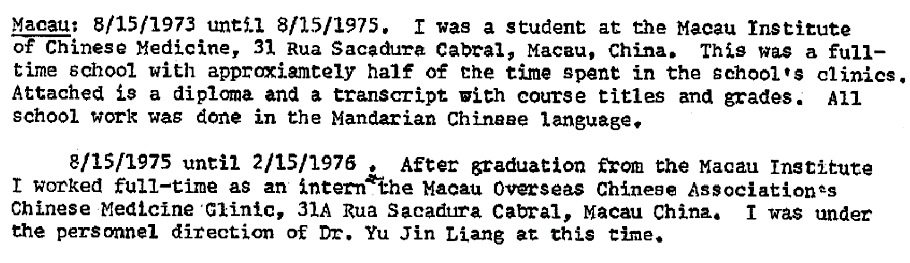
Dummy Medicine, Dummy Doctors, and a Dummy Degree, Part 2.3: Harvard Medical School and the Curious Case of Ted Kaptchuk, OMD (concluded)

A Loose End

In the last post I wondered if Ted Kaptchuk, when he wrote the article titled “Effect of interpretive bias on clinical research,” had understood this implication of Bayes’s Theorem: that interpretations of most scientific investigations are exercises in inverse probability, and thus cannot logically be done without consideration of knowledge external to the investigation in question. I argued that if Kaptchuk had

…understood the point when he wrote his treatise, he was dishonest in not explaining it and in not citing at least one pertinent article, such as Steven Goodman’s (which I’m willing to bet he had read). If he didn’t understand the point he should have withheld his paper.

In researching more of Kaptchuk’s opinions I’ve discovered that he had certainly read Goodman’s article, but that he either didn’t understand it or preferred to obscure its implications in deference to his ongoing project in belittling scientific knowledge. In a letter to the editor of the Annals of Internal Medicine in 2001, Kaptchuk opined that even if “more trials of distant healing with increased methodologic rigor” were positive, it still would not “be persuasive for the medical community”:

The situation resembles the predicament with homeopathy trials, another seemingly implausible intervention, where the evidence of multiple positive randomized, controlled trials will not convince the medical community of its validity. Additional positive trials of distant healing are only likely to further expose the fact that the underpinning of modern medicine is an unstable balance between British empiricism (in the tradition of Hume) and continental rationalism (in the tradition of Kant).

…It seems that the decision concerning acceptance of evidence (either in medicine or religion) ultimately reflects the beliefs of the person that exist before all arguments and observation. [Kaptchuk cites the second of the two Goodman articles that I referred to above, discussed here]

Continue Reading »

26 responses so far

Sep 16 2011

Dummy Medicine, Dummy Doctors, and a Dummy Degree, Part 2.1: Harvard Medical School and the Curious Case of Ted Kaptchuk, OMD (cont.)

Rave Reviews

In 1983, Ted Kaptchuk, the senior author of the recent “albuterol vs. placebo” article, and soon to become the long-time Second-in-Command of the Harvard Medical School “CAM” program, published The Web that Has No Weaver:

The book received rave reviews:

A major advance toward the synthesis of Western and Eastern theory. It will stimulate all practitioners to expand their understanding of the causes and treatment of disease.

–Paul Epstein, MD, Harvard Medical School

A lucid and penetrating exposition of the theory and practice of Chinese medicine. While the book’s rich detail makes it of great use to practicing healers, it is in its entirety very simply written, enjoyable reading for the layman…it brings a demystifying balance…Instructive, profound, and important!

Professor Martin Schwartz, University of California, Berkeley

…demystifies Oriental medicine in a remarkably rational analysis…

—Science Digest, Nov. 1982

…an encyclopedia of how to tell from the Eastern perspective ‘what is wrong.’

Larry Dossey

Dr. Kaptchuk has become a lyricist for the art of healing…

—Houston Chronicle

Although the book is explicitly detailed, it is readable and does not require previous knowledge of Chinese thought…

—Library Journal

The 2nd edition was published in 2000, to more acclaim:

…opens the great door of understanding to the profoundness of Chinese medicine.

—People’s Daily, Beijing, China

…weaves a picture…that is eminently understandable from a Westerner’s point of view…adds a valuable analysis of the current scientific understanding of how the therapies work and their effectiveness.

Brian Berman

Ted Kaptchuk’s book was inspirational in the development of my acupuncture practice and gave me a deep understanding of traditional Chinese medicine…

Dr. George T. Lewith

…a gift for all who share an interest in deep understanding of healing. This new edition is essential reading…

Michael Lerner, President, Commonweal

Even Edzard Ernst, still in his foggy period, called the 2nd edition “a brilliant synthesis of traditional and scientific knowledge…compulsory reading…”

Continue Reading »

FacebookDiggLinkedInStumbleUponLiveJournalShare

42 responses so far

Oct 14 2011

Dummy Medicine, Dummy Doctors, and a Dummy Degree, Part 2.2: Harvard Medical School and the Curious Case of Ted Kaptchuk, OMD (cont. again)

“Strong Medicine”: Ted Kaptchuk and the Powerful Placebo

At the beginning of the first edition of The Web that has no Weaver, published in 1983, author Ted Kaptchuk portended his eventual academic interest in the placebo:

A story is told in China about a peasant who had worked as a maintenance man in a newly established Western missionary hospital. When he retired to his remote home village, he took with him some hypodermic needles and lots of antibiotics. He put up a shingle, and whenever someone came to him with a fever, he injected the patient with the wonder drugs. A remarkable percentage of these people got well, despite the fact that this practitioner of Western medicine knew next to nothing about what he was doing. In the West today, much of what passes for Chinese medicine is not very different from the so-called Western medicine practiced by this Chinese peasant. Out of a complex medical system, only the bare essentials of acupuncture technique have reached the West. Patients often get well from such treatment because acupuncture, like Western antibiotics, is strong medicine.

Other than to wonder if Kaptchuk had watched too many cowboy ‘n’ Native American movies as a kid, when I first read that passage I barely blinked. Although the Chinese peasant may have occasionally treated someone infected with a bacterium susceptible to his antibiotic, most people will get well no matter what you do, because most illnesses are self-limited. Most people feel better even sooner if they think that someone with special expertise is taking care of them. If you want to call those phenomena the “placebo effect,” in the colloquial sense of the term, fine. That, I supposed, was what Kaptchuk meant by “strong medicine.”

Turns out I was mistaken. Let’s briefly follow Kaptchuk’s career path after 1983. In the 2000 edition of The Web, he wrote:

Continue Reading »

FacebookDiggLinkedInStumbleUponLiveJournalShare

48 responses so far

Aug 19 2011

Dummy Medicine, Dummy Doctors, and a Dummy Degree, Part 2.0: Harvard Medical School and the Curious Case of Ted Kaptchuk, OMD

Review

The recent albuterol vs. placebo trial reported in the New England Journal of Medicine (NEJM) found that experimental subjects with asthma experienced substantial, measured improvements in lung function after inhaling albuterol, but not after inhaling placebo, undergoing sham acupuncture, or “no treatment.” It also found that the same subjects reported having felt substantially improved after either albuterol or each of the two sham treatments, but not after “no treatment.” Anthropologist Daniel Moerman, in an accompanying editorial, wrote, “the authors conclude that the patient reports were ‘unreliable,’ since they reported improvement when there was none”—precisely as any rational clinician or biomedical scientist would have concluded.

In Part 1 of this blog we saw that Moerman took issue with that conclusion. He argued, with just a bit of hedging, that the subjects’ perceptions of improvement were more important than objective measures of their lung function. I wondered how the NEJM editors had chosen someone whose bibliography predicted such an anti-medical opinion. I doubted that Editor-in-Chief Jeffrey Drazen, an expert in the pathophysiology of asthma, had ever heard of Moerman. I suggested, in a way that probably appeared facetious, that Ted Kaptchuk, the senior author of the asthma report, might have recommended him. Continue Reading »

FacebookDiggLinkedInStumbleUponLiveJournalShare

83 responses so far

Jan 09 2012

The rebranding of CAM as “harnessing the power of placebo”

If there’s one thing I’ve learned over the past seven years or so that I’ve been blogging, first at my other “super secret” (or, more accurately, super “not-so-secret”) blogging location, and then the four years I’ve been blogging here at Science-Based Medicine (SBM), it’s that the vast majority of “alternative medicine,” “complementary and alternative medicine” (CAM), and “integrative medicine” (IM) treatments (or whatever you want to call them) are nothing more than placebo medicine. True, there are exceptions, such as herbal treatments, mainly because they can contain chemicals in them that are active drugs, but any critical look at things like homeopathy (which is water), reiki (which is faith healing substituting Eastern mystical beliefs for Christianity), acupuncture (whose effects, when tested rigorously, are found to be nonspecific), or “energy healing” must conclude that any effects these modalities have are placebo effects or responses. Given writings on this topic by Steve Novella, Mark Crislip, Harriet Hall, Peter Lipson, myself, and others, this should be abundantly clear to readers of this blog, but, even so, it bears repeating. In fact, it probably can’t be repeated enough.

There was a time not so long ago when proponents of unscientific medicine tried very, very hard to argue that their nostrums have real effects on symptoms and disease above and beyond placebo effects. They would usually base such arguments on small, less rigorously designed clinical trials, mainly because, if there’s another thing I knew before from my medical education but that has been particularly reinforced in me since I started blogging, it’s that small clinical trials are very prone to false positives. Often they’d come up with some handwaving physiological or biological explanation, which, in the case of something like homeopathy, often violated the laws of chemistry and physics. Be that as it may, the larger and more rigorously designed the clinical trial, the less apparent effects become until, in the case of CAM therapies that do nothing (like homeopathy), they collapse into no effect detectable above that of placebo. Even so, there are often enough apparently “positive” clinical trials of water (homeopathy) that homeopaths can still cling to them as evidence that homeopathy works. Personally, I think that Kimball Atwood put it better when he cited a homeopath who said bluntly, “Either homeopathy works, or clinical trials don’t!” and concluded that, for highly implausible treatments like homeopathy, clinical trials as currently constituted under the paradigm of evidence-based, as opposed to science-based, medicine don’t work very well. Indeed, contrasting SBM with EBM has been a major theme of this blog over the last four years. In any case, for a long time, CAM enthusiasts argued that CAM really, really works, that it does better than placebo, just like real medicine.

Over the last few years, however, some CAM practitioners and quackademics have started to recognize that, no, when tested in rigorous clinical trials their nostrums really don’t have any detectable effects above and beyond that of placebo. A real scientist, when faced with such resoundingly negative results, would abandon such therapies as, by definition, a placebo therapy is a therapy that doesn’t do anything for the disease or condition being treated. CAM “scientists,” on the other hand, do not abandon therapies that have been demonstrated not to work. Instead, some of them have found a way to keep using such therapies. The way they justify that is to argue that placebo medicine is not just useful medicine but “powerful” medicine. Indeed, an article by Henry K. Beecher from 1955 referred to the “powerful placebo.” This construct allows them then to “rebrand” CAM unashamedly as “harnessing the power of placebo” as a way of defending its usefulness and relevance. In doing so, they like to ascribe magical powers to placebos, implying that placebos can do more than just decrease the perception of pain or other subjective symptoms but in fact can lead to objective improvements in a whole host of diseases and conditions. Some even go so far as to claim that there can be placebo effects without deception, citing a paper in which the investigators — you guessed it! — used deception to convince their patients that their placebos would relieve their symptoms. Increasingly, placebos are invoked as a means of “harnessing the power of the mind” over the body in order to relieve symptoms and cure disease in what at times seems like a magical mystery tour of the brain.

Part of what allows CAM practitioners to get away with this is that placebo effects are poorly understood even by most physicians and, not surprisingly, even more poorly understood by the public. Moreover, we all like to think that we have more control than we do over our bodies and, in particular, illnesses and symptoms, which is why the selling of placebo effects as a means of harnessing some innate hidden power we have to control our own bodies through the power of mind is so attractive to so many, including some scientists and physicians. Exhibit A is Ted Kaptchuk, the researcher from Harvard University responsible for spinning an interesting study of placebo effects in asthma into the invocation of the power of placebo. Kimball Atwood has written extensively about Kaptchuk recently, revealing his rather dubious background and arguments. More recently, however, Kaptchuk seems to be everywhere, appearing in articles and interviews, promoting just the argument I’m talking about, that CAM is a way of harnessing placebo effects, so much so that I felt it was time to take a look at this argument.

Continue Reading »

FacebookDiggLinkedInStumbleUponLiveJournalShare

23 responses so far

May 01 2009

Harvard Medical School: Veritas for Sale (Part VI)

Loose Ends: Dr. Koh and More

After Dr. Federman’s letter and my reply, posted in Part V of this series,† there seemed little point in pursuing the matter further. Although Dr. Federman never answered my reply, he did send, at my request, a copy of Commissioner of Public Health Howard Koh‘s written “construction of the events in the Massachusetts Special Commission.” As you may recall, those events had occurred at meetings that Dr. Koh never attended:

July 29, 2002

Dear Dr. Federman:

I have had an opportunity to review Dr. Kimball Atwood’s characterizations of the role Dr. David Eisenberg played as an advisor and designee of the Department of Public Health (DPH) and I am writing to clarify several misrepresentations of that role. As you may know, I personally selected Dr. Eisenberg as my designee for the Massachusetts Special Commission on Complementary and Alternative Medical Practitioners based on his high level of scientific and clinical expertise in the field, as well as his international reputation for evidence-based research. I felt at that time, as I do now, that he was the appropriate choice to represent the Department and I am extremely grateful for his advice and his integrity during this most contentious process.

During the course of the Commission, Dr. Eisenberg brought to my attention some of the conflicts that had arisen among the members, despite his attempts to diffuse the hostility and to engage the members in collegial debate. In an effort to overcome these difficulties and deflect unwarranted criticism, Nancy Ridley, Assistant Commissioner for Health Quality Management, attended the meetings over the last six months as the DPH voting designee, with Dr. Eisenberg as an advisor. She also organized a DPH workgroup of the Commission in an attempt to bring consensus and closure to what had become a very polarized and highly personalized process.

I need to state emphatically that the approval of the final Commission report is my responsibility, and is largely a product of the DPH workgroup that Assistant Commissioner Ridley chaired. Dr. Eisenberg had actually not been supportive of either the “majority” or “minority” reports that were originally presented, and neither was Ms. Ridley. She attempted to address as many of Dr. Eisenberg’s concerns as possible but knew he still had issues with the final document. She feels very strongly that there needs to be regulatory oversight of non-physician practitioners of complementary and alternative naturopathic practice. Assistant Commissioner Ridley, on behalf of the Department and with my consent, signed the report that included a significant number of revisions which narrowed the scope of practice, ensured collaborative relationships between physician and non-physician practitioners, and broadened the scope of any proposed regulatory oversight required. Dr. Eisenberg’s advice to DPH was delivered in a fair and balanced manner based his outstanding experience as a clinician and scientist.

I believe that one of the contributing factors for the polarization within the Commission had little to do with Dr. Eisenberg’s participation rather than that of his staffperson, Michael Cohen, who attended Commission meetings in his absence. Mr. Cohen was repeatedly characterized as the alternate DPH designee, which he was not.

In summary, Dr. Eisenberg’s expertise and professionalism throughout this difficult process have been greatly appreciated by the Department. DPH was truly fortunate to be represented and advised by a person of Dr. Eisenberg’s stature and character. I would be more that pleased to speak to you or Dean Martin on his behalf. Please feel free to contact me at xxx.xxx.xxxx if you need any additional information.

Sincerely,

Howard K. Koh, MD, MPH

The range of self-serving misrepresentations in that letter is wide, and is worrisome in someone who will be “responsible for the major health agencies, including the CDC, FDA and NIH, and [will be] the leading health advisor to the Secretary of HHS.” I have already discussed some of the facts here and here, and will add more now.

Continue Reading »

FacebookDiggLinkedInStumbleUponLiveJournalShare

14 responses so far

Jul 22 2011

Dummy Medicines, Dummy Doctors, and a Dummy Degree, Part 1: a Curious Editorial Choice for the New England Journal of Medicine

Background

This post concerns the recent article in the New England Journal of Medicine (NEJM) titled “Active Albuterol or Placebo, Sham Acupuncture, or No Intervention in Asthma.” It was ably reviewed by Dr. Gorski on Monday, so I will merely summarize its findings: of the three interventions used—inhaled albuterol (a bronchodilator), a placebo inhaler designed to mimic albuterol, or ‘sham acupuncture’—only albuterol resulted in a clinically important improvement of bronchial airflow; for that outcome the two sham treatments were equivalent to “no intervention.” For all three interventions, however, self-reported improvements were substantial and were much greater than self-reported improvements after “no intervention.” In other words, dummy treatments made the subjects (report that they) feel better, whereas real medicine not only made them feel better but actually made them better.

Before proceeding, let me offer a couple of caveats. First, the word ”doctors” in the flippant title of this post refers mainly to two individuals: Daniel Moerman, PhD, the anthropologist who wrote the accompanying editorial, and Ted Kaptchuk, the Senior Author of the trial report. It does not refer to any of the other authors of the report. Second, I have no quarrel with the trial itself, which was quite good, or with the NEJM having published it, or even with most of the language in the article, save for the “spin” that Dr. Gorski has already discussed.

My quarrels are the same as those expressed by Drs. Gorski and Novella, and by all of us on the Placebo Panel at TAM. This post and the next will develop some of those points by considering the roles and opinions of Moerman and Kaptchuk, respectively.

A True Story

Late one night during the 1960s a friend and I, already in a cannabis-induced fog, wandered into a house that had been rented by one of his friends. There were about 8-10 ‘freaks’ there (the term was laudatory at the time); I didn’t know any of them. The air was thick with smoke of at least two varieties. After an uncertain interval I became aware of a guy who was having trouble breathing. He was sitting bolt upright in a chair, his hands on his knees, his mouth open, making wheezing sounds. He took short noisy breaths in, followed by what seemed to be very long breaths out, as though he was breathing through a straw. You could hear the wheezing in both directions. Others had also noticed that he was in distress; they tried to be helpful (“hey, man, ya want some water or somethin’?”), but he just shook his head. He couldn’t talk. My friend, who had asthma himself, announced that this guy was having an asthma attack and asked if he or anyone else had any asthma medicine. No one did.

Continue Reading »

FacebookDiggLinkedInStumbleUponLiveJournalShare

53 responses so far

Dec 07 2011

Michael Specter on the Placebo Effect

Michael Specter is a good science journalist. I particularly enjoyed his book, Denialism. In a recent New Yorker article he tackles the difficult question of the placebo effect in modern medicine. While he does a fair job of hitting upon the key points of this question, I think he missed some important aspects of this question and allowed the views of Ted Kaptchuk to overly influence the framing of the article. Specter fell for the typical journalist trap — frame the article around a charismatic “maverick”, complete with compelling anecdotes, bury the meat of legitimate skepticism deep in the article, but then bring it all back to the maverick in the end. Be sure to tell us how this is going to change everything. This is good story telling, but very problematic as science journalism.

Kaptchuk himself is an interesting character. He is heading Harvard’s Program in Placebo Studies and the Therapeutic Encounter. He has produced some good science on the placebo effect, but does not seem to want to draw the appropriate lessons from that research, and passes his bias on to Specter.  From the article the quotes from Kaptchuk that most strike me are those about his personal experience with placebo medicine. Specter reports:

“There was no fucking way needles or herbs did anything for that woman’s ovaries,” he told me, still looking mystified, thirty-five years later. “It had to be some kind of placebo, but I had never given the idea of a placebo effect much attention. I had great respect for shamans—and I still do. I have always believed there is an important component of medicine that involves suggestion, ritual, and belief—all ideas that make scientists scream. Still, I asked myself, Could I have cured her? How? I mean, what could possibly have been the mechanism?”

Continue Reading »

FacebookDiggLinkedInStumbleUponLiveJournalShare

21 responses so far

Nov 21 2011

Woo-omics

Every so often, I come across studies that leave me scratching my head. Sometimes, these studies are legitimate scientific studies that have huge flaws or come from an assumption that is very off-base. Other times, they involve what Harriet Hall has termed “tooth fairy science,” wherein the tools of science are used to study a phenomenon that is fantastical, whose very existence hasn’t been demonstrated. Many such studies, not surprisingly, are studies of “complementary and alternative medicine” (CAM) or “integrative medicine” (IM). Modalities like reiki (which is faith healing that substitutes Eastern mysticism for Christian beliefs) and homeopathy (which is, when you boil it down to its essence, sympathetic magic) fall into the category of therapeutic modalities that are based on fantasy but are studied as with the latest tools of science, producing no end to confusing noise. This “tooth fairy science” has, over the last few years, reached its epitome in the application of the latest genomics technology to, in essence, magic, and I’ve recently come across an incredible example of just such a thing. But, first, let’s take a step back to what is going on in medical science now before I introduce a concept that I’ve dubbed “woo-omics.”

A prelude to woo-omics: Genomics, proteomics, everywhere an “omics”

One of the most difficult problems in science-based medicine is how to do a better job identifying which patients will respond to which treatments. Clinical trials, by their very design, have to look at average responses in populations. In essence, a treatment is compared to either placebo or standard-of-care, a choice mainly driven by ethics and whether effective treatments exist for the condition being studied. It is then determined using statistics whether a significant difference exists between the two groups. The difficulty, as any clinician knows, is applying the results of clinical trials to individual patients. In any population, there is, after all, a range of responses to any drug or treatment, and it would be desirable to be able to predict which patients will fall at the end of the bell-shaped curve where the treatment is most effective and which will fall at the end of the curve where the treatment works poorly or not at all.
Continue Reading »

FacebookDiggLinkedInStumbleUponLiveJournalShare

25 responses so far

Jul 18 2011

Spin City: Using placebos to evaluate objective and subjective responses in asthma

As I type this, I’m on an airplane flying home from The Amazing Meeting 9 in Las Vegas. Sadly, I couldn’t stay for Sunday; my day job calls as I’ll be hosting a visiting professor. However, I can say—and with considerable justification, I believe—that out little portion of TAM mirrored the bigger picture in that it was a big success. Attendance at both our workshop on Thursday and our panel discussion on placebos on Saturday was fantastic, beyond our most optimistic expectations. There was also a bit of truly amazing serendipity that helped make our panel discussion on placebo medicine an even bigger success.

If there’s one thing about going away to a meeting, be it TAM or a professional meeting, it’s that it suddenly becomes very difficult for me to keep track of all the medical and blog stuff that I normally keep track of and nearly impossible to keep up with the medical literature. This is the likely explanation for why I had been unaware of a study published in the New England Journal of Medicine (NEJM) on Thursday that was so relevant to our discussion and illustrated out points so perfectly that it was hard to believe that some divine force didn’t give it to us in order to make our panel a total success.

Just kidding. It was TAM, after all. It was, however, embarrassing that I didn’t see the study until the morning of our panel, when Kimball Atwood showed it to me.

Before I get to the meat of this study and why it fit into our nefarious plans for world domination, (or at least the domination of medicine by science-based treatments), a brief recap of the panel discussion would seem to be in order. First, for the most part, we all more or less agreed that the term “placebo effect” is a misnomer and somewhat deceptive because it implies that there is a true physiologic effect caused by an inert intervention. “Placebo response” or “placebo responses” seemed to us a better term because what we are observing with a placebo is in reality a patient’s subjective response to thinking that he is having something active done having something done. In general, we do not see placebo responses resulting improvement in objective outcomes; i.e., prolonged survival in cancer. The relative contributions of components of this response, be they expectancy effects (if you expect to feel better you likely will feel better), conditioning, or one that is frequently dismissed or downplayed, namely artifacts of the design of randomized clinical trials and even subtle (or even not-so-subtle) biases in trial design. This issue of placebo responses being observed only in subjective patient-reported clinical outcomes (pain, anxiety, and the like) and not in objectively measured outcomes is an important one, and it is one that goes to the heart of the NEJM study that so serendipitously manifested itself to us. As Mark Crislip so humorously pointed out, the placebo response is the beer goggles of medicine (this is not a spoiler or stealing Mark’s line; several TAM attendees have already tweeted Mark’s line), and much of what is being observed are changes in the patient’s perception of his symptoms rather than true changes in the underlying pathophysiology. This study drove the point home better than we could.

Another point discussed by the panel is also quite relevant. As more and more studies demonstrate very convincingly that “complementary and alternative medicine” (CAM) or “integrative medicine” (IM) therapies do not produce improvements in symptoms greater than placebo. Moreover, multiple studies, including a famous NEJM meta-analysis and a recently updated Cochrane review, demonstrate, placebo responses probably do not constitute meaningful responses. In light of these findings, CAM apologists, driven by ideology rather than science and masters of spin, have begun to admit grudgingly that, yes, in essence their treatments are elaborate placebos. Not to be deterred, instead of simply concluding that their CAM interventions do not work, they’ve moved the goal posts and started to try to argue that it doesn’t matter that CAM effects are placebo effects because placebos are “powerful” and good and—oh, yes, by the way—there are a lot of treatments in science-based medicine that do little better than placebos. In other words, CAM advocates elevate the subjective above the objective and sell the subjective, and that’s exactly what they are doing with this study.
Continue Reading »

FacebookDiggLinkedInStumbleUponLiveJournalShare

59 responses so far

Next »