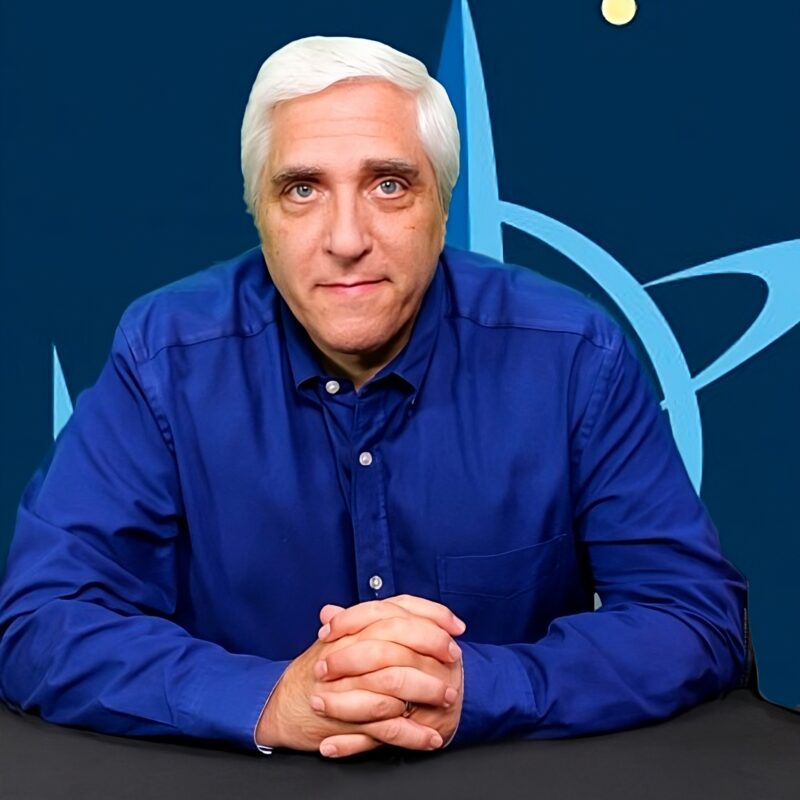
UPDATE 4/27/2011: Here’s the online video of Dr. Novella’s appearance on The Dr. Oz Show:
- Controversial Medicine: Alternative Health, Part 1
- Controversial Medicine: Alternative Health, Part 2
- Controversial Medicine: Alternative Health, Part 3
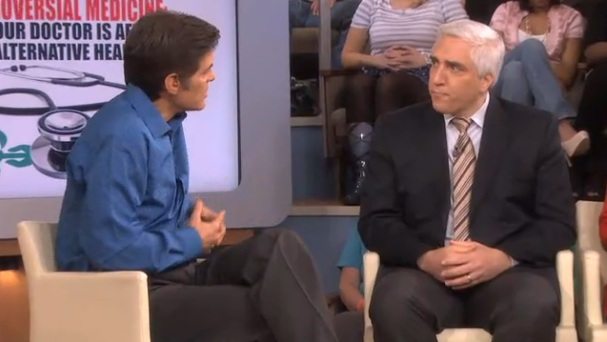
I must say I was a bit shocked two weeks ago when I was contacted by a producer for The Dr. Oz Show inviting me on to discuss alternative medicine. We have been quite critical of Dr. Mehmet Oz over his promotion of dubious medical treatments and practitioners, and I wondered if they were aware of the extent of our criticism (they were, it turns out).
Despite the many cautions I received from friends and colleagues (along with support as well) – I am always willing to engage those with whom I disagree. I knew it was a risk going into a forum completely controlled by someone who does not appear to look kindly upon my point of view, but a risk worth taking. I could only hope I was given the opportunity to make my case (and that it would survive the editing process).
The Process
Of course, everyone was extremely friendly throughout the entire process, including Dr. Oz himself (of that I never had any doubt). The taping itself went reasonably well. I was given what seemed a good opportunity to make my points. However, Dr. Oz did reserve for himself the privilege of getting in the last word—including a rather long finale, to which I had no opportunity to respond. Fine—it’s his show, and I knew what I was getting into. It would have been classy for him to give an adversarial guest the last word, or at least an opportunity to respond, but I can’t say I expected it.
In the end I decided that I had survived the taping of the show and did fairly well. After watching the final version that aired I feel that the editing was fair. They allowed me to make my major points, and did not change anything significant about the discussion. Again, the real problem was that Dr. Oz controlled the framing of the discussion and made many fallacious points at the end that I was given no opportunity to respond to.
What are you afraid of?
But enough about the process—let’s get to the meat of our discussion. I knew that no matter what happened on the show, I would have the opportunity to give my unfettered analysis here at SBM—so here it is. I knew going in that the biggest challenge would be the way in which Dr. Oz framed the debate, and right at the beginning this was evident. The name of the segment was “Why your doctor is afraid of alternative health.”
David Gorski has already pointed out the obvious – we are not afraid of anything. Dr. Oz tried to make it seem as though doctors are afraid of the controversy, because it will result in professional criticism. He accused me (he spent a lot of time arguing against straw men of his own creation) of not wanting to discuss so-called alternative medicine, either professionally or with my patients.
Here is where being a skeptic who deals with a wide range of issues comes in handy. We get the same exact nonsense from believers in alien visitation, psychic phenomena, ghosts, or whatever – they naively and self-servingly assume that anyone who disagrees with them must be afraid of something. The reality is we are just interested in the truth. With respect to medicine, we want to do our professional due diligence to make sure that the treatments we recommend to our patients are based upon the best scientific evidence available. We take the dictum “first do no harm” very seriously – and the only way to be sure that you are not causing harm is to rely on objective, high-quality evidence. It is always about the scientific evidence. But proponents of modalities that are not backed by evidence, like Dr. Oz, desperately want to make the debate about something else. So they invent issues that don’t exist, such as being afraid.
It is also patently untrue that my colleagues and I don’t want to discuss alternative medicine. Quite the contrary: if anything, we are accused of discussing it too much. We spend a great deal of time acquiring expertise in a long list of sectarian and controversial treatments, so that we can discuss them with authority. I talk to my patients all the time about treatments considered “alternative” (if you haven’t figured it out yet, this is a term we do not like because it encourages a false-dichotomy and is a distraction from the key question – whether it is safe and effective). They ask me questions, and I give them evidence-based answers, without judgment or fear.
I find that my patients greatly appreciate that I have taken the time to understand the research on such topics and can give them accurate, no-nonsense information they can use. This is essential for informed consent, which is part of medical ethics.
In short, we are not afraid of anything. We want there to be open debate and discussion. We want to shed as much light as possible on controversial and “alternative” methods, because we feel the public and individual patients will benefit from having all the information. SBM is largely dedicated to providing that information. Our criticism of Dr. Oz and others who promote such modalities is that they give the public partial or distorted information – often grossly so.
A recent example is an episode a few weeks ago in which Dr. Oz uncritically promoted homeopathy. He told his audience that the evidence shows that homeopathy works, even if the mechanism may be mysterious. He stated this as a non-controversial fact, which was very misleading. Every objective review of the clinical evidence demonstrates that homeopathic products do not work for any indication.
A Stent and a Statin
Another example of the dissemination of biased or partial information comes from the other guest appearing on that segment with me, Dr. Mimi Guarneri. Her schtick is that she is an interventional cardiologist who became disillusioned with mainstream medicine and was drawn to the focus on preventive measures in alternative medicine. This, of course, is complete fiction – nothing but marketing hype by promoters of dubious treatments.
On the show she summarized the mainstream approach to heart disease by saying that, as a conventional doctor, the only tools she had in front of her were a “stent and a statin.” This is nice alliteration, and I’m sure it plays well with her target demographic, but it is highly deceptive. Calling such a statement “unfair” is being charitable.
I pointed out during taping that science-based medicine has identified and actively promotes many modalities for preventing heart attacks, in addition to stenting blockages and using statin medication to lower blood cholesterol. These include diet for weight and cholesterol control, exercise, controlling diabetes, controlling high blood pressure, and using ‘blood thinners’ like aspirin.
I could have added that scientific studies are also looking into the role of chronic anti-inflammatory treatments (perhaps it is the anti-inflammatory effects and not the anti-platelet effects of aspirin that are most effective in preventing heart attacks). There are frequently published studies examining every aspect of diet to see which factors are most helpful. A diet with excess simple sugars may also be detrimental, although its exact contribution remains controversial. And just about every vitamin has been looked at for its preventive effects (which turn out to be modest, and high doses of vitamin E may actually increase heart disease risk). The benefits of stress reduction have been clearly established by scientific studies, and is also part of standard recommendations.
Modern medicine has examined every nook and cranny of heart disease prevention, and continues to do so as new ideas come to light. Where are the great innovations to cardiac disease prevention brought by so-called alternative medicine? They appear to be non-existent – except for dubious claims made for superstition-based treatments that were rejected long ago by science.
This is the kind of ideologically-driven misinformation that has earned Dr. Oz our criticism.
Heads I Win, Tails I Win – Now Stop Being so Dismissive
If there were any doubt where Dr. Oz is ideologically, he removed it during this episode. He clearly staked out the anti-scientific ground that most defenders of alternative medicine use to dismiss criticism of their claims. Make no mistake – at its heart the disagreement between defenders of science-based medicine and promoters of alternative medicine is an ideological struggle over the role of science in medicine. We have made our position at SBM clear (which also reflects the consensus opinion in the medical profession) – science is the best method for determining which medical interventions are safe and effective and which are not.
Promoters of alternative medicine only pay inconsistent lip-service to science, but the core of their philosophy is that science is optional. They rely upon the fact that to many non-scientists, the word “science” is sufficiently arcane that they can use the term to generate confusion.
What we mean by “science”, however, is simply rigorous methods of observation. Good science looks at all the evidence (rather than cherry picking only favorable evidence), controls for variables so we can identify what is actually working, uses blinded observations so as to minimize the effects of bias, and uses internally consistent logic.
So when promoters of alternative medicine claim that science is not always the best method to test their claims, which part are they willing to reject? Perhaps they want to dismiss inconvenient evidence, or use logical fallacies, or sloppy research methods, or just make things up as they go along.
Dr. Oz played this game during the show as well. He claimed that for many “alternative” modalities there is scientific evidence to back them up. But he focused on herbal therapy to make his point. This a bit of the bait and switch (and why the false category of “alternative medicine” is counterproductive). Herbal remedies are not really alternative – they have been part of scientific medicine for decades, if not centuries. There is even a research specialty focusing on pharmacognosy – or using natural sources for drug development. Herbs are drugs, and they can be studied as drugs. My problem is with the regulation and marketing of specific herbal products, because they often make claims that are not backed by evidence.
But there is no a priori reason to think that any particular herbal drug will or will not be safe and effective. It just needs to be properly studied.
For modalities where there is some evidence of efficacy, Dr. Oz is all in favor of science. But when the discussion turned to acupuncture, where the evidence is largely negative, Dr. Oz suddenly characterized reliance on “Western” science (another false dichotomy) as arrogant and dismissive. Western science, he argued, cannot wrap its collective head around something as Eastern and mysterious as acupuncture (although he recoiled when I characterized this approach as mysticism – again, he seems to want to have it both ways).
This is a clearly anti-scientific attitude. When studies are positive, science is great. When studies are negative, Western science cannot fathom alternative medicine and relying on research is “arrogant.” Heads I win, tails I win.
Never mind that much of the acupuncture research is designed in cooperation with, and executed by acupuncturists. They signed off on the research and certainly would have claimed support if the studies turned out positive. In fact, they’ve even tried to claim, as ‘positive,’ studies that were completely negative – another example of deception in the world of alternative medicine.
I wish I’d had the opportunity to ask Dr. Oz exactly what is it about “Western” science that makes it incapable of detecting any real physiological effect from acupuncture or a similar method. This is the same intellectual failing as claiming that Bigfoot can turn invisible at will, to explain why there are no good pictures of him. Or that psychic powers do not function in the presence of skeptics.
This is a logical fallacy (special pleading) with which we are very familiar. Ironically, it is a very dismissive attitude – the casual dismissal of scientific evidence simply because it contradicts a pet belief. The scientific approach, of course, is to look fairly at all the evidence – a process that Dr. Oz unfairly characterized as “dismissive.”
Conclusion
In the end I am glad for the opportunity to expose science-based medicine to a wider audience. Despite the accusation that we are “afraid” of alternative medicine, we are anxious to address it head on. Honest and open intellectual discourse is the way to work out such differences of opinion and approach, and we are confident in our ability to defend science-based medicine.
I wonder if Dr. Oz is as confident. I was happy to go into his forum, where he and his producers controlled the conversation. In return I invite Dr. Oz to continue our discussion, either in written form here at SBM or on my podcast, the Skeptics’ Guide to the Universe. We have interviewed those on the “other side” before, and have given them essentially an unedited forum to express their opinions and answer questions. I passed this offer to Dr. Oz through his producer (but I don’t know if he actually received the invite, and I was not given the chance to make it directly during the taping of the show).
So I repeat the offer here in public. There is a lot to hash out about so-called alternative medicine and the role of science in medicine. Let’s continue the discussion, on SBM or the SGU – you have an open offer, Dr. Oz, and you obviously know how to contact me.
Additional commentary:
- Alternative Medicine: The Magic of Oz
- Dear Dr. Oz: I Just Think it’s Very Dismissive of You to Reject Reality
- The Dr. Oz Show: The Price is Right of Medical Woo
- Steve Novella goes to Oz
- Steve Novella on Dr. Oz
- Steven Novella on Dr. Oz
- Dr. Steven Novella vs. Dr. Oz