
Jun 24 2009
Chiropractic – A Brief Overview, Part I
When patients ask me if a chiropractor can help them with their problem, I often think to myself, “OK, do I give them the short answer or the long answer?” The difficulty is often in the fact that chiropractic is a diverse profession and it is difficult to even characterize what a “typical” chiropractor is likely to do. As a chiropractor once admitted to me – there are a great many things that happen under the umbrella of “chiropractic.”
In this article I will summarize some of the history and practice of chiropractic, highlighting what I consider to be many of the enduring problems with this profession.
History
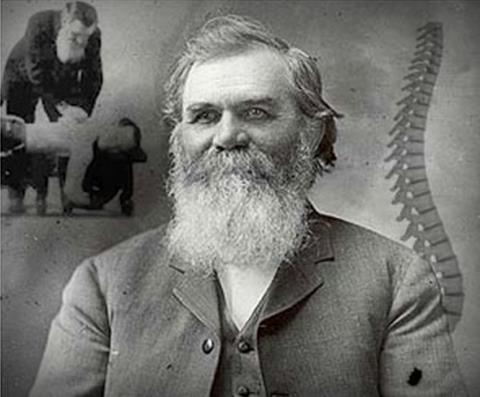
Chiropractic was founded in 1895 by Daniel David Palmer, a grocer with an intense interest in metaphysics. Prior to his “discovery” of chiropractic, D.D. Palmer was a magnetic healer. He also had interests in phrenology (diagnosing disease based on the bumps of the skull) and spiritualism. Palmer reported to have discovered the principle of chiropractic when he allegedly cured a janitor of his deafness by manipulating his neck. The fact that the nerve which conveys sound information from the ears to the brain does not pass through the neck did not seem to bother Palmer, if he was even aware of this fact.
Palmer created the term “chiropractic,” which literally means “done by hand,” to refer to his new therapy. He argued that all disease is caused by subluxated bones, which 95% of the time are spinal bones, and which disrupt the flow of innate intelligence. He did not subject his ideas to any form of research, but rather went directly to treating patients and to teaching his principles to the first generation of chiropractors.
Subluxation Theory
Palmer believed in the pre-scientific vitalistic notion that health stems from the flow of a spiritual life force. Although vitalism was rapidly declining within scientific thought by the end of the 19th century, it was the centerpiece of early philosophies of health in most cultures. Palmer borrowed this ancient belief and renamed it “innate intelligence” which he claimed flowed from the brain to the rest of the body through the spinal cord and peripheral nerves. All disease, he argued, results from disruption in the flow of innate intelligence. Disruption in flow is caused by spinal subluxations, which are small misalignments in the spine that compress the spinal nerves.
Therefore, liver disease is caused by a subluxation which compresses the spinal nerve which supplies the liver with life force, depriving it of its vital innate intelligence. Palmer therefore believed he could cure by fixing these misalignments with manipulation.
This idea has remained the cornerstone of chiropractic despite advances in neurobiology and anatomy which have failed to show any evidence for innate intelligence or chiropractic subluxations. Many continue to ascribe all disease to the blockage of innate intelligence despite scientific advances in medicine which have discovered infectious, genetic, autoimmune, degenerative, nutritional, and other causes for many of the diseases which plague mankind.
Chiropractic was also not the only tradition based upon manipulating the bones. Of note, osteopathic doctors also developed an art of bone manipulation in order to heal, but they believed they were unblocking blood flow through arteries. Osteopathy and chiropractic had similar roots, but took very different paths, as we will see.
D.D. Palmer’s son, B.J. Palmer, became involved in the chiropractic movement early on, during the formative years. B.J shared his father’s metaphysical bent (prior to chiropractic, he worked with a mesmerist and worked in the circus), his tendency to make sweeping statements about health without justification, and his ignorance of contemporary scientific knowledge. He was reported to state, for example, “When I saw there was no use for a sympathetic nervous system, I threw it out, and then just had to put something better in its place, so I discovered Direct Mental Impulse.” B.J. also “discovered” a non-existent “Duct of Palmer” connecting the spleen to the stomach. In 1907 B.J. engineered a hostile take over of his father’s school of chiropractic.
B.J. Palmer set the tone that would later dominate the field of chiropractic. He emphasized salesmanship, advertising, and practice building. He was highly critical of medicine, stating that M.D. stands for “more death.” He continuously sought new methods for increasing revenues, such as his neurocalometer, which would pinpoint subluxations by measuring skin temperature and he decreed must be rented from him by other practitioners at exorbitant fees.
From the beginning chiropractors were also politically aggressive. They sought licensure as a protection from the growing scientific medicine with which they were completely at odds. Many legislators were reluctant to license chiropractors for this reason, but as more and more states voted in licensure, it became increasingly difficult to fight. Additionally, many legislators looked upon licensure as way of controlling the scope of chiropractic. By 1925, 32 states had instituted licenses for chiropractors. The struggle ended in 1974 when Louisiana instituted licensing.
Many states then began to pass basic science board requirements for licensure, making chiropractors pass the same tests of basic science knowledge as medical and osteopathic students. This was justified by the fact that chiropractors were presenting themselves as primary practitioners. However, where roughly 86 percent of medical students passed their basic science boards between 1927 and 1953, only 23 percent of chiropractors did. Chiropractors who could not pass the boards either moved to another state without the requirement, or practiced without a license. Between 1967 and 1979 all of the basic science laws for chiropractors were repealed.
Over the years chiropractic has never ceased its tireless struggle for growth and acceptance. Despite the fact that scientific medicine has continued to progress and chiropractic has never shed its pseudoscientific origins, they have been quite successful. After licensure, they gained coverage under Medicare. They have also successfully sued the AMA to stop their antichiropractic campaign. Today they continue to lobby hard for increased coverage and access under health insurance and HMO policies.
Straights, Mixers, and Reformers
Almost since the beginning, chiropractic has been fraught with many internal schisms. Today there is a wide range of differences between individual chiropractors, but most can be placed within one of three basic types.
Straight chiropractors consider themselves the only true or pure chiropractors because they limit their practice to the identification and treatment of spinal subluxations. They adhere strictly to Palmer’s concept of disease and believe that all ailments can be treated through manipulation to restore the flow of innate intelligence. Once freely flowing, they believe innate intelligence has unlimited power to naturally heal the body.
Straight chiropractors are the most extreme in their anti-scientific views. They openly advocate a philosophical rather than a scientific basis for health care, calling mainstream medicine “mechanistic” and “allopathic.” They call physicians “drug pushers” and disparage the use of surgery. They are careful not to give diseases names, but none-the-less they claim to cure disease with their adjustments. They oppose vaccinations. They also openly advocate the replacement of scientific medicine with chiropractic as primary health care. The statements of Dr. Wilson A. Morgan (who just passed away earlier this month), previous Executive Officer of Life College School of Chiropractic, are typical:
“Chiropractic: The health care system whose time as the official guardian of the public’s health is fast approaching!”
“On the other hand, it is equally appropriate for chiropractors to be viewed as generalists in that the far-reaching effects of their highly specific spinal adjustments usually are followed by the decrease and often disappearance of a very broad array of symptoms, disabilities and pathological conditions.”
“Unlike the medical profession, chiropractic has a very strong philosophical basis, which no doubt has contributed to its having been labeled ‘unscientific’ by the more mechanistically-oriented scientific community.”
“It appears that education will prove to be the best strategy in the ‘war on drugs,’ including education about the dangers of drugs available on the street and also those available from the physician as prescriptions.”
Mixers, comprising the largest segment of chiropractors, may at first seem more rational. They accept that some disease is caused by infection or other causes and they do not limit their practice to fixing subluxations. Most chiropractors in this group, however, do not supplement subluxation theory with scientific medicine, but rather with an eclectic array of pseudoscientific alternative practices. Mixers commonly prescribe homeopathic and herbal remedies, practice acupuncture and therapeutic touch, diagnose with iridology, contour analysis, and applied kinesiology, and adhere to the philosophy of naturopathy. This broad use of unproven, unscientific, and fanciful so-called “alternative” practices clearly indicates an antiscience attitude, as well as a lack of scientific knowledge, on the part of those chiropractors who employ them.
The rhetoric of Mixers indicates that they are attempting to become accepted into the scientific mainstream, rather than replace scientifically based medicine with a philosophy based approach. They no longer openly oppose immunization, like straights do, but they do advocate the freedom to choose whether or not to be immunized. Their appeal to freedom is emotionally effective, especially in the United States, but it fails to recognize that immunization is far less effective in eliminating or containing infectious diseases when it is not given to everyone. They also advocate a role for chiropractors as a primary care portal of entry system within HealthCare, despite the fact that they lack adequate training as generalists skilled in medical diagnosis.
A small minority of chiropractors, numbering only about 1,000, or 2% of all chiropractors (these are rough estimates because accurate figures are lacking), have been openly critical of their own field. They have called for absolute rejection of the subluxation theory of illness, disposing of pseudoscientific and unethical practices by chiropractors, and the restriction of chiropractic to treating acute musculoskeletal symptoms. They are attempting to bring their field into the scientific mainstream.
Occasionally chiropractic reformers have attempted to forge a new profession, entirely shedding the pseudoscience attached to the chiropractic brand. About ten years ago one group in Canada renamed themselves “Orthopractors,” and considered the new discipline of orthopractic as distinct from chiropractic. Orthopractic is the use of manipulation to provide symptomatic relief from uncomplicated acute back strain. They do not believe in maintenance therapy, treating medical ailments, or the use of pseudoscientific alternative practices.
Unfortunately, this reform effort died because “orthopractic” did not exist as a legal entity. This also partly explains why the “chiropractic” label persists and covers such a wide range of philosophy and practice – because it exists as a recognized licensed profession. It has a regulatory inertia that is hard to combat.
To further complicate things, spinal manipulation exists outside of the chiropractic profession, and not all manipulation is chiropractic manipulation. Some physiatrists, sports medicine doctors, and osteopaths legitimately employ manipulative therapy to relieve muscle strain, mobilize joints, and improve function. Chiropractors do this as well. But some chiropractors also do chiropractic manipulation designed to realign the spine and reduce imaginary chiropractic subluxations.
The Evidence – Subluxations
In the past 100 years, there has been very little research conducted into the basic principles of straight chiropractic. There is no research that indicates the existence of innate intelligence or that such a force plays any role in health and disease. Further, the evidence strongly suggests that chiropractic subluxations are a figment of the chiropractic imagination. And it also seems that spinal manipulation is not capable of realigning the vertebra of the spine.
A study carried out by Edmund Crelin, Ph.D. investigated the amount of force necessary to displace vertebral bones of the spine in order to cause impingement of a spinal nerve. The study was carried out on six corpses within 8 hours after death. His conclusion was that the amount of force necessary to actually displace the vertebra was great enough to break the spine, arguing strongly that chiropractic manipulation cannot significantly affect spinal alignment, and that misaligned spines do not caused pinched nerves (Crelin, 1973).
Pinched or impinged spinal nerves do occur, but they are caused by herniated discs, fractures, tumors, or overgrowth of the vertebral bones. When spinal nerves are impinged they cause pain, numbness, and tingling and may cause a decrease or loss of deep tendon reflexes and weakness of the muscles supplied by the affected nerve. Impinged nerves are not caused by subluxations nor do they result in diseases of the organs. Believers in subluxation theory must claim, implausibly, that nerve impingement causes only a blockage of innate intelligence without causing any of the known signs and symptoms of such impingement.
Ironically, spinal manipulation is contraindicated in cases of actual nerve impingement and should not be performed. In medical studies of manipulation, such as the RAND study, often cited by chiropractors as evidence for manipulation, spinal nerve impingement was considered a reason not to have manipulation and therefore was a criteria for exclusion from the study.
Another source of evidence that the chiropractic theory of subluxations and innate intelligence is completely false comes from the unfortunate victims of spinal trauma. There are many victims of complete transection, or disruption, of the cervical spinal cord in the neck. Such a complete injury leaves its victim quadraplegic, unable to move the arms or legs. If the injury is high enough in the spinal cord the victim may not even be able to breath on their own. In such victims no impulses from the brain are able to travel below the spinal cord in the neck, and therefore most of the communication between the brain and the body is interrupted. Certainly, this is a much more dramatic and complete interference of nerve flow than that of an impinged spinal nerve.
Yet, in these patients, the organs continue to work without difficulty and diseases do not develop at any higher rate than those without such an injury. Of course, there are some effects from the disruption of the autonomic nervous system, that part of the nervous system which regulates the bladder, the degree of bowel motility, and other functions. But all effects of spinal cord damage are caused by known neurological injury. If subluxation theory were correct, then patients with high spinal cord injuries would be ravaged by every conceivable disease.
So chiropractors cannot realign the spine to fix imaginary subluxations and restore the flow of nonexistent innate intelligence. Subluxation theory is pure pseudoscience, like homeopathy or therapeutic touch, and has no place in a 21st century scientific health care system.
Despite the extreme scientific implausibility of subluxation theory, specific applications have been tested with clinical research – with predictable results. For example, many chiropractors will use manipulation to treat asthma is children. The results of this research are soundly negative – chiropractic does not work on asthma.
Despite this many chiropractors persist in treating asthma. This led Simon Singh to write in the Guardian in 2008 that the British Chiropractic Association, which does advocate chiropractic for childhood asthma, “promotes bogus therapies.” In response to this statement the BCA notably did not provide the evidence that Singh claimed was missing. Rather, they sued him for libel (the case is ongoing).
Next week I will cover the evidence for musculoskeletal uses of chiropractic.
369 Responses to “Chiropractic – A Brief Overview, Part I”

I am sometimes embarrassed by my patronage of a chiropractor. He is, so far as I can tell, “mixed.” He has never dumped pseduoscientific stuff on me, but I’ve seen things in his office (like books about how allopathic medicine is bad). He’s never touched my neck, as I’ve vetoed this, firmly. I have scoliosis and sciatica, aggravated by a malformed pelvis. I know it sounds very silly (and unscientific), but my pain is less after a visit.
I am a scientist (a biochemist, in fact). I know there is essentially no scientific justification for why this chiropractor helps me, but the point remains that somehow, he does. Perhaps it is the placebo effect? I am not sure. Perhaps I would be better served by obtaining the services of a massage therapist or osteopath, but there is a certain comfort in the known.
The British Chiropractic Association (BCA) is in bad odor now because their libel suit against Simon Singh has caused a large, public outcry. Currently, there are more than 10,000 signatures on a petition to have the law changed. Each time a news story on the topic comes up, the BCA’s suit is mentioned. This has the BCA complaining that they are being made out to be monsters rather than victims.
Another result is that UK chiros are scrambling to cover their tracks by removing their web-sites and literature that make fraudulent claims of treatment. However, before they got to it, two people (independently) archived all the web-sites, and filed complaints with the various oversight boards against as many as 529 chiropractors.
About 12 days ago, the BCA released their list of 29 articles supporting use of chiro for various pediatric conditions (e.g., colic and asthma) http://www.chiropractic-uk.co.uk/gfx/uploads/textbox/Singh/BCA%20Statement%20170609.pdf The articles are ridiculous http://www.ministryoftruth.me.uk/2009/06/18/examining-the-bcas-plethora-of-evidence/ (at the bottom of the blog post are links to more, critical sites). In short, 1/3 are irrelevant, and the rest suffered from some combination of being: unblinded, uncontrolled (or inadequately controlled) and too small. The studies of colic showed that the babies recovered in 2-3 weeks. That is what one expects without treatment.
“Palmer believed in the pre-scientific vitalistic notion that health stems from the flow of a spiritual life force. Although vitalism was rapidly declining within scientific thought by the end of the 19th century, it was the centerpiece of early philosophies of health in most cultures.”
And can you explain to us exactly why vitalism was declining? What exactly was the evidence, from controlled experiments, showing that there is no life energy? Or did the belief merely go out of style, to help separate modern medicine from earlier health practices?
“From the beginning chiropractors were also politically aggressive.”
This statement implies that MDs were not politically aggressive.
“And can you explain to us exactly why vitalism was declining?”
Because there was no experimental evidence to support it.
“This statement implies that MDs were not politically aggressive.”
Ah, but the point is that the MDs also had actual facts, and evidence of effectiveness, to support their positions. Politics was the ONLY way chiropractors could support theirs.
[“And can you explain to us exactly why vitalism was declining?”
Because there was no experimental evidence to support it.]
So you are implying that medical researchers made good attempts to find it and failed? Or was it just that no one tried because they already “knew” vitalism is wrong.
As a physician I can find several opinions in this blog that are more representative of personal belief and not that of science. First of all manual manipulation has many proven benefits. With that being said there are many more subjective benefits that are still in the research phase and are being pre-labeled as bunk. Now I have a science based practice and use proper judgement in the treatment of my patients. I do also recommend treatments that have a high subjective satisfaction but not allot of firm research supporting the eficacy. Can manipulation help disease processes? I think in some cases it can. There have been studies showing it to reduce asthma symptoms, lower blood pressure, etc..
I am not saying we should abandon medication and use manipulation for these things. What I am saying is that DCs treating for segmental dysfunction problems and seeing changes in these disease processes warrants further study. Also, from what I see most DCs are better educated than most of my counterparts in nutrition and supplementation but that is a seperate debate altogether. I see no reason why someone should be embarrased to see a chiropractor. Referrals to DCs happen in this office every day. Osteopaths may understand or are open to manipulation however so that may be the reason for our focus at this clinic.
Extensive efforts had been made to find all sorts of forces which were widely believed to be real. Eventually, though, you have to concede that maybe the think you’re looking for doesn’t exist — especially when someone else walks up with an alternative explanation for which they’ve found real evidence.
Palmer believed that the nerves convey an “innate intelligence” to vital organs. Yet quadriplegics do not suddenly undergo liver failure, despite the lack of a nervous connection to the brain. On the contrary, the liver only dies if you sever its arterial connections; it’s clearly the blood that sustains it, not some sort of vital force conveyed via nerves. Indeed, if you sever the nerves to a person’s hand, they lose the use of the hand, but the hand itself does not die or even suffer much (apart from gradual muscle atrophy due to disuse, and increased rate of injury because the patient can’t feel it and thus has a harder time protecting it). So Palmer’s idea of the innate intelligence is not supported by the evidence. However, other ideas *are* supported by the evidence, such as the idea that bodily tissues are sustained by being perfused with blood, while the function of nerves is much simpler — to detect, to relay, and to trigger muscle contraction.
Obviously no one has proven that there is no vital force. Similarly, no one has disproven the ether. Michaelson & Morlay merely failed to detect it. But that failure was profound, which is why people don’t put a whole lot of stock by the concept of the ether anymore.
Pec: Just google “death of vitalism” and read all about it yourself.
Steve,
How would you characterize the peer reviewed journals of chiropractic? Despite knowing that the logic behind chiropractic is severly flawed, if I were to engage a chiropractor in a discussion, I feel like I would be unable to defend myself against the claim that there is plenty of evidence of the effectiveness of chiropractic in the journals.
When the liver, kidney and heart are transplanted, all neural connections are completely severed. If neural connections were necessary, then transplanted organs would not function at all.
http://en.wikipedia.org/wiki/Vitalism
“A refinement of vitalism may be recognized in contemporary molecular histology in the proposal that some key organising and structuring features of organisms, perhaps including even life itself, are examples of emergent processes; those in which a complexity arises, out of interacting chemical processes forming interconnected feedback cycles, that cannot fully be described in terms of those processes since the system as a whole has properties that the constituent reactions lack.”
http://en.wikipedia.org/wiki/Vitalism
“So popular did Mesmer’s ideas become that King Louis XVI of France appointed two commissions to investigate mesmerism; one was led by Joseph-Ignace Guillotin, the other, led by Benjamin Franklin, included Bailly and Lavoisier. The commissioners learned about Mesmeric theory, and saw its patients fall into fits and trances. In Franklin’s garden, a patient was led to each of five trees, one of which had been “mesmerized”; he hugged each in turn to receive the “vital fluid”, but fainted at the foot of a ‘wrong’ one. At Lavoisier’s house, four normal cups of water were held before a “sensitive” woman; the fourth produced convulsions, but she calmly swallowed the mesmerized contents of a fifth, believing it to be plain water.”
That is how they “proved” that vitalism is incorrect. And I think that was the end of it.
Pec:
Just a few points:
I went to the same wikipedia page you did. I’ve only included points clearly stated in that article. Using those points, here is a much stronger case against vitalism (using only wikipedia)
- The “chemical” basis of vitalism (“organic” chemicals supposedly could not be synthesized from “inorganic” chemicals.) was disproved by the synthesis of urea. This was done by Wohler, who afterwards said he had seen “The great tragedy of science, the slaying of a beautiful hypothesis by an ugly fact.”
- Starting in the 1600′s the microscope allowed us to visualise the body on a cellular level, which lead to:
-The emergence of germ theory, and it’s scientific, empirically proved basis discredited a variety of vitalistic theories that were incompatible with germ theory.
-Increased knowledge of cellular level anatomy, which lead to new theories of physiology. Each new theory, and new piece of knowledge on the inner workings of the body decreased the need for, and scope of “magical thinking” such as exists in most vitalistic theories.
I’m amazed that you’re citing wikipedia as the authoritative source on “the death of vitalism.” Keep searching and you’ll find much more authoritative data.
Smapdi:
It’s always about the quality of the research. I’ve yet to see a positive article from a chiropractic journal that had decent controls, good statistical analysis, and any real time spent on experimental design. The onus is not on you to prove chiropractic doesn’t work, it’s on the chiro-advocate to show evidence that it works. If they tell you otherwise, they don’t understand that one can’t prove the negative.
And the one I’m most concerned about:
Insight
Based on the rest of your comments I’m curious, what kind of physician are you? I feel that your comments are representative of misunderstandings of evidence based medicine that wouldn’t have passed muster with my attendings on any of my wards time.
What KIND of manual manipulation. Noone has claimed physical therapy is bunk, and they use some manual manipulation. You have inadequately defined this term for it to be of value in this discussion.
Noone talked about manual manipulation persya, claimed chiropractic’s theory is baseless. Further, the scientific evidence for any benefit is weak, and purely limited to the musculoskeletal system.
Excessively vague. What are we calling a “subjective benefit.” What are the subjective benefits in question, how would you judge the quality of a study on “subjective benefits”?
Then you don’t have a science based practice. That’s like saying “I practice evidence based medicine, AND homeopathy.” Well then, you don’t practice evidence based medicine.
A caveat: with your treatments that have “high subjective satisfcation,” are you recommending UNproven therapies that are currently being researched, or therapies with significant evidence against their use. If you mean that you use drugs off label, or you recommend modalities that are currently in clinical trials with some promising data, that’s different than recommending tincture of arsenic 10C for panic attacks.
Noone cares what you think. That’s not an insult. Even if you’re an expert, expert opinion is at the bottom of the pyramid of evidence. Show me these studies you speak of. I haven’t seen a valid (well designed, good controls, statistically powerful) study showing that manipulation reduces asthma symptoms, or hypertension.
Trust me, I have asthma, I hate taking asthma meds. When I was a kid my parents tried me on every woo-ish crap practice around (including homeopathy, and ayurveda), because they didn’t know any better. You’re a doctor. You should know better.
Having investigated the literature, I see no good trials on this. There are a good many criticisms of the studies I THINK you’re talking about elsewhere on this blog.
Perhaps you could cite the studies you’re talking about.
Good.
And such study has so far been negative.
No. It’s not a separate debate. We’re well educated on education in medical school here. When you say your counterparts, I’m not sure if you’re talking about dieticians, or PCPs, or doctors who specialize in nutrition. In any of those cases, I would suggest you are incorrect, unless your colleagues are particularly bad with nutrition.
Supplementation on the other hand is mostly pseudoscience. Niacin for cholesterol I’ll give you. Most of the rest of supplementation is based in orthomolecular “medicine”, which is, on balance, bull.
At any rate, chiropractors are NOT formally educated on those subjects to the degree that a PCP doctor should be educated on those subjects.
Osteopaths are doctors just like everyone else. MOST osteopaths recognize that much of osteopathic manipulation is just as baseless as chiropractic. When I applied to medical schools, I spent some time with DOs who practiced primarily manipulation at the nearest osteopathic school. They were quite hostile to evidence based practices. On the other hand, other DOs that I’ve worked with eschew all but the most limited manipulative practices on the basis of their lack of evidence.
Burden of proof lies on the guy who says he saw the tooth fairy, not the guy who says he didn’t, Pec.
Esteleth, I also saw a “mixer” chiropractor years ago, after a specific injury, and thought the manipulations helped. I never bought into the whole “life energy” bit, but the concept of, say, increasing blood flow to tense muscles or freeing a pinched nerve seemed plausible enough. That chiropractor also did acupuncture and employed a massage therapist, who was certainly helpful, and used the little electrode pads that zapped your muscles and made them contract, and I admit I loved those things and always made them crank them up to the highest settings. But all these seemed to have a mechanical explanation, and I could mix and match some of the services (massage cost a lot more, of course) for a flat fee, so I tried them.
(The chiropractor also told me a lot of woo-woo stuff, too, though, in a “scolding” sort of way, like I shouldn’t eat X because it disrupts the flow of my Y, etc., and I politely ignored that stuff. I likened him to my hippie family practitioner, who would tell me to take valerian root but would also send me to get an MR just to be safe.)
Now that I’m aware of the premise behind some of the treatments I did try — and now that I know that some of the mechanical explanations I postulated don’t really jive with the way the body actually works — I have a feeling that much of my relief was attributable to placebo effect — or, even more likely, the fact that my injury simply healed over time, independently of chiropractic.
Looking forward to next week’s post.
With prior apologies to everyone else for feeding the troll–
Pec, I believe in the invisible pink unicorn because she helps me every day in ways subtle and profound. If you do not, please disprove her existence.
Alternatively, please show us why the invisible pink unicorn is so qualitatively different from “life energy” that disbelief is warranted for the former but not the latter.
You will do neither, of course, because you cannot.
“I’m amazed that you’re citing wikipedia as the authoritative source on “the death of vitalism.” Keep searching and you’ll find much more authoritative data.”
I didn’t cite it as the authoritative source. Vitalism is something I have studied. I posted those quotes because the first is an example of what I mean by the new vitalism. And the second because those 2 experiments really closed the case, for materialists, who did not feel a need to think about vitalism after that.
Vitalism has been rejected primarily because of its connections with traditional magic. And of course we “enlightened” moderns must not believe in anything resembling magic.
pec wrote: “vitalism has been rejected primarily because of its connections with traditional magic.”
Wrong.
This is generally the order of vitalism’s demise:
Wohler, thermodynamics, genetic theory.
-r.c.
Emergent properties are not the “new vitalism”, this is one of the many ways in which wikipedia can mislead. The quote you gave is basically
None of that incoherant gibberish has anything to do with chiropractic, or vitalism in the sense that applies to chiropractic.
Chiropractors aren’t saying that they can identify, and treat “subluxation complexes” that cannot be identified by any imaging modality, and can’t be diagnosed with any interoperator reliability because of emergent properties of the complexity of chemical systems.
“A refinement of vitalism may be recognized in contemporary molecular histology in the proposal that some key organising and structuring features of organisms, perhaps including even life itself, are examples of emergent processes; those in which a complexity arises, out of interacting chemical processes forming interconnected feedback cycles, that cannot fully be described in terms of those processes since the system as a whole has properties that the constituent reactions lack.”
You really ought to check the actual citations if you’re going to reference wikipedia. If you had, you’d have found that this is an argument made by *philosophers* as to the philosophical meaning of emergent processes. It is in no sense whatsoever a scientific claim, so it cannot be cited as support for the idea that there is “life energy” by whatever name.
When looking at the history of Chiropractic in 1895, I am amazed that Dr. Novella did not have the courtesy to compare it “medicine” in the U.S. at this time. It was in a very poor state.
For those that are interested, please look at the Flexner report. Wikipaedia has a very good review of it. I a time of pre-anti-biotics, U.S. medicine was a “trade”, in some cases.
There is also some recent research published in the U.S. Journal of Hypertension that shows some very interesting results into the treatment of hypertension by treatment to the upper cervical spine.
whitecoattales,
first of all I am a Osteopathic Physician, Boarded in Family Practice. I also teach for a residency program. Your comments regarding Osteopathic Manipulation are unfounded or based on your limited exposure to the kind. Though many DOs choose not to manipulate it is not due to the fact that they do not believe in it’s validity.
Most do not feel comfortable due to lack of experience. Most don’t perform the advanced fellowship and lose the skill associated.
You present very close minded arguments in an arrogant fashion, this is typical of conspiracy theorists and those of skeptical sites that refute their own stance. I practice science based medicine in regard to medication. I also recommend craniosacral therapy, yoga, Tai Chi and chiropractic care.
I have seen the reference here trying to refute studies for lowering blood pressure with upper cervical manipulation (see U of Chicago study). Simply saying that findings are not conclusive enough to make claims, the typical comment I see refuting findings. Come on?? Not choosing to accept the validity of studies that show organ related change in manipulation is an cheesy way of saying, we see the evidence and don’t buy it.
In regards to the comments on nutrition and supplementation, please give me an example of this extension nutrition training. Also, show me what courses on supplementation you received in med school. I went to DO school at Midwestern and I can tell you that I got nothing. Your biase against in this topic is unfounded. I see Medical School graduates from all over the world in our residency program and when we cover nutrition they are mostly undereducated at best. If you choose to be opposed to topics atleast have the decency to be honest and a bit less arrogant.
@Insight on 24 Jun 2009 at 2:42 pm
As I see it, you are the conspiracy theorist.
Insight on 24 Jun 2009 at 2:42 pm “I practice science based medicine in regard to medication. I also recommend craniosacral therapy, yoga, Tai Chi and chiropractic care. ”
So, I suppose you can offer reliable data supporting craniosacral therapy and chiropracty.
I suspect that you are one of those left behind when DOs adopted legitimate medicine. But I await you proof otherwise.
Craniosacral therapy … the mind boggles.
Insight–
If you “practice science based medicine in regard to medication,” why don’t you extend that to your other areas of practice? I suspect that it’s because you look forward to the occasional negative results on medicines, but don’t want to risk having your favorite woo disproven (that said, yoga and tai chi are excellent forms of low-impact exercise, as far as I can tell).
But come on… craniosacral “therapy?” At what age do the bones of the cranial vault begin to fuse together? How much movement is possible between unfused bones of the cranial vault in a young adult? Do craniosacral efforts have any likelihood of success on someone past the age of likely fusion?
A head massage feels nice at the end of a long day, but one needn’t attribute magic powers to it.
You are scaring me, Insight. I thought that DOs with decent residencies were ok — my dermatologist is a DO and is well respected locally. But, craniosacral therapy? That’s biologically implausible AND has no studies supporting it. You don’t seem to be able to read and interpret studies either.
I don’t understand the argument about nutrition. Beyond the basics, if a patient needs nutrition advice then refer him to a nutritionist or a registered dietician. They know a lot more about the subject than MDs, DOs or DCs. And except for the patient with special nutrition issues, you can get pretty much all the information you need at http://fnic.nal.usda.gov/nal_display/index.php?info_center=4&tax_level=1.
Great post, Dr. Novella. I hope you will deal with some of the newer “hypotheses” (using the term loosely) put forth by chiropractors in support of the subluxation, or vertebral subluxation complex, or manipulable lesion, or spinal boo-boo, or one of the hundred other names they’ve come up with for this putative pathology.
My second baby was delivered by an osteopath. (I didn’t choose her; I had chosen a family practice MD, but the family practice docs generally aren’t qualified to perform c-sections. When it goes to c-section, they call the obstetric surgeon on duty that day, and on this particular day, it happened to be the DO.) She did an excellent job, even overlying the scar of a previous incision so that the new wound would look as nice as possible. What’s more, she got my baby out healthy despite breech presentation and a cord wrapped around the neck. I have nothing but praise for her.
But she limited herself to science-based medicine. In an ideal world, the difference between a DO and an MD would be analogous to the difference between a BA and a BS in the same discipline; as far as their actual expertise goes, very little difference, assuming the degrees come from competent, accredited institutions. (Liberal arts is a popular whipping boy, but people forget that it’s not just humanities, and some very fine scientists have come out of liberal arts institutions. It’s just a slightly different approach.)
If I saw her again, I would hope she would not suggest cranialsacral therapy to me. I have never seen any evidence to suggest that it works, and the suggested mechanisms are highly implausible (to put it charitably). I have heard anecdotes from those who say it works, but that is not the same thing.
Hello Dr. Novella,
you comment about “Orthopractors” is incorrect. Orthopractic was the brain child of Canadian Paediatricain, Dr. Murray Katz. He invited some Chiropractors and Physiotherapists to join it. Respected New Zealand Physiotherapist, Mr Robin MacKenzie, founder of the MacKenzie technique refused to become involved.
What is even more interesting is that you forgot to mention what a New Zealand, Royal Commission of Inquiry into Chiropractic said about Dr Katz.
http://www.chiro.org/LINKS/New_Zealand_Report.shtml
This is just one of the quotes from the commissioners,
“we are abundantly satisfied that it would be quite unsafe to rely on his opinions, or on any of his evidence on matters of fact which were not completely verified from an independent and reliable source”.
Why anyone would want to get involvred with Dr. Katz, or for that matter, Stephen Barrett of Quackwatchers is beyond belief. For you to even suggest that the orthopractic movement and Dr. Murray Katz were maore than what the commissioners said sullies your argument and drives it into no more than biased personal opinion. Stephen Barrett’s credibility was described by the commissioners as
“We have considered material published over Barrett’s name. The chapter on chiropractic in The Health Robbers (entitled “The Spine Salesmen”) was written by him. It is plainly propaganda. What we have seen of the rest of his writings on chiropractic has the same tone. Nothing he has written on chiropractic that we have considered can be relied on as balanced”.
For those of you in the U.S.A. who are not sure of the strength and integrity that a Royal Commission has, ask members of the British Commonwealth. It is very powerful.
I am also surprised that Dr. Novella made no mention of the New Zealand Commissions report. It is the most extensive inquiry into chiropractic that exists in the world. It was very favourable!
In regard to the research on hypertension,
http://www.injurytv.com/chiropractic.html
http://www.webmd.com/hypertension-high-blood-pressure/news/20070316/chiropractic-cuts-blood-pressure
Finally, your comments on the history of Chiropractic are colored by your lack of comparison the the medical profession pre-Flexner
http://en.wikipedia.org/wiki/Flexner_Report
Joe,
I am 43 years old so I wouldn’t include me in your “those left DOs behind” category. You want to argue why I refer to DCs? Ok, let’s.
Give me a better case study with published outcomes for IVD herniation, radiculitis or canal stenosis than of chiropractic with the Cox studies at Loyola medical school in conjunction with National College. Go ahead, I’ll wait. It will be awhile because there aren’t any. If you tell me you haven’t heard of the studies then I will know you aren’t well read and are being ignorant in the research.
As far as Craniosacral Therapy, I know there is a large argument among PTs on the topic, even in our hospital system. When other means have failed and you have a symptomatic patient with Cephagia and they ultimately try this therapy and get better, what do you do. Once you try convential formulary and nothing helps and try CST and the patient says they got their life back. Tell them that there isn’t sufficient evidence to support trying it. Are you a physician??? If so what type?? Now I would like to see who you are. Being ignorant and close minded is far easier than to seek answers. I can see I am wasting my time. The nutrition comments I have made also have not been met with a truthful answer other than rhetoric. I went back for post graduate nutrition course work and it is obvious you are novice on the topic in practical patient application.
Insight; you are using the logic of a physician who treats patient’s in the real world. You are also breaking a cardinal rule here, admitting the short falls in traditional medicine. They are mad because you are aiding those they deem unworthy and what they are trying to get rid of. Your energy is better served to continue educating your residents in being a good doc, the effort is wasted in here.
# OZDiggeron 24 Jun 2009 at 2:18 pm
When looking at the history of Chiropractic in 1895, I am amazed that Dr. Novella did not have the courtesy to compare it “medicine” in the U.S. at this time. It was in a very poor state.
For those that are interested, please look at the Flexner report. Wikipaedia has a very good review of it. I a time of pre-anti-biotics, U.S. medicine was a “trade”, in some cases.
There is also some recent research published in the U.S. Journal of Hypertension that shows some very interesting results into the treatment of hypertension by treatment to the upper cervical spine.
***
Correct. Dr. Novella didn’t compare the two at the time. He didn’t have to. Why? Because while medicine has outgrown its pre-scientific roots,chiropractic has remained the same, mired in the old subluxation / innate mode. Wait! That’s not entirely true. Chiropractic has added all sorts of innovations that weren’t part of the original scheme: applied kinesiology; craniosacral therapy; “nutrition;” “activators;” practice building companies; aggressive marketing schemes; various naturopathic treatments (I contend that “mixers” are just as much naturopaths as they are chiropractors; anti vaccination campaigners; and supplement pushers – to name but a few of their egregious affronts to science!
A list of the advances made by mainstream, science based medicine would take volumes to enumerate.
It has been said (perhaps by Bill Jarvis or maybe Wally Sampson?) that chiropractic has yet to demonstrate that it has made a single contribution to furthering healthcare.
tgobbi
Insight you are trying to argue logic from the standpoint of a doc that actually treats sick patient’s. You are scaring those on this site because you are admitting to medical short falls and validating techniques they choose to banish forever. You would be better served to focus your energy teaching your residents what its really like in primary care than to argue with the brain trust on this blog. You can site any study supporting chiropractic that you want, they will either say it is invalid, incomplete, lacking in substance or performed by unqualified individuals.
“Atlas verterbral realignment and achievement of arterial pressure goal in hypertensive patients: A pilot study”
Bakris et al, Journal of human hypertension, 2007, 21 (347-352)
Not especially convincing , to be honest. The major problem seem to be that although the authors claim this was a double blind study, it was clearly not. In a double blind study neither the investigators nor the subjects know who is receiving treatment or placebo, yet here the investigators knowingly applied either a real or sham intervention. It is not clear from the methods if the same investigators then actually performed the blood pressure measurements; if so then is room for signifiant bias.
Insight -> “As far as Craniosacral Therapy, I know there is a large argument among PTs on the topic, even in our hospital system. When other means have failed and you have a symptomatic patient with Cephagia and they ultimately try this therapy and get better, what do you do. Once you try convential formulary and nothing helps and try CST and the patient says they got their life back. Tell them that there isn’t sufficient evidence to support trying it.”
CST is unsupportable. I’m sorry, but that’s the truth. What can easily be done, however, is deconstruct the treatment construct itself, uncouple it from the actual physical handling, and toss all the anti-scientific stuff (which often requires Occam’s Chainsaw, Backhoe and Dumptruck); then you are left with simple human primate social grooming, one nervous system with its hands on another. The second nervous system uses information supplied kinesthetically by the first, to assist its own neuroplasticizing and downregulation of pain (which it came up with in the first place, so it can easily dispense with it). This is all congruent with the most elegant model that pain science has to offer these days, so far, the neuromatrix model by Ron Melzack. All that any physical contact from a caring practitioner can offer a nervous system in pain, is a change in the sensory-discriminative input reaching that brain. That is all there is to manual therapy of any kind. It’s great for pain, any kind of pain that is non-pathological in origin, that is. But it’s nothing tissue-based at all, it’s a nervous system affair, and a catalyst only. It’s ridiculous for entire professions to base themselves on manual therapy alone, or on the even narrower base of just one “kind” of manual therapy, or on keeping manual therapy wrapped and tied up in anti-, pseudo-, or prescience, then fighting to keep the packaging going.
I say, let go of the packaging and the crazy treatment constructs. Let human primate social grooming live on, but start explaining it in ways that are congruent with science and that make sense in terms of modern pain science. Let any form of manual therapy that won’t do this simple update die by the side of the road, and good riddance.
“start explaining it in ways that are congruent with science and that make sense in terms of modern pain science. ”
Oh yes, let’s always stick with what we already believe. We must never modify our ideas. Never.
Insight on 24 Jun 2009 at 4:32 pm “I am 43 years old {snip}
Give me a better case study with published outcomes for IVD herniation, radiculitis or canal stenosis …”
Perhaps you are still young-enough to learn to provide a proper citation.
Pec -> “Oh yes, let’s always stick with what we already believe. We must never modify our ideas. Never.”
Not sure what you’re on about Pec. “Modifying”"our ideas” is exactly what I am recommending.
Diane, you see “human primate social grooming” as one of the elements in placebo reactivity to hands-on treatment methods?
If so, I don’t understand why you say it should only affect “non-pathological pain”. Other placebo influences have been observed in all kinds of pain, even including severe post-operative pain and (especially) experimentally induced pain of various types.
Insight
Argument from authority
I don’t care. Provide a citation for ANY of the studies you’re referring too, or I have no proof that you even know how to find the studies you mention.
Courtier’s reply.
I applied to both DO and MD medical schools when I applied. Since then I’ve volunteered with, and worked under a variety of both MDs and DOs. I’m intimately familiar with both philosophies of medicine. I’m also familiar with the published evidence on the subject. My anecdote’s just as good as yours unless you’re going to reveal something that proves you know what you’re talking about here.
I don’t need to be a DO to understand the evidence concerning the subject.
Argument by assertion
I’ve heard the opposite from quite a few DOs, you’re asserting one way, I’m asserting the other. Evidence, or no validity.
Ad hominem
Also lying
How is my argument close minded? I said prove it. I said provide citations. That’s close minded?
What have I said that is a conspiracy theory?
Ridiculous. Craniosacral therapy! You might as well have come here and said you recommend emmenagogue herbs for contraception.
Firstly, do you even know what a citation looks like?
Secondly, this shows a complete misunderstanding of science. This is a pilot study. Do you know what a pilot study is? It’s an initial, small study. If it shows an effect, you can move on to a bigger trial.
We don’t make treatment decisions based on one paper published somewhere even if it’s a relatively large trial. That’s a 2nd year med student level mistake. I’m expected to know better than that as a fourth year student.
It’s a much bigger mistake to make these decisions based on a pilot study, which is by nature designed to justify more research into an area.
As criticalist mentioned, this was clearly not a double blinded placebo controlled study, as it was described by the authors.
In medicine, we should survey the extant literature, and we make decisions based on all of the evidence.
My preclinical curriculum was systems based, so it’s an incoherant statement to say “what courses on supplementation”
Longitudinally throughout my curriculum we’ve had nutritionists, and doctors who specialize in nutrition educate us on the material.
Relevant nutrition is given additional emphasis in didactic lectures throughout the clinical years.
Within our pharmacology series we specifically discussed supplements and their relevancy to our practice.
Oddly enough, I’ve met students from Midwestern, and they weren’t anywhere near as disgustingly bad at science based medicine as you are.
I know for a fact that students at Midwestern now are required to learn how to appropriately search the literature for relevant studies, and to survery the evidence. Either that wasn’t part of the curriculum when you went to school, or you never learned it there.
<blockquoteYour biase against in this topic is unfounded.
Give me a citation then. Show me the evidence.
And I care becuase? You pile anecdote on top of anecdote and expect it to add up to something more. The plural of anecdote is anecdotes. Not data.
Again, what is arrogant? Why the ad hominem? Where am I wrong? You have only asserted that I am wrong. You have shown me nothing.
No. Case studies are pretty poor evidence. You should know that if you’re faculty somewhere.
“Oh yes, let’s always stick with what we already believe. We must never modify our ideas. Never.”
I wouldn’t put it that way. Maybe if you said “let’s stick with what we already know and work from there”, I might agree. Your statement is more like a projection and may illustrate how you approach things.
pmoran -> “Diane, you see “human primate social grooming” as one of the elements in placebo reactivity to hands-on treatment methods?
If so, I don’t understand why you say it should only affect “non-pathological pain”. Other placebo influences have been observed in all kinds of pain, even including severe post-operative pain and (especially) experimentally induced pain of various types.”
I wouldn’t argue with that, but would say that I see kinesthetically elicited placebo response as the main effect OF “human primate social grooming”… but I’m not sure if that was what you intended to ask or were implying.
Manual therapy is useful for helping resolve non-medical, non-pathological pain, i.e., ordinary garden variety mechanical pain; i.e., the kind everyone gets sooner or later, but which worries people unnecessarily and leaves them open to exploitation by chiropractic etc.; i.e., the kind of pain that can mimic referred pain from pathological processes, relief of which can lead to claims of “cure” of various “ailments” which have similar pain patterns.
If it’s just non-medical mechanical pain, it will usually go away and not come back. The person inhabiting the nervous system being treated with manual therapy usually needs to learn some individualized movement therapy to keep mechanical pain away long term. Manual therapy provided without individualized homework can become dependency-inducing. A practitioner who uses manual therapy on everyone without taking a careful history or without understanding pain science will be more apt to misapply it or overdo it.
Insight>> “As a physician I can find several opinions in this blog that are more representative of personal belief and not that of science.
Whitecoattales>> “Based on the rest of your comments I’m curious, what kind of physician are you?
Insight>> “first of all I am a Osteopathic Physician, Boarded in Family Practice. I also teach for a residency program.
Whitecoattales>> “I don’t care.
(Hey dude- YOU are the one that asked. Did you forget?)
Insight>> ” Are you a physician??? If so what type?? Now I would like to see who you are.
Whitecoattales>> “I applied to both DO and MD medical schools when I applied. Since then I’ve volunteered with, and worked under a variety of both MDs and DOs
(This is not an answer. The “Whitecoatail” handle and your dodgy answer leads one to suspect you ATTENDED neither.)
“““““““““““`
Whitecoattales>> ” Provide a citation for ANY of the studies you’re referring too, or I have no proof that you even know how to find the studies you mention.
Since I am familiar with the studies Insight is referring to, I will provide you with a few direct links:
http://www.biomedcentral.com/1471-2474/7/16
A non-surgical approach to the management of lumbar spinal stenosis: A prospective observational cohort study
Donald R Murphy1,2,3 , Eric L Hurwitz4 , Amy A Gregory1 and Ronald Clary1
http://www.springerlink.com/content/f32603l877144k77/
A randomized clinical trial and subgroup analysis to compare flexion–distraction with active exercise for chronic low back pain
Follow-up study:
http://www.pubmedcentral.nih.gov/articlerender.fcgi?tool=pmcentrez&artid=1574327
Amount of health care and self-care following a randomized clinical trial comparing flexion-distraction with exercise program for chronic low back pain
You will find additional information and studies here:
http://www.coxtechnic.com/research.asp
Update 1 NUCCA and Hypertension. An evaluation of “Atlas vertebrae realignment and achievement of arterial pressure goal in hypertensive patients: a pilot study.” Published in 2007 in the journal of Human Hypertension. 6/28/07
I reviewed it in quackcast 17, http://www.quackcast.com/page2/page2.html
nobs: Actually, I did forget. My apologies to insight.
From context, insight doesn’t appear to be talking to me when he asked “are you a physician?” , he appears to be addressing Joe.
I was not answering him when I typed what you’ve quoted, I was commenting on my relative exposure to DOs.
It’s amazing what you can do when you quote mine.
For the record I’m (as of yesterday) a fourth year medical student at a midwestern MD university. This is widely written in my comments elsewhere on this blog, and on my own blog. Not meant to be a dodgy answer, because I wasn’t trying to answer his question.
Also, it’s “whitecoat tales” It’s odd because you copy and pasted it, and then misspelled it.
I am already familiar with the studies he’s referring to. They are unimpressive. When I have a little more time I can give you a detailed breakdown of why this is the case.
My request was to highlight that he’s really not very familiar with the world of evidence. We pass citations back and forth constantly. When referring to a study, we generally give either a properly formatted citation, or a PMID, or a DOI.
He also has only referred to studies in the vaguest of terms, claiming that they’re positive and supportive. Yet he never discusses the quality of the data, the design of the study, the controls, or why the study is worthwhile.
In fact, he criticizes us for using all of those exact qualities to dismiss a study that was clearly a pilot trial. He also seemed unfamiliar with the definition of a pilot trial.
He brought up a point along the lines of “I practice science based medicine, AND I practice (insert non evidence based practice here)”
This is a statement that demonstrates one doesn’t understand SBM. SBM and EBM are as much about what therapies they suggest you DON’T use.
Saying that you use both therapies that are recommended by SBM AND therapies that have been adequately researched, and without benefit by SBM/EBM is saying that you don’t practice evidence based medicine.
It’s like saying “I’m a vegetarian, who regularly eats beef.”
whitecoat tales
you are in for big shock when you get into practice. Patients do not read text books. They do not know what science based medicine is. There symptoms will not always follow what the text book says.
They want to get better.
When a patient does not fit the mold of what you learned at med. school, what are you going to do? If you do nothing, you will be seen as being incompetent. Are you going to call them a nut and say that is psycho-somatic. That will not do you credibility any good!!
Keep an open mind of what is out there to help your patients. They respect you for telling them that you may not know ans answer. They will not respect you for burying you head in the sand. They will respect honesty and that comes from experience of dealing with patients, seeing what works and does not work in a clinical setting and realize that every presentation is different.
For more on the chiros vs Singh http://www.ebm-first.com/?cat=73
OZDigger on 25 Jun 2009 at 1:18 am “whitecoat tales
you are in for big shock when you get into practice.”
A major difference between quackery and medicine is that real doctors must have substantial, real clinical experience before they are licensed to practice independently. Chiropractors, for example http://www.dynamicchiropractic.com/mpacms/dc/article.php?id=53681 do not “Sometimes a [customer] asks me, “Who did you practice on when you were learning to adjust?” … we practiced on each other [classmates, not people with illness] …
As a greenhorn DC, I clearly recollect the first patient who told me, straight out, that he needed a “good cracking. … He was a “firm believer” in chiropractic and apparently had always had great results. “Just roll my hips”, he offered, “and that should do it. And don’t be afraid to give ‘er all ya got!” Since I was just out of school and without any meaningful experience, this seemed perfectly reasonable.” [bold added]
OZdigger:
Don’t be condescending. I’m on the wards now, full time. As in, I see patients for 70-80 hours a week, now, and have for the last year straight. I’m well aware that textbook presentation of disease is no more than 30% of total presentation. I’m well aware a good portion of my prescribing will be off label. None of that has anything to do with recommending BS therapies.
I’m confused how a patients knowledge of medicine is relevant to this.
I’m going to use th fact that I exist within a broader world of medicine than only myself. When I’m outside the bounds of my knowledge, I’ll bring in appropriate outside resources. on the patients symptoms, that could be research the literature, consults to ancillary support staff (PT/OT/Speech pathology), other physicians.
What do YOU do? Refer them to a chiropractor? Prescribe them a sugar pill? As far as the evidence goes, outside of some musculoskeletal complaints, there is no question that chiropractic is just an expensive, more dangerous sugar pill.
Didn’t you learn medical ethics at some point? What did they tell you about the ethics on prescribing a placebo in practice? They told us not to do it, period. It’s unethical, it’s inappropriate.
/eyeroll
Are you saying that you never tell your patients if they have psychosomatic problems? Do you ever refer them to a psychiatrist, or a therapist? Because if you don’t, that’s malpractice for a large number of legitimately psychosomatic and psychiatric complaints.
Noone goes “well Mr Smith, I’ve ruled out everything else. The problem is just that… you’re a nut!”
Explaining a patient’s diagnosis and delivering bad news is always difficult, but it’s a skill that we learn! If your patient has conversion disorder or some other psychosomatic complaint, it may not be satisfying for them to be told that it’s not an organic disorder. Yet not telling them is unethical, and unlikely to lead to improvement. All the psychiatrics and PMR doc’s I’ve worked with say appropriate treatment of most psychosomatic complaints starts with acknowledgement of diagnosis.
You’re just wrong here. On neurology I had to tell patients almost every day that their problems were psychosomatic. When done correctly, patients thank you. Because doctors who think like you dance around the issue and don’t tell patients the truth to the best of their knowledge.
At base, patients want to get better, and want the truth. When they understand that psychosomatic illness is still illness, and that you’re validating their concern and trying to treat them, patient’s are generally willing to buy into your plan.
What’s your alternative? Lie to them? Suggest yoga, chiropractic, naturopathy, anything to avoid telling them what you know?
I’m always looking for what’s out there to help my patients. I know that I have a responsbility to be the expert, for my patient. That means I have a responsbility to investigate, and understand WHY I’m suggesting a particular therapy. It means I have an obligation to reject therapies that don’t work. There is a reason that we limit the use of leeches now.
True. But irrelevant since noone suggested saying anything other than the truth. If you don’t know the answer, you don’t know the answer.
True. But irrelevant since noone suggested otherwise.
Regardless of every presentation being different, and not every presentation being classic, this is gibberish.
Patients respect your experience, your education, your motivation, and the hard work and concern you put into trying to make them better.
Because of those things, they expect that if you suggest something, it has legitimacy, and it will work.
Because of those things, you have an ethical responsibility to understand what actually works, and what might be you succumbing to, for example, recall bias.
The whole point of science based medicine is to find out what actually works. Whether the patient understands that is irrelevant. YOU need to understand it. The patient is dependant on you for valid, good, treatments. If you prescribe them placebos if you prescribe them crap that doesn’t work, then you aren’t doing right by your patients.
Doing so because there is no significant research on the subject is impossible to avoid. Doing so when we have alot of information to work with is just irresponsible.
“you are in for big shock when you get into practice. Patients do not read text books. They do not know what science based medicine is. There symptoms will not always follow what the text book says.
They want to get better.”
Wanting to get better is the #1 best reason to see a real doctor, speaking as a patient.
If I had a physician recommend CST or chiro for non musculo-skeletal issues to me I would report them to every board I could find for recommending I try magical theories that are known not to work. It might do nothing, but maybe someday enough patients like me will complain about coming in for real problems and being given fake cures that these “physicians” will lose their licenses.
@pec:
I see you don’t get irony either.
http://www.biomedcentral.com/1471-2474/7/16
A non-surgical approach to the management of lumbar spinal stenosis: A prospective observational cohort study Problems with this study? Let’s see:
1. Was this a prospective study or chart review? It’s not clear from the methods statement. These statements, “Two were excluded because of absence of baseline data or failure to remain in treatment to FU” and “This was a practice-based project in which the data gathered were those data that are collected as part of the routine of practice at the Rhode Island Spine Center” would seem to indicate that this was a chart review, and not a prospective study. Just because they label it as such, doesn’t mean that it was. I can understand a patient being lost to follow-up, but if it was truly prospective how do you exclude one for “absence of baseline data”?
2. No objective measurements of improvement. I realize that many studies of pain rely upon pain scales and patients’ self-reported symptoms and feelings of improvement. However, the authors of this study included people with neurogenic claudication as a clinical diagnosis and inclusion criteria. At the very least, put them on a treadmill and see how far they can walk pre- and post- treatment.
3. No placebo or comparison with other treatments. At the very least a control group consisting with standard non-surgical treatment, i.e. physical therapy. Better yet, divide the groups into those getting chiropractic manipulation from a certified DC and those that see a non-chiropractor who spends time with them randomly moving their legs and back, and directing them on sham exercises at home.
4. No control for non-chiropractic treatment. The authors clearly state, “No attempt was made to alter medication usage and continued medication usage after intake was not recorded, thus it is impossible to know how long each patient continued on his or her medication. Two patients were referred for epidural steroid injections.” How many other patients also saw physical therapy? How many had pain medications adjusted by their physicians? Later in the results section they state, “The mean total number of treatments was 13.3 (range 2–50). This included visits to both the chiropractic physician and physical therapist.” So clearly some patients were also seeing a physical therapist. How many? How often?
5. Inclusion of 14 patients without a known diagnosis of spinal stenosis. Spinal stenosis is a radiological diagnosis, yet 14 of the 57 patients in this study didn’t have imaging. I’ve seen more than one patient who had classical symptoms of neurogenic claudication who then had normal imaging and vascular studies revealed that the claudication was actually vascular.
6. Poorly defined exclusion criteria. What are “contraindications to the study treatments”? How was vascular claudication ruled-out?
That’s just a quick summary of the issues I found in one study you have quoted. They’re enough to cause me to stop reading early on, as such methodological problems do not allow any meaningful conclusions to be drawn.
whitecoattales,
to quote your earlier comment;
“My request was to highlight that he’s really not very familiar with the world of evidence. We pass citations back and forth constantly. When referring to a study, we generally give either a properly formatted citation, or a PMID, or a DOI. ”
This is not a grand rounds and and it was obvious you were aware of the studies I was referring. I am very familiar wtih formatted citations young man, you were showing arrogance and accusing me of ad homs when you through many my way with rebuttal. I see that from 4th years and the occasional first year resident but not to worry, they usually lose that when they have more experience and accept the gaps we have in the system.
I will say one thing, clinical studies are some of the most valid information we get. Double blind, randomized trials are very good I will agree. But the information we receive from trials in MSK pain have been invaluable in my experience.
Also, it is possible to use evidence based medicine and still be open to alternative delivery systems. You admitted being familiar with the Cox studies. I could give a rats behind if you don’t agree with the findings. I have send many patients for this treatment that have had significant subjective and objective improvement. Physical Therapy NEVER helped my IVD patients. I found Cox work from the chief of neurosurgery here who referred non-surg patients for the treatment because he informed me that he saw better outcomes in his patients.
I wont get into a pissing match with a student barely in his 4th year. You have your ideals which is wonderful, let your mind open a bit. You and your patients will be better served for it.
I am not talking about referring patients to DCs for organic processes and you know it. I do think the effects warrant further research. You come across as argumentative and bull headed and I will tell you that is not the same in the eyes of faculty as confident with compassion.
I have spent more than enough time on this blog. And, by the way. You did cause me to contact my old med school and check into the nutrition peice. “1 Class on nutrition”. Thats it. If you are trying to tell people that combining your rounds, observations and morning reports and lectures makes you competent in nutrition than you forget who you are talking to. You are being disindenuous.
I was talking to OZdigger, as indicated by “OZdigger:” at the top of the comment.
Insight on 25 Jun 2009 at 10:50 am “I am very familiar with formatted citations young man,” Then, young man (you are only 43- if you have 20 years more of ignorance than whitecoattales has education, it does not impress; I passed you decades ago with legitimate science), why haven’t you provided the complete citations? As I said, we teach proper citation to college undergraduates. I have asked for data supporting chiropractic and craneoscral therapy (which educated professionals reject) and you have not offered anything reliable.
Insight on 25 Jun 2009 at 10:50 am “I wont get into a pissing match with a student barely in his 4th year.”
That is a wise choice since you are obviously deluded and opposing someone who is better educated.
Hello everyone. First of all, I am delighted that chiropractic is the subject of such ardent debate!!
I am an upper cervical chiropractor. I also have a bachelor’s degree in biochemistry.
To set the record straight, chiropractic students do indeed care for outpatients as part of their training (we didn’t just “practice” on each other).
The main reason I’m writing is to shed contemporary light on this subject of Innate Intelligence (or simply “Innate” as we chiro’s call it). One of you wrote that there is no scientific evidence of the existence of Innate. This is because Innate is non-material and therefore immeasurable.
Innate is the consciousness in every living thing that coordinates the infinite simultaneous space-time events required to sustain life! Presumably none of us consciously mitigates all of the processes occurring in our bodies on a moment to moment basis! A pregnant woman does not consciously create the human being developing in her womb. We don’t consciously initiate the clotting cascade each time we get a paper cut. (You get the picture). All of these things occur as a result of this Innate Intelligence working in our bodies; our bodies ARE the material manifestation of this immaterial intelligence. All of this is self-evident. If it is not self-evident to you, then I’d say you’ve lost your most valuable mental capacity—common sense! And, if YOU indeed mitigate all of these things in YOUR body, then you must be very, very smart!
Science (specifically, life science) is the pursuit of knowledge that attempts to discover and describe the inner workings of Innate! Physiology is Innate at-work; biochemistry is Innate at-work. Kidneys work the same way today as they did before science DISCOVERED how they work. Etc.
The chiropractic argument is as such: Since the body is intelligent enough to coordinate all of these physiological processes in order to sustain life, then it is intelligent enough to restore wellness in the body that has fallen ill! Furthermore, the reason it does not readily do this is as a result of interference in the nervous system (specifically, in the brain stem). The cause of interference at the level of the brain stem is biomechanical dysfunction in the upper cervical spine. I’m sure you doctors are familiar with the concept of disafferentation and/or proprioceptive insult. I’m also sure that you are aware that the greatest density of proprioceptors/mechanoreceptors in the body reside in the area of the upper cervical spine and that the brain requires normal information from this area in order to properly adapt the environment. If the biomechanics of the upper cervical spine is altered by joint fixation, then the brain does not receive normal information from this area. This creates a cascade of dysfunction in the body which prevents it from adapting to the environment and ultimately from fending off disease. Restoring normal function to the upper cervical spine, in time, reverses nervous system dysfunction and ultimately restores the body’s innate ability to regain health. The chiropractic principle in-a-nutshell!!
To scientifically describe how the body heals itself would require the ability of our finite minds to conceptually grasp the infinite mind of our bodies. Since our finite mind is the epiphenomenon of the infinite mind of our bodies, this is not possible. The proof is in the countless sick people that have gotten well as a result of upper cervical care.
To set another record straight, the straightest chiropractors are upper cervical chiropractors! On a historic note, Dr. B.J. Palmer discovered upper cervical chiropractic and devoted his life to its development. Although many of his theories as to how and why this type of care worked were incorrect, he began a path that many others would help pave. And, although the path is not currently completely paved, significant advancements have been made since B.J.’s time.
I strongly urge those of you that have diagnosed patients with psychosomatic disorders to refer them for upper cervical chiropractic care. You would be doing them a great service!
Thanks for reading. I can go on and on but I understand that time is valuable. I hope what I’ve written has helped! And I hope I haven’t insulted anyone. For more information on upper cervical care please visit: http://www.thepowerofuppercervical.com or simply google upper cervical care.
Be well!
Joe, you are the only one here that believes Insight is being out educated. You appear to be more of the angry skeptical undergraduate educated poster who does not have the benefit of real world applications to properly use the research.
I see you stomping your foot shouting, provide complete citations!!!!!!
“I wont get into a pxxxing match with a student barely in his 4th year.”
Sounds like argument from authority to me. Your authority, age, and experience trump his credentials, so he is not worthy of your arguing with him.
That’s a bit of a BS position to take in the comments section of a semi open blog not limited to experienced MD’s. If you only want to have discussions with experienced MD’s, I’m sure there are sites out there that will serve your purpose.
I don’t care if he’s a rodeo clown (no offense to rodeo clowns) and you’re a Nobel winner in medicine, can you logically refute his positions or not?
Ah, so the preponderance of comments on this thread are in agreement with Insight?
Or perhaps all of my arguments were logically refuted?
Clearly you don’t read well, I’m not “undergraduate educated,” I’m a medical student. In medical school, (unlike in naturopath school) everything after the second year is in the hospital, which is real world applications.
As for seeing us “stomping your feet,” you’ve ignored all the arguments.
Innate,
“Innate is the consciousness in every living thing that coordinates the infinite simultaneous space-time events required to sustain life!” This statement is meaningless. There is no way to test it. There is no evidence that any kind of consciousness coordinates the life-sustaining processes; there is evidence that those processes are unconscious. It seems you are re-defining the word “consciousness” to suit your own vitalistic philosophy.
Only a minority of chiropractors accept the upper cervical approach. There is no credible evidence to support it. The website you cited provides no supporting evidence, just a lot of testimonials and this laughable list of all the conditions alleged to be treatable by upper cervical adjustments:
http://www.thepowerofuppercervical.com/symptoms/
Reading all of you “duke it out” is great!!…Lot’s of laughs!
I think you all have lost sight of a very important fundamental: We all decided to peruse careers in health care out of a genuine desire to help suffering people! We all have this one thing in common! Am I wrong? All forms of health care are valuable (complete citations or not) if the patient benefits in some way.
Each form of health care has its place; I wouldn’t see a chiropractor if I broke a bone or if I incurred a life-threatening infection…I’d go to the ER!!; I wouldn’t see a surgeon if I have a headache. If we are to fulfill our desire to help suffering people, then we need to try to accept the value in all forms of health care with an open mind. Instead of immediately discrediting something based on lack of scientific support, try to use your educated mental faculties to figure out how it CAN work. The number one concern is the wellbeing of the patient, and not our egos!
Harriet, You are right!! There is no way to test it…it is self-evident if you perceive it a certain way. For example, the way hemoglobin reacts to the partial pressure of oxygen surrounding it is a sign of intelligence; the self/non-self recognition mechanism exhibited my the immune system is a sign of intelligence; nerve conduction, DNA transcription/RNA translation, cell-membrane signal transduction…all signs of intelligence!!
You certainly have a right to not associate intelligence with these (and other) processes. However, I coose to do so and this brings great meaning to my life.
@INNATE on 25 Jun 2009 at 2:04 pm “Each form of health care has its place …”
Great, show us some reliable evidence supporting the place of your form of health care.
Here you go Joe! It’s a great read. I’m not gonna spoon-feed it to you but it’s all in this book.
http://www.diagnosispro.com/online_store/clinical-reference/078174198X.html
@INNATE on 25 Jun 2009 at 2:51 pm
I asked for reliable literature, I am not going to spoon-feed you on what that means. Allow me to say that quack literature does not count.
What are you talking about? That IS reliable literarture; it’s a collection of all the peer-reviewed journal articles dealing with this subject…excerpts from actual articles categorized by subject; and all the citations within it are complete (like you prefer). You can come over and I’ll read it to you like a bed-story if you want
I have the book in my office. If you give me some time I will pull complete citations of key articles from it for you to read and review for yourself.
Hey, I’m just trying to shed a little light in the midst of darkness. I’m not here to offend anyone. I’m just passionate about what I do as you are with what you do. I’ve witnessed results from this care first hand in my patients and in myself! There is definitly something to it, reliable literature or not.
“For example, the way hemoglobin reacts to the partial pressure of oxygen surrounding it is a sign of intelligence”
It is a sign that hemoglobin is (predictably, materially, and measurably) responding to the laws of physics and chemistry, it’s not a sign of intelligence.
Innate et al.
I would like to remind you that Joe’s book of “science” is bigger than yours, only because the print is so big. He suffers from severe and debilitating myopia and tunnel vision.
“It is a sign that hemoglobin is (predictably, materially, and measurably) responding to the laws of physics and chemistry, it’s not a sign of intelligence.”
Karl, don’t you see that the very ACT of responding and adapting to the laws of nature (through its design) is in itself an act of intelligence?
Like I told Harriet, you have the right to choose NOT to ascribe intelligence to this phenomena.
Is anyone else amused by the claim that a phenomenon which is immaterial and immeasurable can have a physical effect?
If it can affect matter/energy, it can be measured and is not immaterial.
There are things in the universe (such as neutrinos) which are very difficult to detect, but that is because they interact with other matter very weakly. Any phenomenon that interacts strongly enough to produce significant physiological changes should be relatively easy to detect. The crickets are chirping while we wait for evidence of vitalism, which tells me either its effects are extraordinarily weak (weaker than the interactions between neutrinos
… I must be misunderstanding you. My read on that statement means that when I throw a bowling ball off of the roof, it falls because of it’s innate intelligence responding to the laws of nature.
Thoughts, beliefs, and perceptions are immaterial yet they cause physiological responses in the body. The perception of physical threat (real or not) will trigger a sympathetic response. A “broken heart” is the result of a perception that love has been lost. etc.
Make way, consumer coming through…
Best comment ever;
Patients do surf the net to find out about their condition. They do seek out information from many sources – some of it not so good (see Oprah).
The problem is that there is a wealth of misleading information and “easy” cures promoted to consumers every day. From relentless ads for Viagra to bogus sites touting colonics as the cure all for humanity.
I very much appreciate the desire of individuals to help people through healthcare. There are a lot of good providers out there, some in non-traditional (or adjunct) fields – massage therapy, personal coaching, etc.
To claim that all providers are of equal value is not only inaccurate it dilutes the information and causes problems for consumers. A patient going to see a chiropractor as a GP is a fundamental error. They simply lack the skills, training and exposure to distinguish between lower back muscle strain and and acute condition of the kidney.
Innate, your spiritual claims to the unknown aside, I have no doubt that you may “see” results from your practice. However, your attribution of its cause is fundamentally flawed. What more rational reason may exist for any positive result? Do you track the neutrals or negatives?
Perhaps it is simply the therapeutic effect of an informal CBT session which is alleviating the patient’s psychosomatic pain. You seem like a nice, good natured person. Thanks for being so upbeat.
No…so Innate Intlligence resides within LIVING things. Universal Intelligence governs the falling ball. The fact that the ball falls at a rate that can be mathematically described is a sign of intelligence. Universal Intelligence is the source of the laws of physics. Intelligence is exhibited by the mathematical predictability of these laws. Again, these laws were DISCOVERED and not created by man and (as far as we know) they are universal.
I can imagine that all of this sounds like “quackery” to all of you but I feel it is important that you have a true understanding of chiropractic philosophy explained from an actual chiropractor and not from someone that is not.
My goal is to shed light and not to master.
Innate, all of this sounds like religion. I’m confused how these beliefs can guide or inform your chiropractic practice.
Citizen, I did not say all forms are of EQUAL value. And, we are rigorously traind and tested to recognize conditions that are beyond our scope of practice as well as the appropriate referal to make in such a case.
As far as the “results”, In my office (as well as in many other upper cervical care offices) we measure the instantaneous function of the nervous system through “paraspinal infrared thermography”. Very basically, this technology measures the skin surface temperature radiating from either side of the spine and calculates the difference in these temperatures; ideally there should be no differece. However, what we find in many cases is that this differecne exists. For you docs, a difference of more than 0.2 degrees is an indication of neuropathophysiology; basically, there is a problem with the vasomotor mechanism which is controlled by centers in the hypothalamus as well as in the brain stem. These neurologic pathways are part of the autonomic nervous system.
IF and when we detect this kind of abnormality, the patient merrits a very specific and calculated adjustment to the upper cervical spine afterwhich they rest in a comfortable chair for about 20 minutes. We then run the thermography test once more to ensure that the abnormality has subsided. Bear in mind that if the abnormality is not initially detected, they DO NOT receive an adjustment that day.
The above is very diferent from the public conception of chiropractic. The above is REAL chiropractic. All chiropractors that “crack your back” are merely doing spinal manipulation and although it may temporarily relieve back pain, it is not true chiropractic.
Does that answer your questions?
Whitecoattales, I agree that it sounds like a religion, but I assure you that it is not. It’s merely an understanding of nature and how it works.
As far as how these beleifs guide my practice: all we do is ensure that the nervous system (as measured through thermography) is functioning normally. If it is not, then we make a very specific adjustment to one of the two upper cervical vertebrae (we ditermine the directionality of this adjustment by way of a specialized x-ray analysis protocol). We atest that if the nervous system is functioning normally then the body’s intelligence is free to repair anything that may be wrong with it. In Chiropractic philosophy, disease results from imbalance or an inabiltiy for the body to maintain homeostasis. We find that this inability results from interference in the nervous system. If we remove the interference then the body restores balance on its own (given enough time, of course). It’s all very simple if you think about it.
“The above is REAL chiropractic.”
This may well be “REAL chiropractic” but it is also unspeakable nonsense.
While certain local pathologies including nerve damage can be associated with skin temperature changes, here we have medical innocents looking for common, insignificant, random, or externally produced temperature asymmetries, regarding them as pathological for no clear reason, then doing something that can hardly achieve anything relevant and is in the wrong area anatomically, and pronouncing a non-existent entity fixed when almost certainly the results would have been the same without the intervention.
Have you tried merely allowing such subjects to “rest in a comfortable chair for about 20 minutes” without doing anything to their spines?
INNATE on 25 Jun 2009 at 4:30 pm “… IF and when we detect this kind of abnormality, the patient merrits a very specific and calculated adjustment …”
Chiropractic is not specific to one vertebral joint.
Lee RY, McGregor AH, Bull AM, Wragg P. “Dynamic response of the cervical spine to posteroanterior mobilisation.” Clin Biomech (Bristol, Avon). 2005 Feb;20(2):228-31.
Kulig K, Landel R, Powers CM. “Assessment of lumbar spine kinematics using dynamic MRI: a proposed mechanism of sagittal plane motion induced by manual posterior-to-anterior mobilization.” J Orthop Sports Phys Ther. 2004 Feb;34(2):57-64.
Yes! we have obviously tried just resting the patient without intervention and the abnormality does not subside…the abnormal thermographic “pattern” (as we call it) remains and it is exactly the same as proir to resting.
“..doing something that can hardly acheive anything relevant…” please review the neurology of joint motion. Priniciples of Neural Science by Eric Kandel and James Schwartz.
“I can imagine that all of this sounds like “quackery” to all of you but I feel it is important that you have a true understanding of chiropractic philosophy explained from an actual chiropractor and not from someone that is not.”
Yes it does sound like quackery and that’s because it is. It’s not rocket science. You have done a great job of explaining chiropractic philosophy.
My reply got posted before I was finished: the price of working on 3 different things at the same time
…….The crickets are chirping while we wait for evidence of vitalism, which tells me either its effects are extraordinarily weak (weaker than the interactions between neutrinos and “regular matter”) or nonexistent.
So, Joe…those articles deal with the spine caudal to C2. The anatomy of these vertebrae is such that they are locked into place by the the one above and the one below. C1 has no osseous locks, only muscles and ligaments holding it in place. Therefore it has a greater suceptability to misalignment. We look for (as one of the components of the misalignment) atlas laterality and so the adjustment at this level is mostly lateral to medial in nature.
Thanks for doing your homework, though!
Mr. Innate, where is the data supporting your assertion?
Joe…just look at an anatomy text book! If not, here you go:
Iai H, et al. Three-Dimensional Motion Analysis of the Upper Cervical Spine During Axial Rotatin. Spine, 1993; 18(16):2388-2392.
Jirout J. Changes in the Atlas-Axis Relations on Lateral Flexion on the Head and Neck. Neuroradiology, 1973; 6(4):215-218.
Goodridge JP, Donalson BC, Roentgenographic Documentation of Atlanto-Occipital Sidebending. JAm Osteopath Assoc, 1992; 92(9):1129-1133
Kappandji IA. The Physiology of the Joints. Third Edition, Churchill Livingstone, 1974.
Goel VK, Clark CR, Galleas K, Liu YK. Moment-Rotational Relationships of the Ligamentous Occipito-Atlanto-Axial Complex. JBiomechanics, 1988; 21(18):673-680.
Here’s one describing how an infarct to the brain stem results in skin surface temperature assymetries:
Juha T. Korpelainen, Kyösti A. Sotaniemi, and Vilho V. Myllylä
Asymmetrical Skin Temperature in Ischemic Stroke
Stroke, Sep 1995; 26: 1543 – 1547.
This just demonstrates that the regulatory centers for skin temperature are located in the brain stem. The conclusion is that measuring subtle skin surface temperature asymmetries indirectly measures the instantaneous integritiy of brain stem function.
Gentlemen (and/or ladies)
THANK YOU for such a vibrant discussion and for challenging me with such great skepticism! You have helped me to solidify these concepts in my own mind and to re-affirmed my commitment to my profession.
I truely hope you have at least learned something about upper cervical care. I also hope that you maintain an open mind, as hard as that may be sometimes (I’m guilty of this as well). There is always more than meets the eye with most things.
Good luck to all of you.
Innate has failed to provide us with any real evidence that upper cervical treatments benefit patients -for ANY condition, much less from the long list of conditions in the link he provided. He has not shown that thermography is a valid test to improve patient outcome.
Thermography as a diagnostic aid for chiropractic has been discredited. See http://www.chirobase.org/06DD/thermography.html
His arguments for upper cervical treatment are not even good enough to convince other chiropractors: the majority of his colleagues don’t use those techniques.
All I have “learned” from him is that he personally believes in it and he can rationalize why he thinks it might work.
“Yes! we have obviously tried just resting the patient without intervention and the abnormality does not subside…the abnormal thermographic “pattern” (as we call it) remains and it is exactly the same as proir to resting.”
I find it hard to believe that anything about this chiropractic system of diagnosis and treatment has ever been validated in a rigorous manner.
It fails to make sense in so many ways. If there were truly persistent and prominent local temperature variations the search should perhaps be on for more serious underlying pathology — neural, inflammatory or neoplastic . But thermography has been found far too unreliable to be used for that kind of screening. It is mainly affected by gross pathology, typically already very evident in other ways (such as ischaemic stroke in the case report you think somehow supports this practice). It is most unlikely to reliably pick up more subtle preclinical influences.
I dislike this practice because of its its capacity to INCREASE the health care concerns of the public, rather than relieve any of their niggles and stresses.
Here you go:
Title Sixty patients with chronic vertigo undergoing upper cervical chiropractic care to correct vertebral subluxation: a retrospective analysis
URL http://www.jvsr.com/abstracts/index.asp?id=276
Journal J Vert Sublux Res. 2006 ;2006(NOV:8):Online access only 9 p.
Author(s) Elster EL
Subject(s) Thermography
Vertigo
Wounds and Injuries
Peer Review Yes
Publication Type Article
Abstract/Notes Objective:The objective of this article is threefold: to examine the role of head and neck trauma as a contributing factor to the onset of vertigo disorders; to explore the diagnosis and treatment of trauma-induced injury to the upper cervical spine through the use of protocol developed by the International Upper Cervical Chiropractic Association (IUCCA); and to investigate the potential for improving and eliminating vertigo through the correction of trauma-induced upper cervical injury. Data from 60 chronic vertigo patients who recalled prior trauma, presented with upper cervical injuries, and received care according to the above protocol are reviewed.
Clinical Features: Each patient was examined and cared for in the author’s private practice in an uncontrolled, non-randomized environment over an eight-year period. The 60 patients were diagnosed by their physicians with the following types of chronic vertigo: benign paroxysmal positional vertigo (BPPV), cervicogenic, disembarkment syndrome, labyrinthitis, Meniere’s, and migraine-associated vertigo (MAV). Of the 60 vertigo patients, 56 recalled experiencing at least one head or neck trauma prior to the onset of vertigo including auto accidents (25 patients); sporting accidents, such as skiing, cycling, or horseback riding (sixteen patients); or falls on icy sidewalks or down stairs (six patients).
Intervention and Outcome: Two diagnostic tests, paraspinal digital infrared imaging and laser-aligned radiography, were performed according to IUCCA protocol. These tests objectively identify trauma-induced upper cervical subluxations (misalignments of the upper cervical spine from the neural canal) and resulting neuropathophysiology. Upper cervical subluxations were found in all 60 cases. All 60 patients responded to IUCCA upper cervical care within one to six months of treatment. Forty-eight patients were symptom-free following treatment and twelve cases were improved in that the severity and/or frequency of vertigo episodes were reduced.
Conclusion: A causal link between trauma-induced upper cervical injury and the onset of vertigo appears to exist. Correcting the injury to the upper cervical spine through the use of IUCCA protocol appears to improve and/or reverse vertigo disorders. Further study in a controlled, experimental environment with a larger sample size is recommended.
Harriet,
you should know better than to quote a blog as a reference. Peer review is good.
As of interest, I have had a look at your bio. and Curriculum Vitae. Very impressive.
Have you done any research that has been published in peer review literature?
Have you any peer review publications?
[...] Novella reviews the history of chiropractic – wow, it’s really just woo, isn’t it? In the past 100 years, there has been very [...]
Here’s a few by Erin Elster:
J Vert Sublux Res: 2006(2006:NOV:8): Online access only 9 p. Sixty patients with chronic vertigo undergoing upper cervical chiropractic care to correct vertebral subluxation: a retrospective analysis Elster EL
http://www.jvsr.com/abstracts/index.asp?id=276
J Manipulative Physiol Ther: MAR/APR 2004(27:3): Online access only 8 p Treatment of bipolar, seizure, and sleep disorders and migraine headaches utilizing a chiropractic technique [case report] Elster EL
http://www.ncbi.nlm.nih.gov/entrez/query.fcgi?cmd=Retrieve&db=pubmed&dopt=Citation&list_uids=15129207
J Vert Sublux Res: 2004(AUG:2): Online access only 9 p. Eighty-one patients with multiple sclerosis and Parkinson’s disease undergoing upper cervical chiropractic care to correct vertebral subluxation: a retrospective analysis Elster EL
http://www.jvsr.com/abstracts/index.asp?id=205
J Vert Sublux Res: 2003(AUG:3): Online access only 10 p Upper cervical chiropractic care for a patient with chronic migraine headaches with an appendix summarizing an additional 100 headache cases [case report] Elster EL
http://www.jvsr.com/abstracts/index.asp?id=174
J Manipulative Physiol Ther: OCT 2000(23:8): 573-577 Upper cervical chiropractic management of a patient with Parkinson’s disease: a case report Elster EL
http://www.ncbi.nlm.nih.gov/entrez/query.fcgi?cmd=Retrieve&db=pubmed&dopt=Abstract&list_uids=11050615
Oh OZDigger, you get more and more ridiculous with each post.
Poisoning the well, you should know better.
quoting a blog post to show the 10+ references ON that blog… completely valid.
Harriet, the reason why the majority my colleagues don’t use these techniques is frankly because they don’t know how to…everything about this technique is based on maticulous specificity; from the patient positioning when we take the x-rays, to the x-ray analysis, the the thermographic scanning procedure, to the interpretation of this scan, to the actual adjustment itself. We take painstaking care in each of these. What the majority of my colleagues do and call “chiropractic” is quite careless…gross, general spinal manipulation. This is why they don’t get the results that UC Chiros get and thus have to resort to other PT modalities like massage, ultrasound, electric stim and the like… It’s quite a shame, actually. Even BJ Palmer himself claimed that the weakest link in chiroporactic was the adjustment (or the inability to deliver the correct adjustment).
By the way, your thermography refrence isn’t the kind of thermography we use. We use the Titronics instrument and ChiroCET software:
http://titronics.com/content/section/1/3/
I am also surprised that Dr. Novella made no mention of the New Zealand Commissions report. It is the most extensive inquiry into chiropractic that exists in the world. It was very favourable!
I’m not surprised by that. What it tells me is that Kiwi chiropractors aren’t heavily into woo.
I’m a Kiwi and I’ve been to three chiropractors over 20 years. One for a rugby injury to my back, one for whiplash and one for a twisted upper spine.
The first fixed me so amazingly, it was like magic. He was very matter of fact and precise. The second fixed the whiplash alright, but was physically somewhat clumsy, which was less nice. I had no idea from seeing them that chiropractic was infected by woo at all. They talked about misaligned spine — and I could clearly see on the X-rays (and feel) the results of my injuries.
The third was the worry. His shelves groaned with woo nonsense. Instead of just fixing my problem, he seemed to be treating something else — I struggled to understand his reasoning. I can only assume it was a subluxation. The result was my money was wasted.
It seems that the proportions are the other way round in other countries, with the woo-merchants in the majority, rather than an idiot sub-set.
“By the way, your thermography refrence isn’t the kind of thermography we use. We use the Titronics instrument and ChiroCET software:
http://titronics.com/content/section/1/3/”
This is not even a credible infrared scanner for the purpose– it’s a dinky, roller-equipped hand-held USB device — plenty of room for error, artifact and unconscious observer input.
You are wrong about the “weakest link in chiropractic”. I think it is the inability of most chiropractors to assimilate the hard lessons that the mainstream has had to learn over the last century or so.
Time and time again honest and otherwise sensible mainstream physicians have produced case series that supposedly prove the efficacy of a pet treatment, yet it has proved no better than sham treatment in subsequent controlled trials.
You might think that the extraordinary number of competing medical theories within alternative medicine would have alerted EVERYONE to the ease with which the unwary practitioner can be misled by all the illusions of daily medical practice. (That is not to say that patients are not being helped in limited ways –there are scientific, ethical and legal issues at stake here, too.)
If you have never studied this area of medicine you will never fully understand our skepticism or the ruthlessness with which one’s beliefs have to be tested out.
Did you guys know you can cook beans in a can over a fire?
In the latest edition of the Lancet, two U.K. experts, Sir Iain Chalmers and Prof Paul Glasziou lament on the tens of billions of dollars wasted on medical research each year. The money is wasted because of badly designed studies and poor reporting. They say that biased reporting is common, and researchers do not focus on the issues that doctors and patients most want to know about.
For example, a survey found that although 9% of patients with osteoarthritis of the knee wanted further research into drug treatments, – the rest would have preferred rigorous evaluations of physiotherapy and surgery.
However, according to the article, more than 80% of private and publically funded trials into the condition (Osteoarthritis) were drug evaluations.
INNATE,
It does not matter what you say, or how you say it INNATE!
You are dealing with a crude bunch of folks who will hang you
by your nuts if you dare not believe anything they do!
Its like trying to talk to 5 year olds about the theory of relativity!
He’s a Chiro! ATTACK!!!
What i find funny about it is that these people are perfectly
happy and secure in thier knowledge they there is nothing
more to life then chemicals and reactions that just so happened
to stumble upon the earth a long time ago.
People like this are functionally already dead.
PS
When i had acupressure done i also had Chiro work done by the
same person. That was like a few months ago and im still feeling
great!
Mr. Innate,
You don’t know what reliable literature is. The Journal of Vertebral Subluxation is about your invisible friend, and JMPT is written by and for quacks. In both cases, peer-review is done by quacks that are the peers of those that submit papers.
Hi Joe,
I think you must have failed
“Bedside Manner 101″
You rely upon sarcasm and snide remarks to validate your reponses, hardly the reflections of a thoughtful person.
Mr. Dagg- Snide remarks … like your notion that I need large-print texts. Bedside manner FAIL.
I understand exactly what you mean, vargkill! Thanks for your support. This is actually quite entertaining for me; futile attempts to crack through impenetrable skulls…I love a challenge!
Given the current major issue at hand (healthcare reform), upper cervical care is gaining ground as a result of increasing public disillusion with the (so called) mainstream healthcare system and it’s corrupt third-party payment companies. Not to mention the countless pharmaceutical drugs prescribed to them that not only drain their pockets but also carry a long list of dangerous side effects; at least half of the air-time devoted to a pharmaceutical drug television commercial is spent listing the side effects; “…and even death! ask your doctor if X is right for you
” all the while a pleasant melody plays in the backgroud. If THIS isn’t “quackery” I don’t know what is.
And, by the way, all of those side effects are clear evidence of the body’s innate intelligence VOILENTLY REJECTING this synthetic poisonous molecule that has been introduced into it!
People are starving for an alternative to their suffering. Specific Upper Cervical Care safely provides this alternative with side BENEFITS (not side effects) by tapping into the body’s own healing mechanisms.
I can already hear you…”what side benefits? where’s the complete citation? etc.” Side benefits include better rest, more energy, clarity of mind and many others.
I think all of you skeptics are threatened by this as is evident by your hostility towards me. Skepticism is a natural human response to the unknown or unfamiliar but I’m telling you, the upper cervical (r)evolution is comming! get ready!
goodnight everyone and thanks for the debate!
Vargkill, are you now thinking that your personal experience validates EVERY “alternative” modality, no matter what the claim?
If we accepted the kind of evidence Innate offers for upper cervical treatments, we would still be doing bloodletting to balance the humours. There were bold claims, plenty of testimonials, case reports, uncontrolled case series, and a theoretical underpinning that was far more widely accepted in the general medical community of the time than upper cervical theory is in the general chiropractic community of today.
“I can already hear you…”what side benefits? where’s the complete citation? etc.” Side benefits include better rest, more energy, clarity of mind and many others.”
You are aware that such apparent effects can be readily induced by any kind of placebo?
I am not denying that your patients are telling you of all the wonderful things that your treatments are doing for them (while sometimes having a different tale to tell elsewhere) and that some of these effects are even “real”
I merely contend that this is a banal observation for your kind of practitioner, where you do not have to accept responsibility for the outcomes of any serious medical condition. You will be treating a high proportion of self-limiting conditions and subjective complaints, and if you cannot obtain a 70-80% or even higher apparent success rate by just turning up for work on time and being not too rude to anyone, then you are actually a bit weak at this “medicine” game.
I am also confident that your apparent success has nothing to do with subluxations, or innate, or the fancy gadgetry, beyond these contributing to your “schtick”, meaning that conglomerate of features that permits the patient to feel that they are being treated for something.
There is a mountain of evidence pointing to such an interpretation of what you do, including the obvious fact that dozens of practitioners with totally different perceptions as to what they do can achieve the very same apparent results. Millions of practitioners throughout history also.
pmoran,
“Vargkill, are you now thinking that your personal experience validates EVERY “alternative” modality, no matter what the claim?”
When did the concept of all “alternative medicine” working
ever pass my finger tips? Im having trouble finding that?
You can read my post again! But hate to spoil your fun! Its not
there!
This is what i said…
“When i had acupressure done i also had Chiro work done by the
same person. That was like a few months ago and im still feeling
great!”
Now please show me kindly where i ever said that my personal
experience validates every form of alternative medicine?
I have indeed been helped more then once. I have indeed seen
the person at work more then once. But i guess im not logical
enough to make that assessment right? Cause im so stupid
that myself and everyone else that has been helped by this
person must have been bamboozled?
INNATE,
Yeah this blog is inhabited by a core group of colorful characters
who just like to bloviate at length about their garbage and how
SBM is the end all, be all of the world. They are struggling to
bring light to the darkness of mankind!
Bow down before the ones you serve!
“They are struggling to bring light to the darkness of mankind!”
Yeah. It’s a thankless job, but someone’s got to do it. Otherwise people might mistake philosophy for science and return us to the dark ages.
Vargkill,
“When i had acupressure done i also had Chiro work done by the
same person. That was like a few months ago and im still feeling
great!”
So this guy runs a Chinese restaurant, does acupressure, has paranormal diagnostic skills, and does chiro to boot?
Does he have any other interesting skills?
Despite attempted force through legislation – the market sill determines the credibility and effectiveness of “alt-med” and chiro. Both areas are used by a small percentageof the population and practioners continue to be excluded from insurance compensation and mainstream acceptance because their modalities are ineffective.
One can argue from Innate’s perspective (appeal to other ways of knowing, religion, etc.), but the reality remains that these practices cling to life through the ignorance of their patients and practioners and enough “positive” anecdotes to sustain them.
There are only 17 Chiro colleges, 16 listed as accredited, in the United States. They struggle with recruitment and accredidation and reaching minorities.
Why is this? If chiro had been proven effective, reliable and credible, the number of practioners should have skyrocketed and there would not be a rolling battle led by lobbying organizations to establish credibility via legislation. In fact, it is government subsidized educaiton which has sustained the number of chiros in the United States. Despite rosy pictures painted by chiro organizations, the overall number of practioners seems to be holding steady at 20,000.
Finally, as evidence of the lack of market support, most chiros provide many adjunct therapies which are further outside the scope of validated methods or even reasoned science.
I have never doubted the genuine passion of those practioners, like Innate or Fred Dagg, in their desire to help people. I simply believe that they have attributed cause and effect incorrectly.
And of course, if you can’t beat them, join them
But then if you don’t teach science…
And just finally, wow. These last posts brought to you by the Journal of Chiropractic Education, which seems to be working to tease out the science and valid role for chiropractors in health care.
As for Innate or Dagg, which of the colleges did you attend? Have you worked as an alumni recruiter? What is your appeal to prospective students (aside from the general “helping humanity” approach)?
These comments are not from the forces of “evil” allopathic empire, whatever the hell that means, but from well intentioned and apparently determined DCs who want to add credibility to their practice.
Karl Withakay,
Yes he can cook beans in a can over a fire! That is even more
interesting then all the other things he can do!
weing,
Thanks so much for fighting for me! For all of us! You’re
an everyday hero in my eyes!
On a serious note, i would like to make a documentry about
the guy. Or maybe one of you can come down and we can
go to him and test his skills yourself.
Anyone interested? Lets do this in the name of science!
Im not even joking.
De nada.
Here’s your “evidence”..and it’s all Joe-reviewed–I mean peer-reviewed by YOUR preers, not mine.
Posture and Health:
Lennon J, et al. Posture and Respiratory Modulation of Autonomic Function, Pain, and Health. Am J Pain Manag, 1994; 4(1):36-39
Vaidya JA, Dhume RA. Influence of Lateral Posture on Sweating: Does Posture Alter the Sympathetic Outflow to the Sweat Glands? Indian J Physiol Pharmacol, 1994; 38(4): 319-322
Whiplash:
Otte A, Mueller-Brand J, Fierz L. Brain SPECT Findings in Late Whiplash Syndrome. Lancet, 1995; 345(8963):1513
Nervous System and Immune Function
Lee TN. Thalamic Neuron Theory: Theoretical Basis for the Role Played by the Central Nervous System (CNS) in the Causes and Cures of All Disease. Medical Hypotheses, 1994; 43(5): 285-302
Felton DL, Felton SY, Bellinger DL, Madden KS. Fundamental Aspects of Neural-Immune Signaling. Psychother Psychosom, 1993; 60(1):46-56
Connection between the C1-C3 anterior primary rami (disc and alar ligaments) and posterior primary rami (facets) and the Trigeminal Cervical Nucleus:
Bogduk N. Anatomy and Physiology of Headache. Biomedicine and Pharmacotherapy; 1995, 49(10):434-445.
Connection between the Trigeminal Cervical Nucleus and the Hypothalamus:
Clark DL, Boutros NH. The Brain and Behavior: An Introduction to Behavioral Neuroanatomy. Blackwell Science, 1999.
Connection between the hypothalamus and the: Locus cerelus, Rostral Ventral Lateral Medula, and the Intermediate Lateral Cell Column:
Goldstein DS. The Autonomic Nervous System in Health and Disease. Marcel Dekker, Inc., 2001.
Connection Between the Hypothalamus and the Pre- and Post-ganglionic sympathetics:
Parent, A. Carpenter’s Human Neuroanatomy, 9th ed. Williams & Wilkins, 1996.
Kandell ER, Schwartz JH, Jessel TM. Principals of Neural Science, 4th ed. McGraw-Hill, 2000.
Connection between the Hypothalamus and the Immune organs and blood vessels (which validates the use of thermography–just in case you don’t “get it”; thermography measures the the heat radiating from the surface of the skin which results from the profusion of blood through the blood vessels of the epidermis which is controlled by the vaso-motor function of the autonomic nervous system):
Ilia J, Elenkov IJ, Ronald L, Wilder RL, George P, Chrousos GP, Vizi ES. The Sympathetic Nerve, An Integrative Intergace between Two Supersystems: The Brain and the Immune System. Pharmacological Review, Vol. 52, December 2000, Issue 4, pp. 595-638
Happy reading!
INNATE:
YOU, myself, and Insight appear to be the ONLY ones bringing any citable evidence/links of the evidence, to this discussion. Whitecoattales, moran, joe, et al, have provided none the entire… ahem….discussion. Even Mr. Novella provided only one(1) in his op/ed piece, and that was NOT to any peer-reviewed journal or even an official chiropractic organization. It was to some individual DC practice. HUH????? Now THATS “science-based” evidence! ? YUP!!
It appears that what is considered “Evidence” or what is declared “Andecdote” here is solely dependent upon who is making the claim….. “Science-based” appears to be an oxymoron here.
“Connection between the Hypothalamus and the Immune organs and blood vessels (which validates the use of thermography–just in case you don’t “get it”; thermography measures the the heat radiating from the surface of the skin which results from the profusion of blood through the blood vessels of the epidermis which is controlled by the vaso-motor function of the autonomic nervous system):”
I guess I don’t get it. How does that validate thermography? And validates it for what? If you want to learn the science behind medicine, get yourself a good anatomy and physiology textbook and start reading and learn. That would be a good start at least.
.INNATE, those references are fluff. None relate directly to your diagnostic or therapeutic claims. You have not produced one study that seriously tests out any of the steps involved in your patient management.
Admit it. What you do owes nothing to systematic scientific study. You believe in it because your patients seem to get better. “It works!!” will have also been the refrain of your teachers.
I accept that that is a partly valid observation, but at a simplistic level that has proved capable of sustaining absolutely any old pseudoscientific nonsense.
Cannot you yet see that? I’ll bet you cannot think of a single thing that has not been credited with healing powers at some point in history. Fly specks, anyone? How about a bit of a decaying dead person?
“It works!!!”, in this primitive sense, only gets you as far as rubbing shoulders with homeopaths, therapeutic touchers, colonic cleansers etc — not beyond. All enable some people to feel wonderful. These are your true peers and your true competitors, not us.
“Now please show me kindly where i ever said that my personal
experience validates every form of alternative medicine?”
Vargkill, I was responding to your offering support for what is a particularly egregious form of quackery, even if you are unable to see why it is that.
Your post also clearly conveyed the idea that your experience with a completely different modality was relevant to this one, entitling you to state that INNATE’S critics were, and I quote “a crude bunch of folks who will hang you by your nuts if you dare not believe anything they do”.
I have patiently tried to explain why I think the way I do.
nobs!!! GREAT POST! thank you!
Weing..you must have lost your capacity for common sense and critical thinking: I guess it’s all that brain washing they do to you in med school teaching you not to think for yourself but rather let “acceptable” literature do the thinking for you. Where do you think that literature comes from? does it fall from the sky? No, human beings like you and me write it. And how do you thing they write the “conclusions” section? they use common sense based on the data and/or results generated my the experiment.
But regardless of that, let me connect the dots for ya:
Staring with the IML: pre-ganglionic fibers descend via the IML, exit the spine via the vetral root and enter the white ramus communicans to either synapse at that level in the sympathetic chain ganglion or ascend or descend (via the sympathetic trunk) to synapse at ganglia above or below it, respectively.
Once it synapses, the Post-ganlionic fiber (specifically the one that innervates the smooth muscle layer of the arteries of the epidermis) re-enters the vertral ramus via the grey ramus communicans to innervate the blood vessels, the arrector pili muscles, and sweat glands of the skin.
Mind you that this happens bilaterally and if everything is normal, then the vaso-motor tone in the skin on each side of the body will be identical. The vaso-motor tone will dictate how much blood profuses through these blood vessels and since blood carries heat, the thermal energy radiating from the skin is a measure of how much blood is profusing through it.
If one side of the body has a different vaso-motor tone than the other, then a difference in temperature will be evident and measurable. Since all of this is ultimately a function of the autonomic nervous system (as outlined above), any imbalance or asymmetry in temperature is an indirect measure of an imbalance in the ANS.
The fact that patients present with a persistent “patern” of thermal imbalance which subsides as a rusult of a specific upper cervical adjustment (and remains without one) is an indication that a corrective adjustment to the UCS restores normal funciton to the ANS. It also validates the use of computed paraspinal infrared thermoghraphy as a tool for measuring the instantaneous function of the ANS.
pmoron called the device “dinky” and that it has a lot of room for error etc…first of all he wouldn’t call it dinky if he actually held one in his hand; it’s actually a very-well constructed instrument and uses state-of-the-art infrared technology. And, like with any diagnostic instrument, the user must be properly trained to use it correctly in order to run a valid test.
Does that answer you question?
I guess pmoran needs me to connect the dots for him too.
joint motion of the C1-C2 vertebral segments->Trigeminal cervical nucleus->Hypothalamus->locus cerelus, rostral ventral lateral medula, IML, pre/post ganglionic sympathetics, immune organs, blood vessels, viscera.
“YOU, myself, and Insight appear to be the ONLY ones bringing any citable evidence/links of the evidence, to this discussion. Whitecoattales, moran, joe, et al, have provided none the entire…”
Ah, yes! Of course there will be no, or very few contrary citations. The underlying claims are so inconsistent with everything else that is known about illness, anatomy, nervous system functions and what happens when neural pathways ARE seriously compromised in various ways, that no serious scientist would see in them any hypothesis worth testing.
Also testing the various steps involved in patient management was always the claimant’s obligation.
This seems to have been skipped. So far no evidence has been produced that the differences in skin temperature are conistent from observer to observer, stable, correlated with any illness, corrected by manipulation etc.
If you would like evidence concerning placebo responses, biased reporting and other matters that make practitioners hopeless at assessing the true activity of their treatments then I will be happy to oblige.
Innate,
You can connect the dots but you can’t show evidence that thermography is a clinically useful tool to guide treatment and improve patient outcome. You can’t show evidence from controlled studies that upper cervical techniques are effective for any of the long list of diagnoses in the link you cited.
The parallel with bloodletting is striking. Bloodletters connected the dots. They had a plausible rationale based on the medical knowlege of their time: the 4 humours and the effect of removing blood to balance the humours. They had testimonials, satisfied patients, case reports, case series. They had “evidence.” But it wasn’t scientifically meaningful evidence. Controlled studies showed they were actually doing more harm than good.
What exactly is an imbalance of the ANS?
“I guess pmoran needs me to connect the dots for him too.
joint motion of the C1-C2 vertebral segments->Trigeminal cervical nucleus->Hypothalamus->locus cerelus, rostral ventral lateral medula, IML, pre/post ganglionic sympathetics, immune organs, blood vessels, viscera.”
You wish to teach a surgeon anatomy?
I had hoped that chiropractic had moved on from the schoolground reasoning wherein so long as the most tenuous of neural connections can be claimed, anything is possible.
Anything is not possible — a lot of other dots need to be joined before any medical condition can be attributed to these tiny filaments and yet others before it could form the basis of a medical treatment, other than as placebo.
My little toe has more major and varied neural connections than C1,2 but we know that has limited significance for health.
Harriet
here’s a “controlled” study for ya:
http://www.ucrf.org/themes/nuccra/images_new/pdf/Hypertension2007.pdf
there’s a podcast on your favorite website “quackwatch” (or something like that) where the guy speaking (who sounds like a total a**) had to admit!(even though he hated to) that the results of the study were compelling…a 12 point drop in blood pressure for 8 weeks as a result of a single upper cervical adjustmet. (someone posted a link to this podcast in one of the earlier posts)
also (and this goes to pmoran too), Erin Elster, in the list of refrences in one of my previous posts (refrences that you convenienly labled as invalid), used the EXACT same protocol with those patients as I use in my office!
But I get it (and vargkill is right)!; It doesn’t matter HOW much evidence I present (or try to present)…all of you trying to slam me would rather cut off your right arm than to accept or even give the slightest credence or benefit of the doubt to what I’m trying to explain to you.
Good luck!
Erin Elster’s was a retrospective uncontrolled study of the type that are always giving spurious results. He admitted that controlled study was needed.
The hypertension study has not been independently replicated and is too indirect evidence for the various claims that are being made concerning subluxations.
There are direct ways of showing that subluxations exist and can be corrected by manipulation. That is absolutely essential research if the theory is to be taken seriously.
I believe there are some studies showing that chiropractors cannot detect them when blinded.
‘I believe there are some studies showing that chiropractors cannot detect them when blinded.”
You know what I mean.
pmoran,
“Your post also clearly conveyed the idea that your experience with a completely different modality was relevant to this one, entitling you to state that INNATE’S critics were, and I quote “a crude bunch of folks who will hang you by your nuts if you dare not believe anything they do”.”
I think you’re reading a little to deep into a 1 inch pool here
pmoran. Just because i said the alternative medicine guy helped
me does not mean im saying all forms of alternative medicine
work. And just because im ripping on you guys on here that
doesnt mean that i dont believe in or am against SBM.
As a matter of fact, i think most alternative medicine is
bullshit, yet i believe from personal expirence that some of it
works.
It was a simple statement and you decided to blow it way
out of context.
“I have patiently tried to explain why I think the way I do.”
Ok thats good and great and all, but the point was that anyone
else that tries to explain anything on here that goes against
the popular belief is hung by their nuts to dry.
You get it now? Or do i need to type it all in CAPS for you?
I cant blame any of you for not believing due to lack of science
based evidence. But just because something cannot be measured by science does not mean its quackery and does
not mean its all placebo effects ect. Some things cannot be
measured and thats just a fact.
I have said this time and time again and still no takers!
Lets all get together and conduct some kinda study to once
and for all find out the truth. Come on some of you should
be able to get funding for this!
whatever…I can tell you are subluxated just by reading your posts.
All I can say now is: don’t knock it till you try it. There’s a refrence resource of upper cervical chiros in your area at:
http://www.upcspine.com
go to “practitioners” and a list of geographical regions will show up. follow the links, choose your state and find a UC chiro near you. Your first adjustment will change your life! at least go to an office a observe the process in person; the worse that can happen is that you’ll have better ammunition for your next chiropractic debate.
pmoran – “Erin Elster’s was a retrospective uncontrolled study of the type that are always giving spurious results.”
Do you know of any studies that show these retrospective studies give “spurious” results? How is “spurious” measured?
pmoran – “The hypertension study has not been independently replicated and is too indirect evidence for the various claims that are being made concerning subluxations.”
The study is on going and continuing. What do you mean by “too indirect”?
pmoran – “There are direct ways of showing that subluxations exist and can be corrected by manipulation. ”
If the “subluxation” is actually a joint segment with restricted motion, how could it be directly demonstrated?
pmoran – “I believe there are some studies showing that chiropractors cannot detect them when blinded.”
Is this anecdotal? What are the studies and where were they published?
Im an IT pro for a living. MCSE, MCSA, MCDBA, Networking +,
Security +, A +.
Heres my point in telling you this…
Computers, servers, OS’s, Hardware, Software, Coding, ect.
All these things need repaires and maintaining just like the
human body.
I have invented a form of alternative repair, and maintainence
for these things. Anyone interested in learning?
WOW nwtk2007!!! way to sock it to ‘em. looks like the ball is in your court now!
vargkill…you’re the man! thanks again for your support!
Vargkill,
Slap that computer on the side with your hand and it’s fixed. Used to work on my old TV set too. You can also put the sides of the computer into balance by squeezing in a particular way. That should fix any coding issues too. You gotta have a balanced code.
weing,
How did you learn my secrets!!!! Ill see you in court!
INNATE,
Man i cant let someone get hung to dry all by themselves!
Seriously, can i get some free Chiro work done from you?
Really now people, ever stop to think there might be something
greater at work? Are you all Darwinists? Ill bet you all think
Richard Dawkins is awesome to hey?
My point is and has always been, its peoples choice to be
treated how they wish and just because you feel alternative
medicine is bullshit, then what do you care if i, or someone else
chooses to seek that and not SBM?
Also if we made health care in this fucking country a little easier
to obtain, maybe more folk would embrace SBM and not look for
an alternative? People need an alternative from what seems
to be the only option and that is to go broke is you have no
insurence. WOW! Now prove to the world that CAM is bullshit
and you will win the fight! Until then shut up!
Innate said “don’t knock it till you try it”
On the surface, that may sound reasonable, but in reality it is the worst way to proceed. All it does is generate another unreliable testimonial. If you try it and have a favorable personal experience, that only makes it harder to accept the real evidence of controlled studies. The people who have tried it and who are earning their living with it are too prejudiced to assess the scientific evidence objectively.
OK, Harriet…I’ll give you that one. But what I really meant was for him to try it as a patient and not a practitioner. Frankly, I wouln’t let moran anywhere NEAR my atlas, surgeon or not!
I have a request, though, if you would be so kind to oblige: can you please provide a simple outline of a “controlled” study that would satisfy your criteria for validity and would also demonstrate one way or the other the effectiveness of chiropractic?
nwtk2007:
Results are considered spurious when the cannot be replicated.
It is not quantitatively measured, but rather qualitatively. It’s measured by reading ALL of the literature. When there are very few positive trials, and lots of negative trials, it is appropriate to doubt the positive trials.
This is the intelligent way to look at evidence, rather than cherry picking trials we like, partially because when “positive” is defined by p less than 0.05, a certain number of trials will produce a positive result due to chance alone.
When the balance of evidence indicates that this is likely to have happened for a particular trial, we call that trial spurious.
How is the study being ongoing relevant? That has nothing to do with independant verification.
Indirect means that this study, if it can be replicated, and really works, shows that “spinal manipulation can work for hypertension, and should be further investigated”
That does not prove “subluxation complexes exist” or “innate intelligence is the reason for the efficacy of spinal manipluation”, or “thermography works” – the claims Innate has been making.
Oh man, I’ve been waiting for this one! Here you go!
Mootz RD, Keating JC Jr, Kontz HP, Milus TB, Jacobs GE. Intra- and interobserver reliability of passive motion palpation of the lumbar spine. J Manipulative Physiol Ther 1989;12:440-445.
Nansel DD, Peneff AL, Jansen RD,Cooperstein R. Interexaminer concordance in detecting joint-play asymmetries in the cervical spines of otherwise asymptomatic subjects. J Manipulative Physiol Ther 1989;12:428-433.
Troyanovich SJ, Harrison DD, Harrison DE. Motion palpation: it’s time to accept the evidence.J Manipulative Physiol Ther 1998;21:568-571.
Christensen HW, Vach W, Vach K, et al. Palpation of the upper thoracic spine: an observer reliability study. J Manipulative Physiol Ther 2002;25:285-292.
French SD, Green S, Forbes A. Reliability of chiropractic methods commonly used to detect manipulable lesions in patients with chronic low back pain. J Manipulative Physiol Ther 2000;23:
231-238.
Hestbaek L, Leboeuf-Yde C. Are chiropractic tests for the lumbo-pelvic spine reliable and valid? A systematic critical literature review. J Manipulative Physiol Ther 2000;23:258-275.
Hawk C, Phongphua C, Bleecker J, et al. Preliminary study of the reliability of assessment procedures for indications for chiropractic adjustments of the lumbar spine. J Manipulative Physiol Ther 1999;22:382-389.
Panzer DM. The reliability of lumbar motion palpation. J Manipulative Physiol Ther 1992;15:518-524.
Haas M, Peterson D. A roentgenological evaluation of the relationship between segmental motion and malalignment in lateral bending. J Manipulative Physiol Ther 1992;15:350-360.
You’ll note that the studies I’ve cited answer both of your questions. They show methods by which such a “subluxation” could be detected, if they existed, they also show that chiropractors lack intra and interoperator reliability on their diagnostic techniques of choice.
Incidentally, I have a comment relevant to the discussion awaiting moderation.
“The people who have tried it and who are earning their living with it are too prejudiced to assess the scientific evidence objectively.”
Isn’t this true of the medical profesion too? or is medical research done by engineers to satisfy the “objectivity” clause.
““The people who have tried it and who are earning their living with it are too prejudiced to assess the scientific evidence objectively.”
Isn’t this true of the medical profesion too? ”
It’s true of anyone. That’s why we want full disclosure from study authors. That’s why studies need to be replicated by others. We want to factor out the bias, before accepting them.
How about defining ANS imbalance?
ANS = Autonomic Nervous System
Imbalance has to do with one arm of the ANS dominating (in an abnormal way) over the other; what is known as “sympatheticotonia”: a state of excessive and prolonged sympathetic response AKA the stress response (AKA= also known as)
The revesre is also possible but less frequent: “para-sympatheticotonia”
Idially there should be a balanced interplay between these two states with the apropriate response given a certain stimulus. e.g. the sympathetic response dominating in the event of an emergency.
does that help?
I know..my spelling sucks. I wasn’t born in this country. I didn’t start american school untill the 4th grade so I missed out on a lot of the basic spelling priciples.
No. It doesn’t help. What is a balanced interplay? If I see Megan Fox, or the lighting is dim, my pupil dilates, sympathetic. Shine a bright light and my pupil constricts, parasympathetic. I eat and the parasympathetic system activates, increasing stomach acidity to digest the food, etc. What is the imbalance you are talking about? Invasion of the stellate ganglion by a tumor, knocking out the sympathetic ennervation to the ipsilateral eye causing miosis, ptosis, and anhydrosis, ie a Horner’s syndrome?
You kind of have the picture but it doesn’t have to be as catastrophic as a Horner’s syndrome. The interplay means that these responses occur for the most part simoultaneously in a state of homeostasis (sort of like an eb and flow) and if at any given point one dominates over the other due to a stimulus (cf seeing Megan Fox) then the other shuts down (although not completely) for that moment. Once the stimulus subsides (or is removed) then the body returns to this balanced interplay.
I think (and this is my humble oppinion) that a good measure of health is the RATE at which the body returns to balance after the stimulus is removed. Now..actually measuring this rate is another story. we can hypothesize and consult on valid ways to do this. I think thermography is a good way (because it measures vaso-motor tone) but you guys don’t buy that.
Think of this balanced interplay as analagous to a chemical reaction in equilibrium (in a beaker) and you add either reactant or product to the mix (analagous to the stimulant). le Chatlier’s principle takes effect by sifting the reation in the opposite direction untill equilibrium is reached again. I know that’s a loose analogy but it kinda works.
I didn’t answer your question…in a state of imbalance, the body fails to return to homeostatic balance even though the stimulus has subsided (or has been removed)…this is para-/sympatheticotonia; an inappropriate autonomic state given the enviromental stimulus at hand.
Responding to nwtk2007 — (My answers preceded by PM>
pmoran – “Erin Elster’s was a retrospective uncontrolled study of the type that are always giving spurious results.”
Do you know of any studies that show these retrospective studies give “spurious” results? How is “spurious” measured?
PM> See Roberts, A. H., D. G. Kewman, L. Mercier, and M. Hovell. 1993. The power of nonspecific effects in healing: Implications for psychosocial and biological treatments. Clinical Psychology Review 13:375-391.
PM> This study looked at the literature for four conventional treatment methods that were reported to have very high cure rates in uncontrolled personal case series similar to Elster’s . Even where multiple authors claimed good results, numerous subsequent controlled trials showed that the methods worked no better than sham treatment. (Uncontrolled studies are not always fallacious, but they always give exaggerated results — even simple unblinding in controlled studies is associated with 14% differences in effect size. ).
pmoran – “The hypertension study has not been independently replicated and is too indirect evidence for the various claims that are being made concerning subluxations.”
The study is on going and continuing.
PM > I would seriously doubt that the author would now be risking the finding of negative results.
What do you mean by “too indirect”?
PM> Controlled clinical trials cannot show conclusively that a treatment works as claimed. — there may always be some unexpected factor producing the results. All it might take is the person giving sham treatment to also advise an hour’s rest to each patient every day.
pmoran – “There are direct ways of showing that subluxations exist and can be corrected by manipulation. ”
If the “subluxation” is actually a joint segment with restricted motion, how could it be directly demonstrated?
PM> How would trivial loss of motion of the cervical vertebra produce the claimed ill effects, especially when everyone experiences restricted motion as they age? The subluxation hypothesis needs to have some substance.
pmoran – “I believe there are some studies showing that chiropractors cannot detect them when blinded.”
Is this anecdotal? What are the studies and where were they published?
PM> See http://www.chirobase.org/01General/nalc.html I cannot find any formal studies, but that is in itself an indictment of chiropractic’s pretentions to be based upon real science.
Innate said “OK, Harriet…I’ll give you that one. But what I really meant was for him to try it as a patient and not a practitioner.
That’s what I meant too. Someone who has been treated and felt better tends to believe and not to consider the possibility of a post hoc ergo propter hoc error.
“can you please provide a simple outline of a “controlled” study that would satisfy your criteria for validity and would also demonstrate one way or the other the effectiveness of chiropractic?”
You are missing the point. No one study suffices to “demonstrate one way or the other” the effectiveness of any treatment, whether it is a drug or a manual treatment. Studies would have to be replicated and confirmed by other studies approaching the question from different angles. We would look at the plausibility, the quality of studies, etc. and then would reach a provisional conclusion based on the weight of ALL the evidence.
Innate said,
“Isn’t this true of the medical profesion too?”
Not really. The medical profession uses many methods of treatment and readily gives up those that are shown not to work. Chiropractic can’t give up SMT because it is founded on that. And chiropractic has never given up any ancillary technique in over a century, except for Palmer’s “nerve tracing” where he thought he could palpate nerves not known to anatomy – I don’t think anyone is doing that any more.
PM. Re: your response to nwtk2000:
I see what you mean in the first section of your response. It’s actualy an OK point. But I know Elster somewhat personally and she’s not the kind of gal that would inflate her results like that (believe it or not). That’s a good insight though.
pmoran – “The hypertension study has not been independently replicated and is too indirect evidence for the various claims that are being made concerning subluxations.”
The study is on going and continuing.
PM > I would seriously doubt that the author would now be risking the finding of negative results.
I also know Dr. Dickholtz as well as some of his co-authors and I can confirm that a larger-scale study is on its way.
PM> How would trivial loss of motion of the cervical vertebra produce the claimed ill effects, especially when everyone experiences restricted motion as they age? The subluxation hypothesis needs to have some substance.
Fixation produces its ill effects through proprioceptive insult and dysafferentation arrising from joint mechanoreceptors by way of the neurologic pathway I outlined earlier.
Are you saying that old people are the healthiest of us alive dispite their restricted motion? now THAT’s laughable! If this doesn’t add substance to the subluxation hypothsis I don’t what does…you pretty much proved it with that one.
Motion is Life!! quite literally!
Really not much of a response yet.
As to joint motion, the basics apply:
If you don’t use it, you lose it. Use it and it develops or continues to thrive, although age is detrimental to all aspects of life, including joints. A good point INNATE.
Harriet. thanks for the insight and I see what you mean about replicating studies etc.
“Chiropractic can’t give up SMT because it is founded on that. And chiropractic has never given up any ancillary technique in over a century..”
Actually, Palmer also gave up full-spine adjusting when he discovered that he could produce better and longer lasting results by only adjusting the upper cervical spine…in fact if you want to see some rigorous research, check out “clinical controlled research” which is one of his “green books”(as we call them). However, I doubt it will pass your validity test.
Also, the procedure that we do in my office is an adaptation of a procedure he developed. the only difference is the technology that we use as far as x-rays and thermographic assessment. he used the thermocouple technology; we now use infrared technology.
“Fixation produces its ill effects through proprioceptive insult and dysafferentation arrising from joint mechanoreceptors by way of the neurologic pathway I outlined earlier.”
Oh, man!! This is US you are talking to, not some rube, or committee of laymen, that is going to be impressed by big words.
There is no human, disease, or animal model demonstrating systemic ill-effects from such origins, other than the expected transient vasovagal effects from sudden and extreme spinal stress.
Every day within hospitals a wide variety of and many extremes of “proprioceptive insult and dysafferentation” are seen as the result of spinal trauma, disease and paraspinal happenings, and even from deliberate surgery upon the sympathetic and parasympathetic nervous systems, without the health effects that chiropractors claim to be treating in accordance with subluxation theory.
Subluxations are a failed hypothesis
What you are talking about are acute incidences. What I’m talking about are chronic effects of persistent fixation…the effects take time to manifest. And if you know of no models demonstrating these effects it’s not because they don’t exsit, it’s either because they havn’t gained medical “acceptance”, or the medical proffesion has failed to look for one out of reluctance to do so.
PubMed this one if you need controlled research demonstrating systemic effects arrising from the cervical spine:
Carrick FR. Changes in brain function after manipulation of the cervical spine. J Manipulative Physiol Ther. 1997 Oct;20(8):529-45.
Innate,
Wow! I can’t believe you cited that Carrick article. It is garbage, junk science, and not even logical. Please read my comments about that article at
http://www.chirobase.org/06DD/blindspot.html When it was published in the JMPT, there were several letters to the editor that pointed out its flaws. I corresponded with Carrick and was not impressed: he was unable or unwilling to understand my points. I asked him for more information: he studied 500 subjects who all had unilaterally enlarged blind spots, but his article didn’t say how many patients he had to screen to find those 500, and he couldn’t or wouldn’t tell me. I got the impression that he found abnormalities in every patient. I also got the impression that he couldn’t understand simple logic.
There was much more wrong with it that I explained in detail for an article in the Scientific Review of Alternative Medicine, but that is unfortunately not available online. Just one small example: he made a questionable statement and supported it with a reference that said exactly the opposite!
“What I’m talking about are chronic effects of persistent fixation”
So was I.
Hello Harriet,
Carrick has a PhD in neurology. He has done the hard yards in academia, he is actually better educated than you are so unless you can show some semblance of a better education, or some form of peer review research and publication, then you should reserve your comments.
Courtier’s reply.
To tell the emperor that his “new clothes” are really nonexistant, must we first “train in the shops of Paris and Milan”?
Certainly not. We must only make valid arguments based on the evidence. Which is exactly what’s being done.
nwtk2007:
Really? thats all you’ve got to say to my 9 citations on why you’re wrong, and detailed response? Re-read the comment from me on 26 Jun 2009 at 8:53 pm
Perhaps it was still in moderation when you made your comment.
OZDigger said,
“Carrick has a PhD in neurology. He has done the hard yards in academia, he is actually better educated than you”
Carrick’s PhD is in education, not neurology. Did you read my critique of his study? The study is junk science and his reasoning wouldn’t pass Logic 101. You don’t need to be an expert in anything to understand its flaws.
If you think you can defend his study with anything but a fallacious appeal to authority, go ahead and try.
Harriet, I read your piece. Interesting! But I have to side with OZ on this one. I think (and this is admittedly opinion and speculation) that if Carrick brushed you off, it’s not because you “stumped” him somehow, it’s because he’s extraordinarily busy truly helping people and making a difference in the world and arguing with someone like you over seemingly petty details is a waste of his time. You wrote in your piece regarding blind-spots:
“We normally do not notice this because the brain fills in the missing information. The brain can give us the illusion of an uninterrupted visual field, but it cannot change the size of the blind spot…”
Now, YOU are missing the point here or you do not understand the difference between the “anatomical” blind-spot and the “functional” blind-spot. What Carrick measured and what changed as a result of his intervention was the “functional” blind spot, not the anatomical (you suggested measuring the anatomical blind spot to confirm the accuracy of the functional blind spot test). You even admit that the brain “normally” fills in this in the missing information. Based on this, doesn’t it make common sense that if the missing information is not being filled in then the brain isn’t functioning normally? Oh…but you don’t validate the test itself therefore it’s really easy for you to shoot down any and all conclusions based on it (I forgot that skepticism is your JOB so I imagine that you have to come up with cleaver ways to invalidate studies and or concepts that go against what you hold to be true or that threaten the core values of your profession is some way). Just so you know, there’s a computerized version of the test now which eliminates many (if not all) of the variables you find questionable.
You also wrote:
“He concluded that (a) the blind spot must represent brain function or hemisphericity in the cerebral cortex or it wouldn’t have changed after manipulation, and (b) manipulation must affect brain function or the blind spot would not have changed. Neither conclusion is warranted, and the reasoning is circular.”
Regardless of the conclusions you make about HIS conclusion, he is in a far better position (based on his education, accomplishments, knowledge and experience) to make them than you are (education or the process of learning IS a neurological process; cf your comment that he has a PhD in education and not neruology) It’s not like he’s garbage collector making these assertions (no offence to garbage collectors). Furthermore, his findings, if anything, merit further investigation into the subject, not immediate invalidation.
I have refrained myself to this point but I think it’s time to point out some things about medicine now. Isn’t the #1 substance of addiction in America pharmaceutical drugs and not street drugs, and that children raid their parent’s medicine cabinets to get high, and that (some) medical doctors are essentially “legal drug-pushers” because they get financial kick-backs from pharmaceutical companies based on how many of their pills they prescribe? Isn’t it also true that the real #1 cause of death in America is medical mistakes (cutting out the wrong organ, fatal multiple drug interactions, misdiagnosis, etc.)? Isn’t it also true that the over-prescription of antibiotics is creating resistant strains of bacteria aka: “super bugs”? Also (to dispel your assertion that the body is not intelligent) isn’t the fact that pharmaceutical drugs are designed to interfere with some physiological process (by either blocking, stimulating or inhibiting some biochemical process) in and of itself an attempt to essentially “out-smart” the body’s intelligence? If the body is not intelligent, then why would you need to “out-smart” it with a drug? Also, judging from the long list of side effects pharmaceuticals carry, medicine isn’t really doing a good job at it—sure blood pressure went down but the kidneys and liver got destroyed in the process…oops; oh, well (shrug). This simply shows that the body IS intelligent and apparently, it’s more intelligent than you are! Medicine has failed to produce the “magic bullet” it has sought since its inception. The “one disease, one cure” model is therefore fundamentally flawed because it’s apparently impossible to interfere with one system without affecting others.
The above is not to say that medicine to completely worthless, however: In my opinion, the following are acceptable applications of medicine: emergency room care (acute accidental life-threatening injury), advanced disease processes requiring immediate intervention (like the cases presented in the show “House”), and plastic or reconstructive surgery for deformities that result form gross injury or birth-defects. If you are a medical doctor specializing in these areas then you truly save lives and make a valuable contribution to humanity. If not, you should change your specialty to one of these.
This is my last post as my vacation is nearing its end. It’s been fun and thank you for the challenge. For you professional skeptics…good luck with that (I actually see the value in your job; you fulfill a valuable roll in a system of checks and balances). For all of you medical students chiming in, the best of luck to you (sincerely) and please (I beg you) don’t become legal drug pushers (look at what happened to Michael Jackson).
I doubt the truth of every claim you’ve made.
Demonstrably false. The number one substance of addition is still alcohol.
No, doctors don’t get kickbacks based on how many pills they prescribe. Hell at my institution they can’t even give us pens.
No, doctors aren’t “legal drug pushers.”
Before I even suggest pain meds for a patient, we pull the record of all of the prescriptions they’ve had filled in the state to make sure there isn’t anything resembling a pattern of abuse.
Nope, and this one has been debunked on this very blog. Search for it. You’ll find it interesting to look for information instead of just spouting whatever you want.
Here you may have a point. Certainly some overprescription occurs. Also patients don’t always finish their full course of antibiotics, which encourages resistance. It doesn’t help that for veterinary purposes, antibiotics come over the counter, and routinely go into feed prophylactically either. None of that however, makes chiropractic valid.
Sorry? out-smarting the body’s intelligence? Didn’t you get some preclinical science? Doctor’s don’t talk like that. I even avoid using terms like that in explaining how things work to my patients. That’s just sloppy.
We use physiology to create drugs that treat our patient’s conditions.
well, when you put “out-smart” in quotes, you make the fact that this is an analogy, and a crappy analogy at that, perfectly clear.
Ah, so you also don’t know how blood pressure medications work. Our normal blood pressure medication regimen is kidney protective.
Ah, so by bringing up analogies and sloppy language you seek to discredit medicine. That we can say we’ve failed at anything is a testament to science showing what we can and can’t do.
That you maintain you can treat anything with your “one cure for all disease” says more about your inability to change your practice.
Who even talks about this “one disease, one cure” model? I’ve never heard the term in medical school.
In real medical education, we learn about the complexities of physiology. We don’t speak of “one disease, one cure” or even “all diseases, one cure” like you do. We just talk about how to make our patients better.
If I ever need validation for my career choice, I think I’ll go elsewhere for it. To someone who knows what they’re talking about
Res ipsa loquitor
Innate has failed to understand my critique of Carrick. His crude paper and pencil test only measured the same thing more sophisticated mapping of blind spots does: the patient’s report of what he sees. There is no distinction between “anatomical” and “physiologic”. The physiology is limited by the anatomy, and Carrick has not demonstrated otherwise. Nor has he demonstrated that his measurements reflect brain function. He hasn’t even demonstrated that his measurements are real.
Doctors have been mapping blind spots for decades, and they have never observed what Carrick did: that there was a marked asymmetry in every patient. The most parsimonious explanation is that Carrick’s test is not as reliable as previous tests. If he really discovered that one blind spot is always significantly larger than the other, this would be an important finding to submit in a paper by itself and invite replication and peer review. It would mean that previous observations were wrong and that he had discovered an entirely new phenomenon. He doesn’t even notice this or make this claim; he just proceeds to use his new test to guide chiropractic adjustments.
If you develop a new way of measuring body temperature and you examine 500 people and find they are all running a high fever, your first thought should be that your new method might not be accurate. If your results are accurate, that would mean that all previous studies of body temperature were wrong and that conventional thermometers were defective. And that everyone has a high fever that is missed by every test but yours.
The normal procedure when developing a new test is to validate it against older tests or a gold standard. In an e-mail exchange, I tried to get Carrick to recognize the necessity to validate his new test, but he just kept repeating “my results are reproducible and statistically significant.” Sure, so are studies of how much money the Tooth Fairy leaves – but they don’t tell you how the money got there.
When I first read his paper, I tried to replicate his results. Following his detailed instructions, I tested several people and found no signficant difference in blind spot size between the eyes. Try it yourself – anyone can do it at home. But watch out – it’s easy to get false results by not maintaining perfect fixation. It’s easy to imagine how his subjects’ responses might have been subtly influenced by the fact that they were all Carrick’s students in his postgraduate chiropractic neurology course, and they knew which side had been manipulated and what Carrick was looking for.
Junk science and poor reasoning. Poor writeup. Missing information. Conclusions not supported by the data. Citations that don’t support the points he cites them for. I could go on. No excuses. A PhD should have known better and the JMPT should never have published his article.
Just remember, INNATE, that you are able to get away with what you do only because others are dealing with all the REAL illness, and the REAL disabilitoes, and all the really unpleasant things that doctors and nurses have to cope with every day.
How nice to treat a condition that, existing only in your own mind, never kills anyone, or makes them bedridden, smelly and and incontinent, or gets you out of bed in the middle of the night, while also enabling you to avoid the slightest responsibility for the outcome of any real illness.
Yet you wish to feign superiority and to pass judgement on us?
His thermography machine detects a non-existent illness which he can then treat. That would be fine if he just waved his hands over his victims to perform the wallectomy. But these chiros actually engage in a practice that carries a real risk of damaging the victim.
Innate said:”pmoron called the device “dinky” ” . Uh…sneaky ad hominem there Innane.
Harriet Hall,
You’re a strikingly ravishing older women Mrs Hall!
weing, pmoron,
You’re both handsome older men!
Low Back Pain, Predictors of Chronic Disability.
One risk factor/predictor of chronic disability is the choice of healthcare provider.
“Workers whose first health visit for the injury was to a chiropractor had substantially better outcomes.”
The percentage of workers diasled after one year was 5% with chiropractic care, 12% with primary care, 26% occupational medicine, 23% others.
The authors of the study offer two possibilities for the better outcomes of those who consulted the chiropractor first.
1) “….it is possible that workers who saw chiropractors differed in prognostically favourable ways.”
2) “It is also possible that chiropractic care was more effective in improving pain/and or promoting return to work”.
They conclude that more research is needed to investigate the effects of early care on work disabilty.
Turner JA, Franklin G et al. (2008) ISSLS Prize Winner: Early Predictors of Chronic Work Disabilty: A Prospective, PopulatioBased Study of Workers with Back Injuries, Spine, 33(25):2809-2818).
@Fred Daggon 28 Jun 2009 at 4:10 pm “1) “….it is possible that workers who saw chiropractors differed in prognostically favourable ways.”
2) “It is also possible that chiropractic care was more effective in improving pain/and or promoting return to work”.”
What is the point of citing an inconclusive study?
This is anecdotal, of course, but a lot of patients that I see for back pain have already seen a chiropractor, and are still symptomatic. If I am seeing more severely affected patients, it’s not surprising that the outcomes are different. If the patients aren’t better, I refer to the specialists and their outcomes appear paradoxically worse, because they are dealing with an even more severely affected population.
Weing, it is the first practitoner visit that is being taken into account.
Weing’s anecdote supports the notion the notion that “It is also possible that chiropractic care was more effective in improving pain/and or promoting return to work.” Then, the more difficult cases turn t medicine.
Weing,
your comment about prognosis following care from a number of different practitioners is really interesting. Though anecdotal, would make a really good research project. Basically, the more practitioners a patients sees for a complaint, the worse the prognosis. I would be very interesting in your comment.
Joe, sour grapes from you, as you are not looking at the intent of the research, but instead, just finding something to complain about.
At the recent World Federation of Chiropractic Conference in Montreal, one keynote speaker was Dr. David Eisenberg of Harvard. He spoke of the integration of chiropractic and other complimentary services (e.g. acupuncture and massage), with medical care at Harvard, and a pilot trial showing greatly improved outcomes for chronic back pain patients as a result. Dr. Eisenberg was apparently impressed at the calibre and depth of chiropractic research.
Carragee EJ, Deyo RA, Kovacs FM et al. (2009) Clinical Research: Is the Spine Field and Mine Field? Spine 34(5):423-430)
These authors reviewed the current system for the approval of drugs and surgical proceedures based upon industry sponsored clinical research. They found that the system is “broken” and that “clinicians can no longer rely on the medical literature for valid and reliable information”.
The authors note that the US Consumer Reports “recently listed spinal surgery as number one on its list of overused tests and treatments”.
Very interesting, considering the reluctance of the site to address any of these issue in a contructive manner.
“The authors note that the US Consumer Reports “recently listed spinal surgery as number one on its list of overused tests and treatments”.”
If the incentive is there and they are given the opportunity, it is certain that some orthopoedic surgeons will be over-influenced by their lifestyle objectives and will operate more often than others.
Most countries rely upon a mixture of professional ethos, keeping their specialists busy through restricting numbers, referral systems (you need a GP referral to see a surgeon in most systems), rationing of resources, and in a few countries non-incentive payment systems, to keep this in check. I cannot comment on America.
The specifics matter. What type of spinal surgery and for what indication? With sciatica the studies show that patients get better quicker with surgery, so that the issue becomes how long the patient is prepared to tolerate the pain and disability. There will be a wide spread of possible answers depending upon who is paying, who has to suffer, and other factors .
My son had to wait three months in pain from a massive disc protrusion, unable to work and bent over 90 degrees at the waist, before his GP would refer him. Two days after the op we met him walking down the hospital corridor, perfectly straight and already virtually pain free!!
See. we are not ONLY supported by all those shonky scientific studies — we have anecdotes, too!!
.
You mentioned once before the difference in spinal surgery rates between your country and England. I would suspect much of it will be due to the comparative accessibility of surgery in your country rather than culpable misuse of it, and less than you think is indefensible.
There was once a lot of similar criticism concerning differing rates of hysterectomy. It was found that the highest rates of all were in doctor’s wives!
Fact is that sometimes chiropractic care is just not enough to handle back and neck conditions, however, a combined effort of both chiropractors and orthopedists has a great likelihood of success with only a few cases out of hundreds eventually going to surgery.
My experience is my guide. I have not one single double blinded study to back up what I have seen in practice over the past 13 years seeing over 15,000 patients.
I would also point out that very, very few patients who saw me first, later switched and went the total medical route for their care. In fact, I don’t think a single one did that. Well OK, maybe a few. But many have come to me after first going the medical path having found little if any success there.
And please don’t take that to imply that medical practitioners have no success in what they do with neck and back injuries.
I am glad to see some medical anecdotes finally rising to the level of this discussion.
“Innane” is back!
“His thermography machine detects a non-existent illness which he can then treat.”
Report of the American Academy of Neurology, Therapeutics and Technology Assessment Subcommittee. Assesment: Thermography in Neurologic Practice. Neurology 1990;40:523-525.
“Executive Summary: …Infrared thermography may provide information about *altered cutaneous temperatures useful in characterizing reflex sympathetic dystrophy*, *focal autonomic neuropathies*, focal nerve injuries, and for evaluation of faulty use of insensitive acral parts.”
The italicized phrases are exactly what I’ve said I use it for, and the journal Neurology seems to agree that this is an appropriate use for the technology.
“My little toe has more major and varied neural connections than C1,2 but we know that has limited significance for health.”
This is blatantly not true; your little toe has nowhere near the density of proprioceptos as does the upper cervical spine and you know this!
“…and yet others before it could form the basis of a *medical treatment*, other than as placebo.”
I think I’ve figured out the fundamental source of the disagreement between MD’s and DC’s. What you fail to understand is that Chiropractic isn’t a “medical” ANYTHING! The term “chiropractic medicine” is the oxy of all morons and actually makes my skin crawl when I hear it. We don’t treat diseases; YOU treat diseases. We treat the PERSON that HAS the disease and herein lies the difference. When you treat the disease, you get “side effects”. When you treat the person, the disease subsided (within the limitations of matter, of course). All of you want evidence that chiropractic is an effective treatment for a specific disease and it never has been or never will be; the body’s own healing mechanism is the effective treatment!
“How nice to treat a condition that, existing only in your own mind…”
Really?..Tell that to “Betty” (not her real name) that used to have to decide how many Motrin pills it would take to get her out of pain enough so that she’d be able to do simple things like vacuum her house on Sundays. Or “Lisa” that was told “we can’t find anything wrong with you…it’s all in your head.” Or “Fred”… Or “Mike”… Or “Judy”. All were chronically ill and now no longer are…placebo effect…right.
Just because the exact mechanism has not been described completely (or to your satisfaction), doesn’t mean it exists only in my mind. To my knowledge, we don’t know exactly how aspirin works but hey…”It works”, right? The good news is that, thanks to our exchanges, I now know the kind of evidence it will take to describe this mechanism in an irrefutable way; and fortunately, I’m in the position to do something about it….get ready for the 50-ton boulder rolling your way.
“…never kills anyone, or makes them bedridden, smelly and incontinent, or gets you out of bed in the middle of the night…”
We have YOU for that!..thank you (sincerely)! I never said I care for terminally ill patients; they are too far beyond chiropractic hope. They need to be made comfortable as they undergo the dying process (we all need to die someday, and no one claimed that chiropractic makes people live forever) I even admitted this, as you are far better equipped to do so in your hospitals.
“…while also enabling you to avoid the slightest responsibility for the outcome of any real illness.”
This is also blatantly false since the very livelihood of my practice depends on producing positive outcomes in my patients…outcome is my greatest responsibility!
“Yet you wish to feign superiority and to pass judgement on us?”
I never said I or Chiropractic am/is necessarily superior, just different. And the judgment you’ve passed on me far exceeds my little paragraph listing things that are obvious problems in your profession (as Dagg referenced in one of his last posts.)
“That would be fine if he just waved his hands over his victims to perform the wallectomy.”
I WISH it were that easy!! And I don’t do it for the money…the money comes as a proportion to the loving service and meaningful results I provide to my patients.
“But these chiros actually engage in a practice that carries a real risk of damaging the victim.”
The magnitude of risk was proven to be miniscule in another blog-roll on this site that dealt with the subject (I believe Dagg made compelling arguments for this). Besides, there is no rotation in the line of drive I use in my adjustment, and my x-ray analysis clearly elucidates the directionality of the biomechanical dysfunction I correct with the adjustment. On top of this, I pay FAR less in malpractice insurance than you (2-3 K per year!); and if anyone is a valid evaluator of “real risk”, its insurance companies (having an accurate value of risk is their business).
Fred, nwtk2007, vargkill, et al…You are awesome! But you are wasting your time here (just as I have). This blog site is a trap; full of people that, I’m willing to bet, get paid to cut down any argument favoring chiropractic. If you’ve noticed, they don’t chime in until one of us decides to post a comment; and when we do, the replies they use seem to come out of a hat full of come-backs from which they pick. Really, we don’t need to prove ANYTHING to these people, especially since it’s clear they have a 5-foot thick brick wall around their head. It’s the public that deserves the proof; the people decide what is valid and what is not….of the people, by the people and for the people. They want to make you believe that THEY do, but they don’t.
I’m sure they’ll get the last word on this: HH with her “INNATE has FAILED!!! Mwah ha-ha ha-ha!!…blood letting…the tooth fairy” and Joe with his sour grapes, weing with his “explain 5-foot thick wall”, pmoran with his blatant minimizings, misconstrusions and dismissals…etc. all a waste of time and not arriving at any consensus.
I thought Pmorans last post was very good, and from the heart.
The 9 month post surgical result with sciatica is the same as the result without surgery, in terms of pateint pain. However, the surgical patient does get better faster.
I always thought that the rates of hysterectomies were greater in Catholic women, who had finished having their children. (Just an aside)
INNATE, I accept that you are helping some people, but it is not for the reason that you think.
ANY kind of practitioner can, given the right kind of patient and the right circumstances, tap into that host of non-specific influences that can produce dramatic illness responses, and very high rates of apparent success with sham treatments of certain conditions.
A comparable exercise to “upper cervical” might be glomectomy, a minor operation on the autonomic nervous system in the neck, denervating a chemoreceptor. Many physicians claimed dramatic success rates form this operation for asthma, even when intractable. (Incidentally, you cannot escape having to demonstrate some effect upon SOMETHING, no matter how you may wriggle around with “treating the patient not disease”)
Nine independent authors published retrospective case series involving nearly 6000 patients in all, claiming success rates ranging from 51% to 95%!
But there were still some skeptics. Ultimately no less than thirteen CONTROLLED trials were performed, three of them double-blinded, and these proved conclusively that a sham operation “worked” as well. One enthusiast produced a 58% success rate with glomectomy — but his sham op did better at 64%!!
This is no isolated event in medicine. We are now at least as hard on our own as we are on you. So I won’t respond to the more paranoid elements in your last post. It is no fun having cherished beliefs challenged in this manner. I may tell you some stories against myself one day.
Your approach would be more tolerable if it were not so prone towards becoming a practice-building exercise. It is can create a lot of wholly unnecessary “medical” activity.
Why do CAMsters keep returning to this particular argumentum ad hominem? Perhaps they are just projecting their own motivations onto others.
“This blog site is a trap; full of people that, I’m willing to bet, get paid to cut down any argument favoring chiropractic.”
How much are you willing to bet? As far as I know, chiropractic may be of some use in lower back injuries.
You mentioned in your diatribe that you “treat the PERSON that HAS the disease” and you use the thermography machine to diagnose diseases. Do you even know what the kappa statistic for thermography is? I certainly don’t. I’ve never seen any neurologists using it on my patients either.
weing asserts: >>”You mentioned in your diatribe that you “treat the PERSON that HAS the disease” and you use the thermography machine to diagnose diseases.
Really? Will you please direct me to the post that Innate claims he uses thermography “to diagnose diseases”.
““Executive Summary: …Infrared thermography may provide information about *altered cutaneous temperatures useful in characterizing reflex sympathetic dystrophy*, *focal autonomic neuropathies*, focal nerve injuries, and for evaluation of faulty use of insensitive acral parts.”
The italicized phrases are exactly what I’ve said I use it for, and the journal Neurology seems to agree that this is an appropriate use for the technology.”
From the same post.
Is THAT what you are declaring as claiming to “diagnosing disease”?
That’s what I understand him to mean. Unless he has a neurologist diagnose the patient first.
>>”Infrared thermography may provide information about *altered cutaneous temperatures useful in characterizing reflex sympathetic dystrophy*, *focal autonomic neuropathies*, focal nerve injuries, and for evaluation of faulty use of insensitive acral parts.”<<
I see NOTHING here claiming to “diagnose diseases”.
Do you also consider labs, CATs, MRIs, EMGs, NCVs, reflex hammer, pinwheel, ………..to “diagnose diseases”?
IMO- Your assertion that it does, is either a disenguous distortion, or else you are confused as to the difference between “diagnosis” and “diagnostic tool”
I utilize those tools to diagnose diseases.
“This blog site is a trap; full of people that, I’m willing to bet, get paid to cut down any argument favoring chiropractic.”
You’d lose that bet quite badly. But even if your accusation were true, it boggles the mind that you’d make it when YOUR ENTIRE LIVELIHOOD depends 100% on convincing people that chiropractic is legitimate.
So who would have the conflict of interest again?
I mean, what else would you do those tests for if not as an aid to diagnosis?
To maximize the effectiveness of the placebo effect.
daedalus2u- Interesting that you consider MRIs CTs, EMG, NCV, Reflex hammer, pinwheel, …….>>>>placebo effect! —????
Please elaborate.
BTW- Infrared thermography has a well estabished usefulness as a diagnostic tool—–especially in neuromusculoskeltal conditions.
Innate said,
“This blog site is a trap; full of people that, I’m willing to bet, get paid to cut down any argument favoring chiropractic.”
Who do you think is paying us? I didn’t get my check yet. And I will offer again an argument I have offered before in favor of chiropractic: chiropractors are skilled in SMT and SMT has value for certain types of low back pain. I fully support chiropractors who reject the subluxation myth, don’t employ any quack methods, and offer evidence-based short-term SMT for musculoskeletal problems.
If he doesn’t diagnose, then isn’t he just treating the thermograph and not the patient? How can you have treatment without diagnosis?
Thermography has its uses, but there is no evidence that it can locate chiropractic “subluxations.”
Is there any evidence that anything can locate “chiropractic subluxations”?
Is there any evidence that chiropractic subluxations exist to be located?
weing>>”If he doesn’t diagnose, then isn’t he just treating the thermograph and not the patient? How can you have treatment without diagnosis?
WOW- This is getting really bizzare—– It was YOU that concluded the infrared thermography “DIAGNOSED diseases”, not Innate.
Innate provided information as to how infrared thermography is used as a diagnostic tool. Please review previous posts.
HH declares- >>”Thermography has its uses, but there is no evidence that it can locate chiropractic “subluxations.”
Please direct me to a post by Innate(or anyone else for that matter) that supports this declaration BTW- A “boiled-down” version or “critique” does not qualify, obviously.
HH->>”Thermography has its uses, but there is no evidence that it can locate chiropractic “subluxations.”
mojo- >>”Is there any evidence that chiropractic subluxations exist to be located?
Please provide YOUR definition of “subluxation” as used in the above.
Keep up the banter, folks. Apparently the fact that even within the North American Chiro Education community there is admission of the teaching of non-scientific, non-evidenced based modalities and theories. That the same group also identified significant specious claims made in chiropractic advertising and that the number of chiro’s in the US is less than their advocacy bodies claim and concentrated in areas of chiropractic density can only lead me to the following conclusions;
1) There is no science supporting chirpractic as it is taught in the United States
2) The public is wasting money on chiropractic treatments
3) Any benefit from chiropractic treatments is likely from either the placebo effect, “white coat” effect or a well understood aspect of physical therapy
4) Studies and papers which exist only serve to extend the debating society struggle within the medical field, an area long abandoned by the American consumer.
Since Dagg, nwtk, wieng and INNATE have no refutation for the articles cited in my last post – I will assume that they concur by fiat.
CD,
I concur.
RE: Citizen Deux -
WOW! Anyone here confused as I? WHAT was that about?
CD, I concur too.
Nobs, yes, the more expensive and elaborate a “treatment” is, the stronger a placebo effect it induces.
Adding fancy high tech bells and whistles to chiropractic doesn’t change its fundamental nature, that of a placebo.
Differential testing is only useful for differential diagnosis which is only useful for differential treatment. If the only “treatment” being given is some kind of neck manipulation, why do you do bother testing with MRIs CTs, EMG, NCV, Reflex hammer, pinwheel, etc.
How does a specific finding on MRIs CTs, EMG, NCV, Reflex hammer, pinwheel, etc. change treatment? If you can’t articulate how a differential test result will result in a differential treatment, why are you doing the tests?
If it doesn’t inform treatment, then it is a useless waste. Unless it causes an increased placebo effect.
You have cleverly obfuscated your original declaration——
You accused Innate of: >>>>>”and you use the thermography machine to diagnose diseases.”<<<<<
He never said that, the evidence clearly validates that, yet you insist upon revisionally recreating a non-existant declaration.
WOW! Incredible!!
nobs, it was about the chiro advocates unwillingness to look themselves in the mirror via their own educational periodical. The Journal of Chiropractic Education found several significant gaps among chiro schools, advertising practices and unsubstantiated claims supported by the governing agencies in chiro.
This is not some hatchet job by an angry doc, but a reasoned, well researched analysis by chirpractors and educators.
Unsubstantied Claims from Chiro Colleges
As none of the advocates took the time to look at them, clearly, I consider their statements unrefuted. Thus if the chiro educational community doubts its own curriculum, how can we give credence to any of these technical arguments, much less the whole discipline.
Journal Link
A brief reading of the archived issues of this journal will reveal a program which is bereft of scholarship, lacking in scientific underpinnings and divided over its own direction.
It is the hallmark of a critical thinker, and good scientist, to first admit that their idea could be wrong. Hence the whole of statistical analysis starts with the assumption that your idea is incorrect.
I initially looked at this site expecting it to more a far more honest interpretation than presented here. As an APNP I have to say that the chiropractic attack on this site is obviously unfair. The willingness to look at the material presented is done so with a pre-determined eye and the references that I looked up that I foubd valid were dismissed in a manner that would never have been done by the opposing view. I practive family medicine with much more of a view in reality. I know the limits of physical therapy, I see them daily. I see what chiropractic does and does not do. Though it is a profession of vastly differing techniques and opinions there are a few facts that cannot be overlooked. Many people have increased range of motion and decreased pain. Now for those who have made a very strong reach of an argument as to why that is, it fails to represent why many of these same patient’s fail with PT and succeed with chiropractic. I defended Insights earlier comments because as a primary care provider I can see he is being truthful on both sides of the issue. There are pro’s and cons. Many on this site are not open and that is too bad. I refer to Chiropractors that I trust and have established protocols with and will continue to do so. When Insight said his IVD injury patient’s do not improve with PT but do with Cox manipulations I can personally atest to the same outcomes in my practice. Until PT can prove otherwise to me, I will continue to refer my disc injuey patient’s accordingly.
healthnut — the whole point of this place is to *question* and require *science*. Do not, therefore, be surprised when we ask for science rather than anecdotes. It is acknowledged that sometimes decisions about patient care have to be made with inadequate information — but people posting here are not in that position. With the luxury of time, why not ask for science? Why not question? Why not test to see if the treatment is really working? What might you fear?
whitecoattales:
Well, straight chiropractors, for one. The one disease is spinal misalignments, and the one cure is chiropractic adjustments. (Why, Palmer even claimed to cure blindness!)
What’s happened is that the gentleman was using a strawman — the ancient idea of “one disease one cure” was found lacking when people started to apply science to medical practice. Unfortunately, not all medical practitioners have bought into the idea of science, and so today we have chiropractors, homeopaths, and so forth. Granted, some chiropractors have noticed that there is science that they can learn from, and have started to realize the limits of their practice. Unfortunately, they are in the minority. Their profession will never move out of that 19th Century mindset until it rises up, as a whole, and starts doing what scientists are supposed to do — ask questions.
>>>”Well, straight chiropractors, for one. The one disease is spinal misalignments, and the one cure is chiropractic adjustments. (Why, Palmer even claimed to cure blindness!)
REALLY?? Please direct me to your source for this assertion. (btw- although you are most likely parroting something you read on Chirobase or similar chiro-trash site, it is not a valid source.) Produce a source in the objective literature.
Palmer claimed that all disease was caused by subluxation; 95% from subluxation of the spine, 5% from subluxations of other bones.
Originally chiropractic stressed that it did not “cure” anything. All it did was align the spine to prevent nerve interference and allow Innate to keep the body in health.
Healthnut,
Non-medico here – what does APNP stand for?
Healthnut, you are clearly referring to the use of manipulation for back problems. Most skeptical contributors have allowed that this may help some sufferers — even though the evidence from controlled clinical studies remains somewhat equivocal in terms of any intrinsic activity of spinal manipulation i.e. beyond placebo.
What is unfair about that?
The problem with “chiropractic” is that it now encompasses a lot of practices that definitely qualify as quackery i.e. exaggerated or unsupported medical claims. INNATE’s version of chiropractic is one such. I suspect you would agree with us on that if you looked at it more closely..
Harriet,
you are doing your normal cherry picking. Compare what Palmer said, to what was common “medical theory” of the time (1900), please.
What you have written is otherwise garbage and irrelevant.
You take no cognisance of the Flexner report. What is interesting is that the first “pupils” Palmer (DD) taught were “medical practitioners”.
First of all, please accept my sincere apologies for my accusation as it was clearly out of line. I will say that it was out of frustration from all the attacks and judgments I’ve had to incur from all of you thus far; judgments based on obvious misconceptions as to what exactly it is that I do. It is obvious from your comments that you really have no clue as to what chiropractic is and I feel it is my responsibility to clear up these misconceptions.
Regarding thermography: thermography simply tells me if there’s a problem in the ANS. It also allows me to monitor and track improvements and tells me if an adjustment is needed or not. It is not the diagnosis, nor does it “locate” the “subluxation”. Allow me to clear up any misconceptions by explaining my initial exam:
-Patient comes in and gets acclimated in my waiting room for about 10 mins. I greet them and have them put on a gown. I then run a full-spine scan using the device as well as a cervical scan (T1 to occipital shelf)(scan #1).
-I then take the patient’s history which takes about 20 mins (sometimes more) after which I run another full-spine and cervical scan (scan #2).
-I then do the physical exam: vital signs, ortho/neuro, and I palpate their spines for pain/tenderness/abnormalities/restricted motion. If it’s indicated, I’ll do ab/thorax exams. After the physical I run another scan (scan #3).
-I then take the x-rays of their upper cervical spine: 1 lateral, 1 base-posterior (analogous to the vertex view), and 3 nasium films: one is with the patient in neutral head posture; one is with the patient in left lateral flexion; and one in right lateral flexion. The goal of these three is to isolate lateral flexion; I ensure that the patient does not rotate or extend the head in the process. Let me clarify that positioning the patient for these films requires lost of training and skill to get quality films. After the x-rays, I run another scan (scan #4).
-I then make an appointment for their report of findings and have them go home. This is when I go to work.
The thermography computer display shows three vertical lines; the length of the lines is the length of the scan from bottom to top: the line on the right is the absolute heat measured by the right channel; the line on the left is that of the left channel; and the center line is based on a calculation of the difference in these absolute temperatures. Ideally the center line should be straight and centered indicating no difference (what we call “symmetry” and “balance”). However, undulations in this line are seen which indicate that there’s a problem. Furthermore, the characteristic pattern of undulation will repeat across all four scans that I take. Every patient’s pattern is different and so the software allows me to store their scans in a filing system so that I can keep track of them. Based on the four scans, I use my expertise to select one that is the most representative of all four. Again, taking the scans, reading the scans, selecting pattern all take skill and training.
Next I do the x-ray analysis: I look at all the films and assess if there is any form of pathology (we are excessively trained and tested in chiropractic college to do this). I then use the three nasium films to determine adherence to normal biomechanical coupled motion as defined by White, Panjabi, and others. BTW, I used to take APOMs but I get far better information from the nasium films (I can adapt my practices too!). In the neutral film, I look at head tilt and determine if C1 and C2 displacements are appropriate for that head tilt direction. I then look at the right-lateral flexion film and do the same thing (did C1 move right? did C2 move left? Did C2 spinous move left?) I repeat for the left lateral flexion film. Based on this, I can determine where and in what direction the fixation exists (because, as pmoran points out, using palpation doesn’t really work). This tells me the appropriate segment and direction I need to take with the adjustment. Again, this takes a lot of training and skill to do.
The above is and excessively simplified explanation of how I locate the “subluxation”. I diagnose the patient with “biomechanical dysfunction of the upper cervical spine” as well as their presenting complaint and anything else I may find in the history, physical, and /or x-rays.
Patient care involves the patient first acclimating in my waiting room. I then run a cervical scan and compare it to the pattern I’ve established for that patient. If the scan is identical to their pattern then I adjust them; if it’s “clear” (a strait line) then they go home; if it’s something funny looking (not strait, and not pattern), I have them rest for 10 minutes and re-scan—the second scan will be either clear or pattern and I proceed as above. If they need an adjustment, I adjust and have them rest afterwards; I then take a post-adjustment scan to see if I’ve cleared it. My goal is to make that line straight and keep it there. In time, the patient will start to hold their adjustments for longer and longer periods of time as indicated by consecutive visits with clear initial scans. I base the frequency of their visits on the length of time that they hold their adjustment. Eventually, they’ll need to come in only once per month and I have several patients that come in once every 2 months or more. Making the adjustment, BTW, takes by far the most training and skill…it is an art. And if I get it wrong, it will be evident by the post-scan.
I invite REAL questions about this. I’m tired of the attacks and it would be nice if we could take this discussion in a direction that tries to eliminate pre-conceived notions about each other in an effort to shed light on the areas that need further study. In this way I can make efforts to guide the research in the right direction.
Here’s a thought experiment, though, and it deals with the placebo effect. If positive outcomes can be attributed to the placebo effect, how (what is the exact physiological mechanism) does the placebo effect produce these results? And if you don’t know how, isn’t this an indication that there are mechanisms in the body that are unexplainable yet obviously present?
Dacks, I am an APNP – Advanced Practice Nurse Practitioner.
pmoran, the statement you make about benefits of manipulation beyond placebo is also not accurate. Although you may think to the contrary if you refute the studies stated. Some of the studies mentioned earlier are quite interesting and complimentary to the opposite of your views.
Also let us not scoff at possible organ related changes from nervous system input although I will not argue the possibilites on this site. It would be futile.
Why does the same wine with a vintage label on the bottle and high price taste better than the wine from a cheap bottle and price? Functional MRIs show that people actually experience greater pleasure, in the former situation, drinking the same wine.
“Also let us not scoff at possible organ related changes from nervous system input although I will not argue the possibilites on this site. It would be futile.”
I agree, arguing the possibilities would be futile. Now if you have some studies to that effect, that would be a horse of a different color entirely.
A few bones to pick here and there, some which may have been discussed before but I have only skim read the above as quite a lot of it was drivel… Not going to mention it as my post is adequate to figure it out.
Innate first off, the way you defined ‘intelligence’ be it ‘innate’ or ‘universal’ is faith. Since you are counting the material evidence for its chemical interactions of oxygen with haemoglobin and the interaction of a bowling ball hitting the floor as ‘intelligence.’
Let’s just get down to the fundamentals. First being a oxidation of the iron held in the complex, haem, part of the haemoglobin molecule if the name wasn’t obvious enough.Also I believe it can complex with the Iron in haem. (The reverse reaction of haem you can research yourselfs as I have admittedly not read on this enough. Although can safely say it is ligand substitution and reduction.) Two basic chemical reactions known to use. To say it is caused by ‘Innate Intelligence’ is just like saying God did it or the Flying Spaghetti Monster did it. Which is by definition FAITH.
Now for the basic lesson in gravity… No I won’t go there. It’s safe to say you can refer to Newtons law of gravity, or Einstein’s equation for extreme precision. Also look up the Higgs Boson while you are there.
Now with this fundamental principal why should we incorporate faith in evidence based/science based medicine? Faith is non falsifiable and should not be within medicine.
Now let us have a quick look for plausibility for chiropractic. First off is that chiropractic does not deal with germ theory/disease. I’m sure you can read plenty of this by the good Doctor Novella above on this. Secondly is evidence. Anecdotes get you to see plausibility for treatment, but it only gives you a gentle poke towards an idea. And that poke has gone on too long with nothing showing in terms of research. And now I am stuck for a metaphor.
Next is the poor studies… I really only need to say this I believe to get my point across. The inverse relationship on quality of the study to effectiveness in nearly all areas of chiropractic. Not all as I will discuss in a second. A bad study won’t get you approved as licensed treatment like a bad study on drugs won’t get that drug approved.
And finally the crux of it all. Chiropractors do not change their treatment according to testing and observation in the grand scheme of it. They reason the bad results, and accept the good results. And at times say science cannot tell if we work or don’t work but then use BAD science based studies that were positive and shove it in our faces as it tells us something. It is a double standard at times.
And finally a quick discussion on the positive effects. First lets start with the blood pressure stuff. I would personally say is possibly a given since blood pressure can be caused by stress. We all get it. And what can a homoeopathic sugar pill do that chiropractic can do? The placebo effect. If you believe it and get it done or even hear it may work and have some shred of hope for it, the patient may feel relieved rather than anxious etc before receiving treatment. A more plausible reason than chiropractic works as a bold statement. It only takes Occam’s Razor to get to a reasonable hypothesis to test.
Secondly the only positive results which are reliable as far as I’ve come across from chiropractic manipulation is for uncomplicated lower back pain which I believe I have read up upon thanks to Doctor Novella again. But I believe that this area is possibly a better place for physio therapists to investigate. Which anecdotally are by far the better option as they may do some manipulation but what they do is help the person be able to move more freely or help regain function of your limbs generally by exercise and stretches. Again only from experience and anecdotes. But this is only for what I stated above, generally uncomplicated ways to help mobilise patients and help treat pain.
*On a note by physio therapist I am strictly on about professionals who do not employ the same kind of philosophy as strict/ mixer chiropractics. Here in England there is one organisation which I believes regulated private physio therapists for approval but there are a lot of mixers still.
Anyone who sees I made a mistake please feel free to let me know.
Weing, you have been given the studies, e.g. Hypertension study.
Here is another one on the central Nervous Systems effect on the modulation of Pain.
Man Ther. 2008 Oct;13(5):387-96. Epub 2008 Mar 3
“An increasing number of studies hypothesise activation of the central nervous system resulting in a non-segmental hypoalgesic effect with concurrent activation of other neural pathways as a potential mechanism of action”.
Fred Dagg: -> “An increasing number of studies hypothesise activation of the central nervous system resulting in a non-segmental hypoalgesic effect with concurrent activation of other neural pathways as a potential mechanism of action”.
Yeah. But the thing is, almost anything from education about pain to physical handling of the lightest skin-only sort of manual contact can do that. Anything that changes sensory-discriminative input. So, what kind of pain patient needs high velocity manipulation, in that case? Very very very few. Vanishingly few.
INNATE, one of the features of pseudoscience is its failure to take simple, obvious, rigorous and NECESSARY steps to validate itself as it goes along.
So it is almost too late for your kind of chiropractic. The siren song of patient approval has already had its way with you — one of the most powerful forces the universe.
But here, broadly, are some of the steps that are needed.
1. Establish inter-observer and intra-observer reliability of the observations that determine the need for treatment and how the patient is treated. If you do this properly then it is very likely none of the other steps will be found necessary.
It is not enough in this to merely produce results of ordinary levels of statistically significance — in order to form the basis of a whole new system of medicine we would expect a very high degree of reliability with low rates of false positives and false negatives.
2. Establish by similarly rigorous studies that the detected abnormalities are reliably corrected by the chosen manipulation.
3. Then — more difficult — show that the presence or absence of the abnormalities observed are correlated with any form of ill health — ideally some unmistakable objective effect on a serious illness so as to provide some support for the extravagant claims often made as to the abilities of this method.
If it is a statistical effect on more subjective and observer dependent outcomes then three independent top quality double blind controlled trials would be the minimum needed to reach pharmaceutical standards for presumption of efficacy.
4. Ideally produce a credible mechanism whereby it could work. Before that you and your fellow chiropractors would probably have to learn a lot of physiology and neurophysiology — we already know a great deal about the autonomic nervous system and what it does and does not do.
Speculations are not evidence.
INNATE,
”Here’s a thought experiment, though, and it deals with [cervical adjustment]. If positive outcomes can be attributed to [cervical adjustment], how (what is the exact physiological mechanism) does [cervical adjustment] produce these results? And if you don’t know how, isn’t this an indication that there are mechanisms in the body that are unexplainable yet obviously present?”
The physiological placebo effect is mediated through the neurogenic control of physiology. The allocating of metabolic resources is done continuously by physiology to ensure survival of the organism. When the organism anticipates needing resources for “fight or flight”, those resources are diverted away from other things, such as healing. When the organisms no longer needs to be in the “fight or flight” state, that state is terminated by the physiologic placebo effect. It is a neurogenic mechanism which diverts metabolic resources back to long term pathways such as healing.
Many (if not most) of these pathways are mediated through NO, with low NO being the “fight or flight” state and high NO being the opposite of that state, the at rest state.
The placebo effect of chiropractic is not triggered by subluxations or other mumbo-jumbo, it is as Diane said, “simple human primate social grooming, one nervous system with its hands on another.” It is an effect mediated by communication, by the message being communicated that “everything is ok”, that there is no need to be in the “fight or flight” state, and that the individual can relax and divert resources back to maintenance, back to healing. It is the equivalent of a mother’s “kiss it and make it better”. What is being communicated is a sense of safety. When a sense of safety is effectively communicated, organisms respond by switching from a “fight or flight” state to a state of rest. There are many degrees of “fight or flight” and many degrees of “rest”. Those states are as complicated as the rest of physiology. They may appear to be “the same” but that may be an artifact of our inability to measure what is different.
Pain is a signal. It signals insufficient resources to do the task that the tissue compartment is being called on to perform. There are 3 ways to resolve pain of insufficient resources. Reduce the demand for resources, increase the availability of resources, or block the pain signals with anesthetics. Stress relief and the physiological placebo effect reduce the demand for resources by turning off the “fight or flight” systems. That frees up resources to be used for the physiological systems activated in the “at rest” state.
The placebo effect can reduce pain by endorphins, but I think that is a minor part of it. Extreme stress in the “fight or flight” state can completely eliminate pain, but that is not a “placebo” effect, it is a stress response. I think it is more precise to call pain relief due to a stress response something other than a placebo effect.
pmoran…THANK YOU!!
so basically,
1. demonstrate iner/intra-observer reliability of:
a) the thermography assessment,
b) the x-ray analysis, and
c) the determination of when and when not to adjust based on theremographic assessment.
2. prove that biomechanical dysfunction is corrected by the adjustment.
3. Monitor some (or several) parameter(s) of health throughout care and show that it improves as a result of care (and also that it doesn’t improve if care is not given–control).
–Repeat this three independent times.
Q: do you (or any of you) have any suggestion as to these heath parameters? what can be monitored reliably that will serve this purpose (in your opinion)?
4. Propose a physiological/neurophysiological mechanism for why the parameter changed for those that received care and why it didn’t change for those that didn’t receive care.
you forgot 5. Have HH comb through it with her fine-toothed bomb!!
did I understand your instructions?
daedalus2u
Thank you for taking the time to explain that to me. Very insightful! It actually makes a lot of sense. You seem like an expert on the topic. Question, though: at what point do you start considering that there are other factors at work besides the placebo effect. In other words, if I adjust the patient in the opposite direction as is indicated by the x-ray analysis and the patient gets worse (and their thermography scans never clear) yet I do everything else the same, would it be an indication that it is not the placebo effect that gets the patient better when I adjust him/her in the direction that IS indicated?
Or:
Placebo effect at work:
Adjust in the right direction->patient gets better
Adjust in the wrong direction->patient gets better
Placebo effect not at work:
Adjust in the wrong direcrtion->patient gets worse
Then:
Adjust in the right direction->patient gets better
Do I understand?
“…fine-toothed bomb!!” should have read “…comb!!”
“Q: do you (or any of you) have any suggestion as to these heath parameters? what can be monitored reliably that will serve this purpose (in your opinion)?”
It is interesting that you should have to ask —- presumably symptomatic of the “we don’t treat disease, we enable healing” thing.
That ploy helps you to dodge making specific claims and then having to back them up. But it also begs the question “how, then, do you know you are doing anything at all to ease medical suffering?”. I mean, something must be being “healed”.
Most healers get to think that they are particularly good at relieving some conditions, and they become their preferred arena for testing..
What are you good at? Enabling healing is not an answer.
Grimreapor
“A bad study won’t get you approved as licensed treatment like a bad study on drugs won’t get that drug approved.”
I wonder what Vioxx was, a good study of a bad drug, or a bad study of a bad drug, or even a bad study of a good drug or even a good study of a good drug?
Harriet, you are the expert in research, you have done so much, perhaps you could help with this dilemma?
I think Vioxx was removed from the market volentartily due as it did cause problems with long term high dosage usage.
But it did have quite a bit of use as an NSAID as it was pretty effective.
I would say that it was a bad study of a good drug.
The unfortunate thing I believe was they ignored their one, own small trial about it being not as safe as they imagined at first, until they did stage four clinical trials. Which showed much higher statistical significance.
And I agree that maybe I took a little too much liberty with what I said. I’m sure there are a few drugs that have been proven to be unsafe after being licence. Well nothing is full proof I suppose.
@nobs:
How about the one from the article published in the Chiropractic Journal of Australia and discussed here: “an entity that is yet to be shown to exist”.
Innate, when you do something that makes it worse, it is called the nocebo effect.
You are confusing association with causation. You are doing all of these very impressive tests and manipulations, which you believe in your heart of hearts will “help” the patient and the patient can see that. The patient sees your belief that you are doing positive things, so the patient adopts these beliefs too. That triggers the physiological placebo effect in the patient.
When you say “adjust in the right direction”, what do you actually mean? Could you give instructions to someone else as to which “direction” the adjustment is appropriate and how to do it?
If you adjust” someone without doing the scans and x-rays does their condition get better?
Vioxx was a good drug that originally was aimed at patients who were anticoagulated. If the company didn’t market it for the wider population, it would probably be still on the market. I have patients who admit to still using it, they hoarded it when it was being pulled off the shelves. I wonder if the number of MIs allegedly caused by it, as a fraction of patients using it, is equivalent to the adverse outcomes from chiropractic manipulation?
weing queries:
..” I wonder if the number of MIs allegedly caused by it, as a fraction of patients using it, is equivalent to the adverse outcomes from chiropractic manipulation?
It is impossible to answer such a poorly constructed, ambiguous, question.
“adverse outcomes”? While MI is a very specific event, “adverse outcomes” is ambiguous. Can you please reconstruct your question into something less ambiguous?
A clarification on Vioxx:
“In 2005, advisory panels in both the U.S. and Canada encouraged the return of rofecoxib to the market, stating that rofecoxib’s benefits outweighed the risks for some patients. The FDA advisory panel voted 17-15 to allow the drug to return to the market despite being found to increase heart risk. The vote in Canada was 12-1, and the Canadian panel noted that the cardiovascular risks from rofecoxib seemed to be no worse than those from ibuprofen — though the panel recommended that further study was needed for all NSAIDs to fully understand their risk profiles. Notwithstanding these recommendations, Merck has not returned rofecoxib to the market.”
From my point of view that says it all about the medical community about risks and benefits.
How does one calculate acceptable risk to benefit ratio when they see the risks of a previously banned drug as no different than ibuprofen which, of course, will never be banned.
How many deaths per year will this acceptable risk result in if it were to be returned to use?
I guess for Merck, the finacial risk outweighs the benefits at least.
“How does one calculate acceptable risk to benefit ratio when they see the risks of a previously banned drug as no different than ibuprofen which, of course, will never be banned.”
You do realize that you’re criticizing the risk/benefit calculation by pointing out that the risks are comparable but completely disregarding the relative benefits? You have to look at both to be able to say anything at all.
nobs,
I guess you can compare the alleged incidence of strokes and paralysis due to chiropractic to the incidence of alleged MIs due to Vioxx. I say alleged, because I’ve never seen either. All I’ve heard is reports of both.
Vioxx is mainly a problem for patients who have cardiovascular disease or who are at high risk. It could be marketed with a black box warning to guide prescribing. The drug appears to be safe for people with low cardiovascular risk, and it is highly effective. Patients who had tried many other treatments and only got relief from Vioxx were denied the only effective treatment they had found.
HH->> “The drug appears to be safe for people with low cardiovascular risk
Please cite the evidence supporting this assertion.
weing->>”I guess you can compare the alleged incidence of strokes and paralysis due to chiropractic to the incidence of alleged MIs due to Vioxx. I say alleged, because I’ve never seen either. All I’ve heard is reports of both.
“due to chiropractic”———”chiropractic”what?
All of SMT and “chiropractic” a subgroup?
All of SMT with cervical manipulation(I am assuming you are referring to) as a subgroup of that and “chiropractic” a subgroup of that? and licensed chiropractors a subgroup of that?
The evidence was evaluated by the US and Canadian advisory panels that recommended returning Vioxx to the market.
Black box warnings are recommended re cardiovascular risk. http://www.fda.gov/Drugs/DrugSafety/PostmarketDrugSafetyInformationforPatientsandProviders/ucm103420.htm
Risks are cumulative, so obviously it is safer for someone with a low risk of cardiovascular disease to take it than someone with a higher risk.
Of course, safety is relative. There are significant risks for anyone taking any NSAID that must be balanced against the benefits.
I have to make one more comment after seeing where this thread has gone. Now I prescribe medication, it saves lives and makes people have better quality of life in many situations. With that being said, many drugs are over prescribed, have side effects which are far more dangerous than the conditions they are prescribed to treat. If you want an honest assessment, read Rakel’s work. An MD who wrote the alternative medicine text. He lists the statistics on morbidity and mortality for drugs in non life threatening conditions. Also lets look at the most prescribed drugs in out country. SSRI’s and PPI’s and statins. Necessity versus reliability in these medications is not proportionate to need vs risk. I welcome any argument in these cases. You will not find an honest PCP who will refute the risk or the over usage. If PCPs were better in nutritional understanding and recommendations as well as that of special testing, this would not be happening.
daedalus2u,
“When you say “adjust in the right direction”, what do you actually mean?”
–Again, we do A-P lateral flexion x-ray studies of the UC spine and determine if normal biomechanical coupled motion (as described by White, Panjabi, and various other authors regarding spinal biomechanics) is being followed. When we do this study, the *directionlality* of restricted motion is evident. As I’ve stated, performing this analysis takes skill and training as well as an understanding of what normal should look like in order to recognize not-normal. The “right” direction would then mean: a direction that frees the restriction and restores normal biomechanics.
“Could you give instructions to someone else as to which “direction” the adjustment is appropriate and how to do it?”
yes!
“If you adjust” someone without doing the scans and x-rays does their condition get better?
NO! This is why we take the time to do these things…in my circle of UC chiros, we don’t buy “palpation”. there’s no way of characterizing (reliably and reproducibly) altered biomechanics using your fingers, especially in a region of the spine as complex as the upper cervical spine.
Another thing I forgot to mention is that all patients present with some degree of marked head tilt and decreased range of motion in the direction opposite the head tilt. After the correct adjustment, the head tilt normalizes and ROM increases to the previously restriced direction. the incorrect adjustment creates more head tilt (it also makes the scan go “berzerk”, if you will–significant undulations in the DeltaT graph).
pmoran: so what you are saying is that a marker of a *specific* disease process needs to be tracked (by a blinded evaluator). I was more asking for a general marker of health, like daedalus2u explains that increased [NO] is associated with the “at rest” state. Are there other markers such as [NO] that can reliably be monitored? or is it more important/significant that a specific disease marker be monitored to demonstrate efectiveness?
Thank you for your input.
HH->>”The evidence was evaluated by the US and Canadian advisory panels that recommended returning Vioxx to the market.
Perhaps my request was unclear. This is essentially an edited restatement of your prior post. I am interested in your cites supporting your assertion.
The phrasing here leads one to believe that chiropractic is an adjective that requires a noun. This is incorrect. Chiropractic is the noun referring to the system of spinal manipulation practiced by chiropractors.
In other words, the question is wrong.
wcts->>”The phrasing here leads one to believe that chiropractic is an adjective that requires a noun. This is incorrect. Chiropractic is the noun referring to the system of spinal manipulation practiced by chiropractors.
In other words, the question is wrong.”
The question is indeed accurate and correct.
See:
Inappropriate use of the title ‘chiropractor’ and term ‘chiropractic manipulation’ in the peer-reviewed biomedical literature
http://www.chiroandosteo.com/content/14/1/16
Misuse of the literature by medical authors in discussing spinal manipulative therapy injury.
http://www.ncbi.nlm.nih.gov/pubmed/7636409?dopt=Abstract&holding=f1000,f1000m,isrctn
Wow! 246 comments so far and this is just Part I! Way to stir it up Dr N . Can’t wait for Part II.
“If you adjust” someone without doing the scans and x-rays does their condition get better?
Innate says “NO!”
This amounts to a condemnation of chiropractic. Essentially, he is saying that chiropractors don’t help patients unless they use his specific upper cervical techniques. The great majority of chiropractors would disagree.
“If you adjust” someone without doing the scans and x-rays does their condition get better?
Innate says “NO!”
Let me rephrase the “NO”…you COULD get lucky and and get the adjustment right, but we don’t like to take that chance.
HH->”This amounts to a condemnation of chiropractic. Essentially, he is saying that chiropractors don’t help patients unless they use his specific upper cervical techniques. The great majority of chiropractors would disagree.”
That’s right, HH, you are starting to get it!! In specific chiroporactic, we try to be as objective as possible: we use an objective test to determine the “listing” as we call it (the directionality of the restriction) and we use an objective test to determine if the patient needs an adjustment or not! you can, at least *loosely*, call this science-based although, admittedly, A LOT more science is required (as you and pmoran have so graciously pointed out-thank you!).
Full-spine chiropractors help a lot of people,especially folks with acute MS conditions; but their method of adjusting doesn’t clear the scan (no studies on this, that I know of, but we’ve proved this among our own circles.)
Here’s a youtube video of BJ scanning, adjusting, and clearing the scan (you may find it interesting, or you may fall to the floor laughing):
http://www.youtube.com/watch?v=1zfZM3QpGY8
In the latest edition of the Lancet, two U.K. experts, Sir Iain Chalmers and Prof Paul Glasziou lament on the tens of billions of dollars wasted on medical research each year. The money is wasted because of badly designed studies and poor reporting. They say that biased reporting is common, and researchers do not focus on the issues that doctors and patients most want to know about.
For example, a survey found that although 9% of patients with osteoarthritis of the knee wanted further research into drug treatments, – the rest would have preferred rigorous evaluations of physiotherapy and surgery.
However, according to the article, more than 80% of private and publically funded trials into the condition (Osteoarthritis) were drug evaluations.
Harriet, you blather on about “science”, but when it is pointed out to you a few areas where “science” in healthcare is so one sided, you seem to be amazingly quiet. This is just one example of your silence.
Also it has been pointed out to you on numerous occassions where the use of the term “chiropractor” has been used innappropriately when discussing accidents and incidents as a result of spinal manual therapy. I do not think this point has sunk in yet.
“Sir Iain Chalmers and Prof Paul Glasziou lament on the tens of billions of dollars wasted on medical research each year. The money is wasted because of badly designed studies and poor reporting.”
Sounds like they could be talking about CAM research.
Yes, but they were not. They were talking about “medical research”. Read the article instead of trying to negate it.
Innate,
How can you expect to convince the rest of us if you can’t even convince the majority of chiropractors?
“no studies on this, that I know of, but we’ve proved this among our own circles”
What does that mean? What do you call proof?
Fred Dagg said,
“it has been pointed out to you on numerous occassions where the use of the term “chiropractor” has been used innappropriately when discussing accidents and incidents as a result of spinal manual therapy. I do not think this point has sunk in yet.”
Yes, it has sunk in. But it is irrelevant. SMT is associated with risks. Chiropractors are associated with SMT. SMT is their whole raison d’etre. So anything that worries us about SMT should worry us about chiropractic.
“Now I prescribe medication, it saves lives and makes people have better quality of life in many situations. With that being said, many drugs are over prescribed, have side effects which are far more dangerous than the conditions they are prescribed to treat.”
By this do you mean that you are over prescribing? Are you also saying that your understanding of nutrition is inadequate?
INNATE “pmoran: so what you are saying is that a marker of a *specific* disease process needs to be tracked (by a blinded evaluator). I was more asking for a general marker of health, like daedalus2u explains that increased [NO] is associated with the “at rest” state. Are there other markers such as [NO] that can reliably be monitored? or is it more important/significant that a specific disease marker be monitored to demonstrate efectiveness?”
I know of no suitable marker and that you have to ask hints at the lack of substance to the “upper cervical” brand of chiropractic.
For we are talking about YOUR claims. Remember those, the ones that supposedly make your approach so superior to the crude activities of ordinary doctors — the pluripotent benefits– on health, better organ function, stronger immune systems, and improving the ability to heal from (implied) ANY illness?
How on earth did such claims ever arise in the first place, if you are unaware of suitable markers for them, or any other way in which you can prove that your methods do what you claim?
“But, but, but,” — (this dialogue usually goes) —”it is difficult to get down to those specifics because we are mainly involved in preventing illness, and the ability to heal future illness.”
Well, yes, it is true that this is more difficult to test out because it would require very large prospective long-term RCTs showing that patients under upper cervical care just don’t get as sick as those without. And such studies don’t exist either, do they?
So again, WTF provided the basis for such claims in the first place? As I suggested once before, it is not based upon science but upon the interaction of commonplace clinical outcomes with a highly susceptible chiropractic psyche.
It was always predictable that the instant you started putting patients through your elaborate “healing” ritual, many of them would find ways it which it was making them feel better. That, unfortunately, proves nothing.
HH->”How can you expect to convince the rest of us if you can’t even convince the majority of chiropractors?”
First, I’m not trying to convince any of you; I’m mearly trying to clear up misconceptions (honestly, have you ever had anyone explain to you the methods that I use? you never knew those existed, did you?). second, the majority of chiropractors do what they do out of choice; we have a choice of whether we want to do full-spine or upper-cervical. all full-spiners will give credence to upper-cervical methods (ask them) and upper-cervical chiros give credence to theirs. It’s simply a matter of how we want to spend our day. I’d rather spend my day doing the methods I expained because I resonate with the specificity and objectivity of it; and also because this is the method BJ did for the last few decades of his life.
““no studies on this, that I know of, but we’ve proved this among our own circles”
What does that mean? What do you call proof?”
well…several instances of pre- and post scans related to the “rotary-break” or “Gonstead cervical” adjustments (the kind of cervical adjustment all of you associate with chiroporactic) indicating that the post scan does not clear as it does with the adjusment that I do (the one on the youtube video). This is admetedly anecdotal but it is know and accepted among our circles. It would be interesting to conduct an actual study and one may even exist but to us it’s a non-issue. in fact, full-spiners don’t use thermography BECAUSE they know they can’t clear it and also because it’s specific to upper cervical techniques. They DO restore movement to the full-spine and extremities and that has value on other levels…people feel like they can go out and do stuff like exercise and sports and even labor when their spines have unrestriced motion in them.
pmoran–I’m aware of suitable markers; I was just asking for your insight into other’s out of respect for your knowledge…I thought you would have been kind enough to oblige by providing a creative way to monitor overall health, but I guess not. thanks for the steps you outlined last night, that really helped (more than you know). I won’t bother you anymore.
What a thread. It’s basically like reading a Democrat vs. Republican argument, no one is going to change anyone’s underlying biases and philosophies although let’s hope both sides get educated.
Comment #1 directed to Dr. Novella:
Your brief overview is not very reliable and misses a large amount of chiropractic history that is essential to understand the true dichotomy of the profession. Were you aware for example, that in 1898 the first graduating class of chiropractors immediately set-up a ‘competing’ chiropractic curriculum, one that had MDs and DOs on staff and essentially ‘merged’ chiropractic, osteopathy and medicine? The resulting college was National College of Chiropractic, now NUHS. If you don’t know the significance of NCC and Joseph Janse to the profession, then you are missing a large chunk of the development of the profession and your article is invalidated and not reliable.
Comment #2 directed to Dr. Hall:
Do you consider the CCGPP (www.ccgpp.org) a credible organization, and if so, have you read the evidence-based literature syntheses documents produced? If so, what is your opinion on them?
Skeptics here (and there are plenty) you need to attack the BEST of chiropractic research and literature and the BEST practitioners for they are the standard bearer. You judge the profession by it’s research and contributions to science. Chiropractic medicine has had a very late start to it (and who blames them, the profession was ostracized by organized medicine since the beginning and couldn’t get any research dollars) but in the last 25 years a lot of good research has been published that supports the use of SMT for MSK conditions. So, it the very least chiropractic medicine is legitimate for MSK management.
Subluxation is just another word for segmental dysfunction, somatic lesion, manipulable lesion, joint fixation/restriciton/dysfunciton. Research is being done to understand the effects of SMT on the ANS and the next 5-10 years will demonstrate whether or not is has a beneficial clinical effect for non MSK conditions. The Eisenberg data from the joint chiropractic/allopathic (not used in a deragatory sense) study yielded very favourable results. Physical medicine with pharmaceutical medicine each has their proper role in management of mechanical pain and wellness.
Harriet,
“Yes, it has sunk in. But it is irrelevant. SMT is associated with risks. Chiropractors are associated with SMT. SMT is their whole raison d’etre. So anything that worries us about SMT should worry us about chiropractic.”
SMT used inappropriately or incompetently is dangerous. Is the clinical reasoning and skill of the practitioner and not the act itself. That’s why it’s important that any profession that wishes to use SMT regularly have proper skill, education and oversight. So, even though MDs are “licensed” to perform SMT, I wouldn’t trust my physician to give me an adjustment, anywhere. Same with PTs who think that 1 month of training in undergrad makes them the equivalent in skill.
Put in another way, if I got my knee “butchered” by a surgeon I wouldn’t throw the whole orthopedic surgeon profession into disrepute I would blame the individual who had poor skills. IMHO, it’s the same thing with individual DCs who perform a) inappropriate or b) poorly executed manipulation.
INNATE I did answer your question. There is no “general marker for health” because health is the default state.
NMS_DC asked me “Do you consider the CCGPP (www.ccgpp.org) a credible organization, and if so, have you read the evidence-based literature syntheses documents produced? If so, what is your opinion on them?”
I read this:
http://www.ccgpp.org/2.pdf
I was not impressed. It surveys the literature on chiropractic treatment of nonmusculoskeletal disorders, showing that the evidence is shaky at best and mostly negative. Others have reviewed the same evidence and have concluded that there is no credible evidence that chiropractic benefits any nonmusculoskeletal condition. These guys concluded “Evidence from
controlled studies and usual practice supports chiropractic care (the entire clinical encounter) as providing benefit
to patients with asthma, cervicogenic vertigo, and infantile colic. Evidence was promising for potential benefit
of manual procedures for children with otitis media and elderly patients with pneumonia.” This is wishful thinking, not rigorous scientific judgment.
Whatever word you apply to it, one of the major barriers to the skeptics on this blog accepting chiropractic is the lack of evidence that these subluxations exist.
The big issue in my mind is the lack of interoperator reliability in diagnosing subluxations. Please see my comment above at on 26 Jun 2009 at 8:53 pm above. It’s the one with 9 citations, multiple of which discuss this problem.
Whitecoattales
First, you would have to agree that the general concept of joint dysfunction exists. In any medical speciality involving musculoskeletal medicine (including chiropractic medicine itself) there is a biomechanical, functional lesion in joints. The unique relationship between chiropractic and joint dysfunction is that spinal manipulation is believed to have a NEUROLOGICAL benefits, at a minimum, at the neuromusculoskeletal level.
That’s a given already, as Dr. Hall and Novella have already conceded.
Given that 95% visits to chiropractors involve some form of MSK it would seem that even the most ardent of skeptics would admit in the legitimacy of the appropriate of chiropractic medicine as a speciality in manual medicine for MSK function. However, sadly, this is not the case.
Joint dysfunction exists, period, and the semantics are just that. The idea that biomechanical dysfunction has an effect on the nervous system is well established (neuromuscular, skeletal) has been proven both directly and indirectly.
More recent palpation studies are available Whitecoattales, your list is dated:
http://www.ncbi.nlm.nih.gov/pubmed/16904495?ordinalpos=1&itool=EntrezSystem2.PEntrez.Pubmed.Pubmed_ResultsPanel.Pubmed_DiscoveryPanel.Pubmed_Discovery_RA&linkpos=4&log$=relatedreviews&logdbfrom=pubmed
http://www.ncbi.nlm.nih.gov/pubmed/18984245?ordinalpos=1&itool=EntrezSystem2.PEntrez.Pubmed.Pubmed_ResultsPanel.Pubmed_DiscoveryPanel.Pubmed_Discovery_RA&linkpos=4&log$=relatedreviews&logdbfrom=pubmed
http://www.ncbi.nlm.nih.gov/pubmed/19539121?ordinalpos=1&itool=EntrezSystem2.PEntrez.Pubmed.Pubmed_ResultsPanel.Pubmed_DiscoveryPanel.Pubmed_Discovery_RA&linkpos=1&log$=relatedarticles&logdbfrom=pubmed
Assessment of joint dysfunction is both an art and a skill and generally speaking, where there is spine pain there is joint dysfunction at some level. The astute clinician will determine whether or not it mechanical pain that can benefit from SMT and prescribe an exercise to complement it. Also, the DIAGNOSIS of subluxation, IMHO is more of a FINDING than a diagnosis in itself and is always accompanied with some kind of focal soft tissue changes. Regardless, it is a physical entity, biomechanical in nature and should be noted in at the very least an orthopaedic sense.
Semantics are getting in the way of proper interprofessional conduct and integration. The skeptics here simply cannot reasonably explain why they would oppose the integration of chiropractic doctors for MSK. This is primarily what they treat and the research on non MSK generated from 2010-2020 will determine whether DCs are valid in their claims of managing (not spinal manipulation per se) holistically (i.e. without pharmaceuticals) non NMS.
So, you accept then, Whitecoattales, that chiropractic medicine is valid MSK?
Harriet,
Ok, we’ve established that you disagree on the appropriate of ANY chiropractic management of NMS.
However, what was your opinion of the other literature regarding chiropractic management of low back disorders, thoracic and cervical spine pain, diagnostic imaging, soft tissue injuries, upper/lower extremity pain? What is your opinion on the methodology of these guidelines?
Confront your skepticism in a constructive manner and LEARN about MODERN developments in the profession both in North America and Europe (particularly exciting there). Saying one doesn’t ‘believe’ in subluxations is not really a valid argument because that is saying that is not merit in spinal manipulation. The subluxation, at its core, is a manipulable lesion. One that DCs, DOs, PTs, MDs adjust.
Paradigm shift in manual therapy? Evidence for a central nervous system component in the response to passive cervical joint mobilisation
We found consistency for concurrent hypoalgesia, sympathetic nervous system excitation and changes in motor function. Pooling of data suggested that joint mobilisation improved outcomes by approximately 20% relative to controls. This specific pattern suggests that descending pathways might play a key role in manual therapy induced hypoalgesia. Our review supports the existence of an alternative neurophysiological model, in which passive joint mobilisation stimulates areas within the central nervous system.
Man Ther. 2008 Oct;13(5):387-96. Epub 2008 Mar 3
Something from the physiotherapists. Probably wasted on most of you, but it does talk about the neurophysiological effects of joint mobilisation.
@NWS
You say we should judge chiros by the “best” in that job. No, one must judge them by their education, and by their beliefs. The education centers on a non-existent subluxation and Innate. http://www.chirocolleges.org/paradigm_scopet.html And, by your own surveys, 90% of chiros believe in subluxations http://www.sciencedirect.com/science?_ob=ArticleURL&_udi=B75KC-4F1H9GS-5&_user=10&_rdoc=1&_fmt=&_orig=search&_sort=d&view=c&_acct=C000050221&_version=1&_urlVersion=0&_userid=10&md5=754fe88415cd702aa52be6484f7005b8 In addition, they can geaduate and set-up shop with no meaningful experience http://www.dynamicchiropractic.com/mpacms/dc/article.php?id=53681&MERCURYSID=9ac341fe894c032f3c98ee00405aa420
Now you want us to give you 5-10 years to determine if your services have validity?! Please explain to me why you should be allowed to continue as if your job had validity.
The British Chiropractic Association is suing Simon Singh for saying there is no evidence that chiro is effective for colic, asthma, etc. The BCA has now released its list of articles supporting use of chiro for those conditions http://www.chiropractic-uk.co.uk/gfx/uploads/textbox/Singh/BCA%20Statement%20170609.pdf It is pathetic. Ten of the papers are irrelevant! The rest are some set of: uncontrolled, unblinded or have too few subjects.
[...] Last week I reviewed the history of chiropractic and discussed issues relating to its underlying claims and treatments for non-musculoskeletal indications. Today I will focus on chiropractic for back pain and similar indications. [...]
OZDigger-> “Evidence for a central nervous system component in the response to passive cervical joint mobilisation. We found consistency for concurrent hypoalgesia, sympathetic nervous system excitation and changes in motor function. Pooling of data suggested that joint mobilisation improved outcomes by approximately 20% relative to controls. This specific pattern suggests that descending pathways might play a key role in manual therapy induced hypoalgesia. Our review supports the existence of an alternative neurophysiological model, in which passive joint mobilisation stimulates areas within the central nervous system. Man Ther. 2008 Oct;13(5):387-96. Epub 2008 Mar 3. Something from the physiotherapists. Probably wasted on most of you, but it does talk about the neurophysiological effects of joint mobilisation.”
Diane (further up) -> “Yeah. But the thing is, almost anything from education about pain to physical handling of the lightest skin-only sort of manual contact can do that. Anything that changes sensory-discriminative input. So, what kind of pain patient needs high velocity manipulation, in that case? Very very very few. Vanishingly few.”
I.e., any kind of manual contact (including that which was limited to skin only) would likely produce the same neurological results. It’s logically impossible IMO to rule out effects of ordinary human primate social grooming on the outer layer of the body on both the peripheral and central nervous systems.
1. So, why do chiros (and others, like orthopaedic manipulative therapists) seem to think they have to push joints around in order to get results of the most generic neurophysiological sort? Especially when skin (most conveniently located on the outside of the body) has the densest afferent innervation recognizable at conscious levels of the brain?
2. In their studies on joint manip effects, do they remove skin first, so that it does not end up being a confounding factor as they try to isolate neural responses from joint manipulation? I think not.
3. In that the nervous system signals at a rate of something like 270 mph, how does one isolate effects from joints without considering possible artifact effects from skin?
4. Wouldn’t it be more scientifically appropriate to first consider, then figure out a way to rule out afferent neural noise from skin? Why continue to hypothesize that joint afferent effect is more important than skin afferent effect? I’ve seen nothing that would ever convince me it is, in over 40 years of being a PT and manual therapist/human primate social groomer.
Joe – thanks for the link. The list of 20 studies are all but worthless, and of course they did not include the well-designed studies that refute their claims. This deserves a separate analysis.
Trivial point
Believed by who? Anyone who ISN’T a DC?
Argumentum ad populum. This says “people use chiropractic, ergo chiropratic must be a valid speciality.” Without evidence of efficacy, and evidence that chiropractic will stop holding it’s many anti-scienctific beliefs, this is without value.
None of this says anything about the value of chiropractic manipulation.
weing, you asked;
“By this do you mean that you are over prescribing? Are you also saying that your understanding of nutrition is inadequate?”
Obviously the answer to the first question is no. I realized long ago that many PCPs used the meds I mentioned incorrectly and it had become the norm. To anwer your second question, Yes. I did have the inadequate training and lack of clinical applications for nutrition. I went back to school 6 years ago and obtained my Clinical Nutrition Certification. I went with a friend who is a IM doc and we were blown away at how much we didn’t learn and how much there is to know. I rarely if ever use statin drugs anymore. Most GERD patients respond to supplementation and diet so they don’t require PPIs. Many patients have depression issues due to a variety of deficiencies such as D3. I use far less PT and surgeons for spinal problems and utilize 2 chiropractors. All of this has increased patient satisfaction, reduced medication risks and made my patients healthier and testing such as blood and radiography has shown it.
“I realized long ago that many PCPs used the meds I mentioned incorrectly and it had become the norm.”
Oh, so you ran a study of the PCPs in your area. What were their reasons for over prescribing?
Healthnut->>”I rarely if ever use statin drugs anymore.”
Around here, statins are prescribed like the new VIT C.
Yet, with the script, I have never seen a concommitant(prescribed or even suggested) COQ10.
I look forward to your comments on this.
Thank-you
What would be the reason for prescribing an unproven medication, one that can be bought without a prescription, and one that you have no way of knowing that it is in the pill?
“The subluxation, at its core, is a manipulable lesion. One that DCs, DOs, PTs, MDs adjust.”
Uh, no we don’t. Substituting one undefined term for another doesn’t exactly clarify the issue.
Adjust….this term alone implies a need for continual care, whether or not you actually promote it directly, it’s there…the implication. And it also implies that the body is like a car, something that needs alignments and adjustments and so on and similar to a car is a mechanical machine. Both of these implications are wrapped up in this awful term to the detriment of the patients that so quickly identify with it (after all, most have cars) and PTs do NOT adjust “manipulable lesions.” Whatever those are. Nor do I imagine does any professional other than DCs.
weing, I don’t want to be rude but you aren’t very bright are you??
Seriously?!
I didnt need to run a survey of docs in my area to know what is over prescribed nationally, well are all aware of the abuse. I also explained why it is happening, aren’t you able to follow along???
In regard to prescribing supplementation for health problems, your comments are uneducated on the topic. We use medicinal grade supplements from companies that only sell to providers that have paid to bring in regulation to ensure quality. Much of Andrew Weils program outlines the current research. Are you really asking me why I choose to avoid statin drugs. Do you want to compare risk factors for patient’s with their use. Lowering cholesterol is very easy in many cases without prescribing these drugs.
Please have a better understanding before you reply. Your arguments are uneducated from a literature and practical stand point.
Thank-you Healthnut-
Your strong response is refreshing on this site of pseudoskeptics.
@ healthnut on 02 Jul 2009 at 11:21 am “weing, I don’t want to be rude but you aren’t very bright are you?? … Much of Andrew Weils program outlines the current research.”
healthnut, I don’t want to be rude but you aren’t very bright are you??
Andrew Weil is a notorious crackpot. If you cannot figure that out, what can I say? http://www.quackwatch.org/11Ind/weil.html
healthnut,
I guess you are correct, I must not be too bright. Your kung fu is much stronger. Who needs to study what everybody knows already? Why bother verifying efficacy and safety of Q10 since you already know it works? You don’t need to do the expensive studies like those done on statins to prove efficacy and safety. Stupid me. And it’s only about a dollar a day.
Joe,
quoting Quackwatch destroys your argument from the start. It is a site that has no credibility. Barretts integrity has been called to question many times, especially a Royal Commission of Inquiry.
OZDigger on 02 Jul 2009 at 1:18 pm “Joe, quoting Quackwatch destroys your argument from the start.”
Okay, tell me what is technically, significantly wrong with an article there. One person chose to object to Dr. Barrett’s bio there; but that is not technical. It is wishful, distorted ad hom.
Also, the Royal Commission, to which you refer, was a joke comprised of three people (a lawyer, a school headmistress and a chemist) with not a jot of knowledge of medicine among them. Their conclusion was bogus; it reads like a Monty Python script.
Tell me, if you don’t feel well would you consult one of those people? Really- a school teacher …
To the cognoscenti, Quackwatch is the best, general source about sCAM on the web. sCAMmers sniffle the Dr. Barrett is “so mean;” but none of them has been able to invalidate any technical article at the site, and there are thousands of such articles. I would expect a certain error rate; but, so far, you guys cannot demonstrate it.
weing, I don’t remember ever mentioning CoQ10, although it is a good supplement. Dollars per day on statins you mentioned. You are right, we should put every high cholesterol patient on a drug that has a laundry list of severe side effects instead of changing diet, exercise and using supplements because you wont accept the literature cause it wasn’t peformed in a Big Pharma study.
Statins have been shown to be less effective and have more risk than taking red yeast rice daily. Even Big Pharma’s recent studies have not been kind to statin use.
Joe,
Quackwatch has zero credibility. If that is your smoking gun in defense of your stance? Andrew Weil has one of the largest residency programs in the country. Hospital systems around the world are sending their practitioner’s through his program. Are you really pinning your credibility on a doctor who was found biased and unqualified to testify objectively?
Statins are just another example of medicine gone overboard with something that is not welll understood and much more potentially harmful that ANY chiropractic treatment.
The science is bad and not undertood by most doctors.
The problem is that the harmfull effect on coronary arteries is due to oxidized LDL and the LDL levels are really not relevant or related to coronary artery disease (plaque) formation.
Lowering LDL has no effect. Lowering oxidized LDL does. Statins apparently do not lower or reduce oxidized LDL’s to a safe level.
Fooling patients into taking a drug that is not needed is exactly what the anti-chiro’s accuse the chiro’s of; prescribing a treatment that they feel is not effective. Two way street I’m afraid.
Anyway, I have to get back to providing my placebo treatments for my patient’s as they seem to work so well. And no side effects.
Citation?
Still no reply to my response to your question up above? You asked the question, came back, and said “no replies yet”, then when a reply came up, ignored it.
1. Citation? You make a comment on the efficacy of red yeast rice, AND the lack of efficacy of statins. The is interesting because…
The active ingredient in red yeast rice is…. *drumroll* Lovastatin.
This forum has gone to Stephen Barrett as it’s validation.
That pretty much sums up this crowd. The rational medical
world views him as a radical, close minded crack pot. I should
not be shocked he has a following here.
whitecoattales,
I think by mentioning Lovastatin you just proved her point.
healthnut on 02 Jul 2009 at 3:02 pm “Joe, Quackwatch has zero credibility.”
I keep hearing that; but nobody can back it up. So- be the first to show us why.
As far as how many disciples Weil has, that is a fallacious ad pop argument, … when you see flies swarming on road-kill are you tempted to join them?
Insight->>”This forum has gone to Stephen Barrett as it’s validation.
YUP—– the one and same that the courts found, “biased and without credibility” . NO publications in peer-reviewed, indexed journals………..HMMMMMM
Glad to see you are still here Insight. I always look forward to your posts. Keep ‘em coming! Thanks for your time.
Here are some articles on over prescribing
by physicians and some consequences:
http://www.medscape.com/viewarticle/456437
http://www.ahjonline.com/article/S0002-8703(05)00651-4/abstract
http://eurheartj.oxfordjournals.org/cgi/reprint/29/17/2083
Insight-
Per your previous post……let me direct you to a site I know you will enjoy:
Who Watches The Quackwatchers?
http://randomjohn.wordpress.com/2005/12/29/data-please-holding-quackbusters-to-their-own-standards-part-i-prometheus-unhinged/
Data please: holding quackbusters to their own standards, Part II
http://randomjohn.wordpress.com/2005/12/29/data-please-holding-quackbusters-to-their-own-standards-part-ii-orac-you-know/
Hi Joe,
Let me see, it is a big choice here?
Quackwatch or Harvard University???????/
Quackwatch or JMPT?
Quackwatch or Royal Commission of Inquiry?
I think that Quackwatch and all who sail in it lose.
Sorry Joe, it is not a credible citation. Barrett is a “propagandist”, and his status to the commission was zip, none, insignificant.
If you doubt the commissioners validity, remember that they had susmissions on behalf of the Chiropractors, Physiotherapists, Medical Practitioners and others. Any conclusions that were made, were made on the quality of the evidence given to them.
The Royal Commission into Chiropractic was very favourable to Chiropractic. Comments to the contrary are just sour grapes.
http://www.chiro.org/LINKS/New_Zealand_Report.shtml
See what they said about Barrett and his cahouts. You did not have to be a rocket scientist to come to that conclusion about his integrity and motives.
How?
She’s criticizing statins, suggesting without reference that an anternative treatmet is better. Then it turns out, her alternative treatment’s active ingredient is a statin.
What then, could her point have been?
Fred,
It’s already been established that I am definitely not a rocket scientist. So, what are Barrett’s motives? What are the motives and integrity of the Royal Commission of Inquiry? What are the qualifications of the Commission?
whitecoattales,
I’m not even sure about that. Check out:
http://www.theheart.org/article/805737.do
“Let me see, it is a big choice here?
Quackwatch or Harvard University???????/
Quackwatch or JMPT?
Quackwatch or Royal Commission of Inquiry?”
What specific medical claim are we considering here? Generalizations create confusion and unnecessary conflict.
For example, many like to demonize Quackwatch. But it criticises medical activities that nearly everybody, including most “alternative” supporters, regard as fraudulent or silly, also claims that have been proved to be false and that AM itself has largely distanced itself from e.g. some extravagant claims once made for vitamin C.
On other matters, such as chiropractic, it has more qualified opinions.
So, what exactly is in dispute here?
The NZ commission was utter rubbish, in my opinion. The commissioners lacked the background needed to assess primary sources of evidence. They seem to have relied upon secondary opinion and gossip. I am aghast at some of the material that they thought worth considering. The decision seems to have gone to those prepared to rely upon the character assassination of opponents.
In my view Eisenberg’s claims regarding the use of certain manual methods for chronic back pain at Harvard hang upon whether objective and cost-effective outcomes are confirmed. Other skeptics might see the use of acupuncture, even on that basis, as risking a slippery slope into quackery. They would be divided regarding spinal manipulation, as the evidence remains somewhat equivocal as to whether it may sometimes have useful intrinsic activity in this context. .
“You are right, we should put every high cholesterol patient on a drug that has a laundry list of severe side effects instead of changing diet, exercise and using supplements because you wont accept the literature cause it wasn’t peformed in a Big Pharma study.”
Citations, please.
“Statins have been shown to be less effective and have more risk than taking red yeast rice daily. Even Big Pharma’s recent studies have not been kind to statin use.”
Really? By whom? What Big Pharma studies? Dialysis patients?
The aim is science based medicine, not anecdote based medicine.
weing->>”The aim is science based medicine, not anecdote based medicine
And off-label prescription would be ………… ?????
…generally speaking, off-label prescription is the freedom doctors require to generate grist for the science mill that makes the science mill.
Noone is objecting to anecdotes as the start of a hypothesis. We’re objecting to anecdotes as the endpoint.
My that was incoherant of me
lets render that:
“generally speaking, off-label prescription is the freedom doctors require to generate grist for the science mill… “
“Let me see, it is a big choice here?
Quackwatch or Harvard University???????/
Quackwatch or JMPT?
Quackwatch or Royal Commission of Inquiry?”
I would pick Quackwatch every time, because I have seen egregious errors from all those other sources, but I have never found an error on the Quackwatch site. And despite all the ad hominem attacks on Dr. Barrett, no one here has been able to point out any false statements in the content of the Quackwatch website. They may disagree with Dr. Barrett’s conclusions, but his facts are solid and are supported by references.
Harriet, as long as you support Quackwatch, your posts can only be considered suspect. I have gone into the site and read some of the articles. They remind me of some of the articles I have read by the Holocaust Deniers. Lots of rhetoric, but short of unbiased fact.
It is not valid, could not be used as a reference for any peer review article. It is unsafe.
It is to “Medical Literature”, as the Chevrolet Corvair was the automobile safety.
“Unsafe at any speed”.
(With apologies to Ralph Nader)
OZ,
Can you give an example of what you found that upset you or struck you as wrong? What is a biased fact?
I drove a corvair for years, it was a great car. It was only “unsafe” if you didn’t know how to drive it and allowed the wheels to lock up, then it was unstable and would go into a spin.
The “medical literature”, is written by medical professionals for medical professionals. It is meant to be a communication from one peer to another peer. From one person who understands the science to another person who understands the science sufficiently well that when they don’t know something they are aware of it and look it up by looking at the cited references or at the rest of the scientific and medical literature.
It is said that it is a poor workman who blames his tools. A poor driver who drives his car in an unsafe manner. If you don’t ‘understand the scientific or medical literature, the fault is not with the literature.
I understand “scientific literature” very well.
Quackwatch is not part of it. It is unsafe, biased and outdated in a lot of the articles.
It would not be accepted to be used in a citation.
Biased is correct. Hypocritical application of principals applied on one side and not on the other.
The bias is clear as I have stated previously.
But it is human nature to be biased. As long as they are not too self righteous, the bias is their option. I guess, in America, even self righteous bias is OK, but it is certainly not acceptable in a “scientific” community.
It is the blindness to the bias here that is most egregious. It is always those who feel most sure of their correctness that are the most susceptible to a biased point of view.
Not necessarily Dr Hall, but many who post here are biased in the extreme. Although, to embrace the Quackwatch brigade is very, very suspect indeed.
“It is always those who feel most sure of their correctness that are the most susceptible to a biased point of view.”
You see very sure that you are correct about Quackwatch being biased. Again, examples of bias and danger from either your or OZ would be helpful. Or do we just have to take your word for it?
Quackwatch is indeed biased – in favor of rigorous science and critical thinking. Some people’s beliefs are threatened by that and they lash out with ad hominems and blanket condemnations. But no one has offered any cogent criticism of Quackwatch content or any examples of any inaccuracies on the site.
@OZ: I agree with you but would replace the word “unsafe” with “creepy”
@lonelystudent: Great, another person to tell us specific errors of fact in technical articles at Quackwatch. (Typographical errors don’t count.)
HH->>>”I would pick Quackwatch every time, because I have seen egregious errors from all those other sources,
Yes, I agree that there have been egregious errors that have made it through the peer-review process in prestigious journals– eg. see: http://www.thenation.com/doc/20020805/newman20020725
However, it is a logical fallacy to conclude that by default, “THAT” makes quackwatch a valid, non-”egregious” source. You already know that, Harriet.
““““““““`
HH->>”but I have never found an error on the Quackwatch site.
That is your personal ancedote…… Nothing more.
It is interesting to note here that you omitted your association with quackwatch: you are listed as a “medical advisor” to Quackwatch. That would be considered an “egregious” failure of disclosure in peer-reviewed journals…..
“““““““““`
HH->>>” And despite all the ad hominem attacks on Dr. Barrett,
I must dispute that- nothing posted here re: Barrett has been unfactual, and your use of the “ad hominem” defense is without merit.
““““““““`
HH->>>”no one here has been able to point out any false statements in the content of the Quackwatch website. They may disagree with Dr. Barrett’s conclusions, but his facts are
solid and are supported by references.
Do not confuse “false statements” with the more insidious: intellectually dishonest statements, misleading statements, statements from an assumption of a false(“uncredible”) scientific authority…….
Quackwatch is an op/ed site- nothing more. Respresenting it as anything other is “egregiously” dishonest.
I’m just curious as well. What (if any) substantial criticism do you have of Quackwatch?
Admittedly I have not read every article on the site, but so far I have not found a fault in his articles.
The only criticism about Quackwatch are the alternative medicine groups who probably deserve a libel/slander suit against them for what they say.
And in all honesty I don’t see we need to call using ‘rigorous science and critical thinking’ as being biased… One works the other won’t. Who would you trust more, a physicist building your plane or a priest with no knowledge? Personally I’d take science any day of my life.
“Quackwatch is an op/ed site- nothing more. Respresenting it as anything other is “egregiously” dishonest.”
Oh I get it. You don’t like the opinions. You don’t need to defend your tastes. But what would make it unsafe? You still don’t seem to be able to provide any evidence to back up your claims.
Grim->>”I’m just curious as well. What (if any) substantial criticism do you have of Quackwatch?
See above. It is an op/ed site- nothing more. Everyone is entitled to their opinions, and even to create websites to publish their opinions. Quackwatch is such a site. It reflects the OPINION of the site owner and whom he allows/recruits as “contributors”.
““““
Grim->>”The only criticism about Quackwatch are the alternative medicine groups who probably deserve a libel/slander suit against them for what they say.”
REALLY???? REALLY??? Please elaborate.
“““““““`
Grim->>”And in all honesty I don’t see we need to call using ‘rigorous science and critical thinking’ as being biased…
It depends on what you call/define as ‘rigorous science and critical thinking’ . Please clarify.
“““““““““
Grim->>” One works the other won’t.”
HUH???? See above
““““““““““
Grim->>”Who would you trust more, a physicist building your plane or a priest with no knowledge? Personally I’d take science any day of my life.”
I absolutely agree with you here. Barrett simply doesn’t have the credentials or education to set himself up as the “expert” he claims to be. In fact, in a recent court case in California (which he lost) a panel of judges declared him “biased and unworthy of credibility”. Anyone that’s thoughtful and reasoning should view Barrett’s biased rhetoric as precisely that: extreme opinions he attempts to disguise as “fact”.
Is THIS what you wish to define as “‘rigorous science and critical thinking’”?
Weing->>”Quackwatch is an op/ed site- nothing more. Respresenting it as anything other is “egregiously” dishonest.”
Oh I get it. You don’t like the opinions. You don’t need to defend your tastes. But what would make it unsafe? You still don’t seem to be able to provide any evidence to back up your claims.
It is what it is—– an op/ed site—–it appears that it is YOU that has a problem with that? If you do not agree- what do you prefer to call it?
“intellectually dishonest statements, misleading statements, statements from an assumption of a false(”uncredible”) scientific authority……. ”
Still no specific examples. I’ve never seen anything on the website that would meet that description.
—
“It is an op/ed site-”
It is an educational and informative site that expresses “bottom line” opinions based on solid referenced facts.
Quackwatch is highly regarded by everyone except those whose beliefs it challenges. The Wikipedia article about Quackwatch http://en.wikipedia.org/wiki/Quackwatch has a long list of kudos with references. Just one example:
The Health On the Net Foundation, which confers the HONcode “Code of Conduct” certification to reliable sources of health information in cyberspace, directly recommends Quackwatch,[61] and has stated about Quackwatch:
“On the positive side, “four web sites stand out” from the rest for the exemplary quality of their information and treatments: quackwatch.org, ebandolier.com, cis.nci.nih.gov and rosenthal.hs.columbia.edu. Three sites, quackwatch.org, rosenthal.hs.columbia.edu/ and cis.nci.nih.gov are HONcode certified by the Health On the Net Foundation.”[62
—
“Barrett has been unfactual”
Still not a single example.
—
Ad hominems:
He is being criticized for not having credentials, for what nonscientists like a judge have said about him, and for having failed a psychiatry board exam in the distant past. These are ad hominem attacks unrelated to the content of the Quackwatch site.
—
And yes, I am an advisor to Quackwatch and am the author of several of the articles on the site. I was proud to get involved because long experience showed me that Quackwatch was an accurate source of information with high integrity. I did not specifically mention my association with Quackwatch here because it is common knowledge and is prominently featured on my personal website. If you have any specific criticisms of the articles I wrote for Quackwatch, please explain.
“It is what it is—– an op/ed site—–it appears that it is YOU that has a problem with that? If you do not agree- what do you prefer to call it?”
I don’t have any problem with that. I’ve never visited that site. All I know is that it appears to have engendered strong feelings in you about it. What is he supposed to be an expert at? Quackery?
“““““““““
# Harriet Hallon 04 Jul 2009 at 11:26 am
“intellectually dishonest statements, misleading statements, statements from an assumption of a false(”uncredible”) scientific authority……. ”
Still no specific examples. I’ve never seen anything on the website that would meet that description.
THAT is your personal opinion. You are entitled to that. Don’t masquerade it is being something else.
“““““““““““““
HH->>”“It is an op/ed site-”
It is an educational and informative site that expresses “bottom line” opinions based on solid referenced facts.
That still makes it an op/ed site. Whether it informs and educates is subjective.
“Bottom line” ????? REALLY? “bottom line” implies ‘case closed’>>>….>>no discussion. WOW! Is that your position?
““““““““`
HH->>”Quackwatch is highly regarded by everyone except those whose beliefs it challenges.
HMM- I’ve never seen it even cited by any peer-reviewed sources/PUBMED sources…..yup the same peer-reviewed sources you seem to cite when it suits your propag….I mean agend….I mean….well you know what I mean….your position.
HH->>”The Wikipedia article about Quackwatch http://en.wikipedia.org/wiki/Quackwatch has a long list of kudos with references. Just one example:
The Health On the Net Foundation, which confers the HONcode “Code of Conduct” certification to reliable sources of health information in cyberspace, directly recommends Quackwatch,
[61] and has stated about Quackwatch:
“On the positive side, “four web sites stand out” from the rest for the exemplary quality of their information and treatments: quackwatch.org, ebandolier.com, cis.nci.nih.gov and rosenthal.hs.columbia.edu. Three sites, quackwatch.org, rosenthal.hs.columbia.edu/ and cis.nci.nih.gov are HONcode certified by the Health On the Net Foundation.”[62″
Quoting Wikipedia????? From “egregious” peer-reviewed journals, to wikipedia? Are you serious? Do you really want to go there?
““““““““`
“Barrett has been unfactual”
Still not a single example.
Uninteligible……..??????
“““““““““““““
HH->>>”Ad hominems:
He is being criticized for not having credentials, for what nonscientists like a judge have said about him, and for having failed a psychiatry board exam in the distant past. These
are ad hominem attacks unrelated to the content of the Quackwatch site.”
I don’t see any of that as being posted here. AND–I will not address your ad hom of “non-scientific judges”. You appear to be reconstructing/embellishing posts. However if you think the judges’ details are important/relevant………. by all means, continue……..
““““““““
HH->>”And yes, I am an advisor to Quackwatch and am the author of several of the articles on the site. I was proud to get involved because long experience showed me that Quackwatch was an accurate source of information with high integrity.”
That is your personal opinion and ancedote.
““““““““““
HH->>”I did not specifically mention my association with Quackwatch here because it is common knowledge and is prominently featured on my personal website. If you have any
specific criticisms of the articles I wrote for Quackwatch, please explain.
Harriet- c’mon- I can’t believe you said that. “Common Knowledge”??? To whom? Those that already know you? The same that already agree/support/post in kind with you?. …
>>”prominently featured on my personal website”….. That is totally lame Harriet. Your personall website is not referenced in quackwatch articles equivalent to references required in peer-reviewed papers To imply otherwise is dishonest.
You know full well about disclosure. Do you really want to go there?
nobs,
“I’ve never seen it even cited by any peer-reviewed sources/PUBMED sources”
That means nothing. It is not a primary source.
—-
“bottom line” implies ‘case closed’”
No it doesn’t. It means the best conclusion based on current evidence and is always open to revision.
—-
Re Wikipedia: don’t be silly. I cited it not as an authority but because it had a convenient compilation of kudos supported by original references for each.
————
“I don’t see any of that as being posted here.”
Don’t know why you don’t see it. At least two are posted here and others on a previous thread.
————
“You know full well about disclosure. Do you really want to go there?”
(1) This website has information about each of the authors with links to further information. It also has a statement about our philosophy and the reason for establishing this blog. I think that’s fair disclosure.
(2) I haven’t seen any comparable disclosure from the commenters – many of whom are chiropractors who are obviously biased towards their own belief systems.
—-
None of you critics of Quackwatch has yet offered any examples to support your criticism. It has been said that “Barrett has been unfactual” and “intellectually dishonest statements, misleading statements, statements from an assumption of a false(”uncredible”) scientific authority……. ” Generalities like that are meaningless blather unless you can support them with facts.
Nobs saying Quackwatch is an op-ed site is completely unfounded. What makes you think that? Steve Barrett quite nicely explains why the modality is worthless and references to some really good literature to boot. I think you are being intellectually dishonest here. Unless you are reading Steve Barrett’s observations of Quackery which in case it is quite obvious why there are no references.
Also note that I took the quote ‘rigorous science and critical thinking’ from Harriet Hall. Since I was quoting Harriet Hall I am implying by his same standards science and critical thinking which is quite nicely shown by all writers of SBM.
Next:
Who would you trust more, a physicist building your plane or a priest with no knowledge? Personally I’d take science any day of my life.
Either misunderstood me completely at the point I was getting across and/or twisted to suit yourself. I was comparing Dr Barrett to the physicist and the quacks to the priest. You here are perfectly using an ad homineim attack here. Dr Barrett does not have the credentials therefore he is wrong. You cannot apparently find the ad hominem attacks but you are using them! If a 10 year old tells you that the earth is round and explains why and how we know. Does it mean he is wrong because he has not got the formal qualifications/credentials? It is a more fundamental comparision of what you are saying.
But even then I think you are misinformed about Dr Barrett’s credentials. He has proven himself very competent in his writings and has even shows his CV on Quackwatch. http://quackwatch.org/10Bio/biovitae.html
Also reaffirming the point you just don’t get it at times is this:
‘“Barrett has been unfactual”
Still not a single example.
Uninteligible……..??????’
Why is that unitelligeble? Quite obviously Harriet Hall is just stating the fact that no one hear has yet shown where Dr Barrett is unfactual.
I have worked with Dr Barrett, too. He is forthright in his opinions, but I know how meticulous he is in documenting his sources. He risks litigation from digruntled quacks every day.
I would thus be astonished if many factual errors could be found in his writings.
In the absence of examples of his alleged misdeeds, we are entitled to observe that only those who find themselves running out of telling evidence resort to allegations of bias and bad faith. I have yet to hear any of the skeptics question the sincerity of opponents on these chiropractic threads.
It is not hard to find on the internet articles about Barrett et al.
Whilst some of this may be irrelevant, it does expose some serious shortcomings of the site and organisation. i.e. it’s reluctance to be critical of anything that is considered normal within mainstream medicine. E.G. use of placebos, Vioxx debacle, antibiotic over usage, iatrogenic causes of death just to name a few issues.
As such, it is still pseudo-scientifically biased and not trustworthy.
http://www.raysahelian.com/quackwatch.html
OZdigger, this guy’s nose went sideways and he wrote that long defensive accusation because of an innocuous email from Barrett, simply asking for a bit of information? What an over-the-top, porcupine-esque reaction. It’s like Barrett said BOO! and Sahelian jumped instinctively. Makes me understand better how Barrett is doing a good job trying to protect the public from potential scammers, if all he has to do is send an email and get a reaction like that. Sahelian reveals himself completely in that long tirade, doesn’t he?
OzDigger criticized Quackwatch’s “reluctance to be critical of anything that is considered normal within mainstream medicine.”
That is not a valid criticism. That’s like criticizing a website about cats because it doesn’t discuss dogs.
The whole purpose of Quackwatch was to look at health claims outside mainstream medicine – things that no one else was addressing. It fills a unique niche. Mainstream medicine has always criticized itself; alternative medicine has no such tradition, so Quackwatch was sorely needed.
OZ,
I checked out the website you linked to. The guy was outraged to be asked questions that any medical speaker or lecturer has to answer upfront. Even when publishing an article in a peer reviewed journal. Sorry, but that information is definitely our business, whether peddling supplements or promoting the latest antibiotic. It appears your friend thinks supplement peddlers should be exempt from such disclosure.
“As such, it is still pseudo-scientifically biased and not trustworthy.”
I find it amazing that you can continue to make such statements, despite being unable to supply an example.
The most that anyone could possibly claim is that a few of the subjects discussed on Quackwatch are controversial.
Even in those cases it will be found that Barrett presents prevailing scientiific opinion. It merely suits some slick operators to pretend to the general public that they are engaged in legitimate scientific controversy and that Quackwatch repreresents some kind fo extreme position.
# pmoranon 04 Jul 2009 at 5:16 pm
I have worked with Dr Barrett, too. He is forthright in his opinions, but I know how
meticulous he is in documenting his sources. He risks litigation from digruntled quacks
every day.
I would thus be astonished if many factual errors could be found in his writings. In the
absence of examples of his alleged misdeeds, we are entitled to observe that only those who
find themselves running out of telling evidence resort to allegations of bias and bad
faith. I have yet to hear any of the skeptics question the sincerity of opponents on these
chiropractic threads.”<>”Nobs saying Quackwatch is an op-ed site is completely unfounded. What makes you think
that? Steve Barrett quite nicely explains why the modality is worthless and references to
some really good literature to boot. I think you are being intellectually dishonest here.
Unless you are reading Steve Barrett’s observations of Quackery which in case it is quite
obvious why there are no references.
I believe you have answered your own query: ” Steve Barrett quite nicely EXPLAINS……”
“EXPLAIN” what? His personal interpretation/opinion? I opine that it is YOU that is
feigning “intellectually ignorant/dishonest”……..trying to pass “EXPLANATIONS” as being
anything other than opinion. One can base an “explanation” on anything that supports their
position. “OPINIONS” do not require objectivity. Barrett is entitiled to that. n
DO NOT mjiscontrue/mislead/misrepresent it as otherwise.
In the spirit of the oft frequent Harriet Hall: —–Let me “boil it down” for
you:……… It is an OP/Ed site. (And in the words of “seinfeld”- “nothing wrong with
that”)…….JUST call it what it is. It is nothing more, and DO NOT represent it as
anything other. THAT would be “dishonest”.
Where might I find Barrett’s “explanations” in the indexed peer-reviewed literature>?
OH YEAh!!! SCRAM!!
See below:
~~~~~~~~~~~~~~~~~`
Grimreapor->>”Also reaffirming the point you just don’t get it at times is this:‘“Barrett
has been unfactual”Still not a single example.
Uninteligible……..??????’
Why is that unitelligeble? Quite obviously Harriet Hall is just stating the fact that no
one hear has yet shown where Dr Barrett is unfactual.
“unfactual” is not the same as misrepresnting or misleading, such as:
Barrett/Quackwatch describes/adertises SCRAM as being “peer-reviewed”
# OZDiggeron 05 Jul 2009 at 1:03 am
>>>…..”As such, it is still pseudo-scientifically biased and not trustworthy.”<<
I think pseudo-skeptical would be a better descriptive.
Still no data, nobs. As for your 11:55 post, it is uninterpretable.
“misrepresnting or misleading, such as:Barrett/Quackwatch describes/adertises SCRAM as being “peer-reviewed””
I think you mean SRAM. He describes it as peer reviewed because it IS peer reviewed. It says so on the SRAM website.
http://www.sram.org/
And I have personal experience of peer-reviewing and being peer-reviewed for articles in SRAM. I’m wondering where you got the idea that it was NOT peer-reviewed… it seems you are the one whose statements are misrepresenting or misleading.
Still no cogent criticism of anything in the content of the Quackwatch website.
I’m confused nobs. You keep complaining about quackwatch, but you haven’t pointed to an article and said “This article is wrong, right here, and here is why.”
Why not?
WCTs->>”I’m confused nobs. You keep complaining about quackwatch, but you haven’t pointed to an article and said “This article is wrong, right here, and here is why.”
Why not?”<<
Perhaps you have me confused with some other poster…….
Let me boil it down for you:
I am not complaining about quackwatch. Do not assign untrue accusations to me. My posts affirm that QW is Barrett’s site, and he has every right to post anything he wants there.
There are no pre-qualifications. It is his op/ed site, and he has complete liberty to post what suits him.
Perhaps some took offense when I questioned the declaration of SRAM being proclaimed as “peer-reviewed”.
I did request some clarification on the ambiquity of SRAM…… describing itself as peer-reviewed”. No one so far has professionally addressed the query. Lots of obfuscation, dodging, meaningless blather………….NO honest reply. Not one.
Whar makes it’s claim of “peer-review”ed” valid? What is it’s peer-review process? criteria? relative to other “peer-reviewed” journals? Please clue us in as to SRAM’s claims to be “peer-reviewed” .
SRAM is peer reviewed as indicated by Dr. Hall’s pointing to the site.
Now, you may not like the reviewers – but this seems to meet the requirements for peer review.
Why didn’t you read the site?
>>”# Citizen Deuxon 07 Jul 2009 at 2:24 pm
SRAM is peer reviewed as indicated by Dr. Hall’s pointing to the site.
All submissions will be reviewed by at least one internal editor and will be sent for outside peer review at the editor’s discretion. Authors may suggest reviewers’ names. Depending on the need for reviews, the editors may request submission of at least two hard copies of text, references, legends, tables, figures, and other required elements.
Now, you may not like the reviewers – but this seems to meet the requirements for peer review.
Why didn’t you read the site?”<<
Would you consider this(above) consistant with standards of other “peer-reviewed” journals” If so- Which? Please document. Honest answers only- PLEASE-
I think what nobs is getting at is that there are no homeopaths, chiros, faith healers, etc doing the peer review.
Nobs, a recent post of yours seems to be attributing to me statements that I would not make i.e. “Steve Barrett quite nicely explains why the modality )chirtopractic) is worthless and references to some really good literature to boot.”
I know that SB sees a place for spinal manipulation in medicine.
I think that you will find he and contributing Quackwatch authors are quite specific about the aspects fo chiropractic theory and practice they criticise.
Without looking at Quackwatch I suggest that the following matters would be top of the list: unfounded scientific concepts, the practice-building ploys, the use of non-chiropractic quack methods and devices, the use of spinal manipulation in children and for “wellness”, and violent antivax and anti-doctor biases.
These are legitimate grouches. They are all a very long way from having even average standards of scientific suppport. About the only really controversial issue is the percentage of chiropractors that indulge in these matters.
nobs on 07 Jul 2009 at 2:11 pm “… I am not complaining about quackwatch. …”
Sorry, there are so many cranks responding to this topic that it is easy to be confused. I take it, then, that you recognize that quackwatch is reasonable and factually accurate.
Epic Post is Epic!
In before 404!
There IS such thing as a Specific Scientific Chiropractic Adjustment.
I have witnessed first hand the life that begins to flow through the body upon the removal of a subluxation.
Chiropractor’s are more educated on the human body than any other professions out there.
A misaligned vertebrae in the spinal region can be compared to a kink in a water hose. No one can disagree that the kink disrupts the flow of water through the hose. The same applies for the subluxation..it simply cuts off the flow of life through the body which allows the body to function to its maximum potential. A Chiropractor simply removes the interference.
alee826, you are so in for a bruis’in here. But at least they won’t boot you off. And pretty mannerly considering.
alee826,
Thank you. I was looking for an example of a meaningless testimonial and you have provided a doozy.
Your assertions are just as logically acceptable as if a child asserted “There is too a Santa Claus!”
The water hose analogy may have been credible in 1895, but today we understand how nerve impulses are propagated (not like water flowing, but by electro-chemical processes) and we can measure nerve conduction speeds. No chiropractor has demonstrated decreased nerve conduction with a “subluxation” and shown that it improves after chiropractic adjustment.
You are clearly not playing by the rules. See http://www.sciencebasedmedicine.org/?p=337
[...] a brief overview of chiropractic, visit SBM: Part I Part [...]
I’ve been following this site for a long time, and I just signed up to comment on “Why We Need Science: ‘I saw it with my own eyes’ Is Not Enough”. But I thought I’d just post a quick comment here to say that this is my favorite post on this site. Many people I know still think that chiropractic has some legitimacy to it, and I make sure to point them all to this post. Very handy. Thanks for explaining it so clearly. Keep up the good work :]
- Harriet Hall
The water hose was a simple illustration to explain how life flows within the body through the nervous system. A kink a hose is just as applicable then as it is now.
You are correct in you understanding of how the brain sends electrical nerve impulses and messages throughout the body.. from the brain through the nervous system to every cell tissue and organ in the body.
–”No chiropractor has demonstrated
decreased nerve conduction with a
“subluxation” and shown that it improves
after chiropractic adjustment.”–
Chiropractors actually use NASA Published Space Certified equipment which CAN and does MEASURE nerve interference. I see on a daily basis patients being tested before and after an adjustment and the results speak for themselves.
Im not sure what rules you are referring to, however, lives are being changed daily and people are being set free from the bondage and propaganda of prescription medication. The testimonials speak for themselves as well:
http://www.godiscoverhealth.com/templates20/custom-content/1testimonials
Its important to understand that Chiropractic in and of itself does not claim to ‘heal’ the body. A Chiropractor removes the interference and the body begins to restore health the way it was created to.
alee826 said,
“I see on a daily basis patients being tested before and after an adjustment and the results speak for themselves. ”
Unfortunately, results do not speak for themselves. Please read my article “Why We Need Science” at http://www.sciencebasedmedicine.org/?p=729
alee826 said, “Chiropractors actually use NASA Published Space Certified equipment which CAN and does MEASURE nerve interference.”
I think you are referring to the Insight Subluxation StationTM. It does not measure nerve interference and has nothing to do with NASA. “The system measures skin temperature differentials and the sensitivity of paraspinal tissues and assesses range-of-motion, heart rate variability, and the amount of tension of paraspinal muscle activity to create the visual images used by chiropractors and their patients.”
See http://www.worldchiropracticalliance.org/tcj/2009/jul/a.htm for a critique showing that the claims made for this device are false.
Harriet declares:
>>”The water hose analogy may have been credible in 1895, but today we understand how nerve impulses are propagated (not like water flowing, but by electro-chemical processes)….”<>”>>> and we can measure nerve conduction speeds.”<>” No chiropractor has demonstrated decreased nerve conduction with a “subluxation” and shown that it improves after chiropractic adjustment.”<<
Please cite the support for your above claim.
Thank-you in advance.
For some quirky reason, my reply did not get posted as typed……???
So I will re-post- hopefully it will appear as it is intended. And just as an insurance- I will divide it into two parts.
Harriet declares:
>>”The water hose analogy may have been credible in 1895, but today we understand how nerve impulses are propagated (not like water flowing, but by electro-chemical processes)….”
Harriet- water does INDEED flow via “electro-chemical processes”. Your claim above implies otherwise…?
Harriet posts:
“See http://www.worldchiropracticalliance.org/tcj/2009/jul/a.htm for a critique showing that the claims made for this device are false.
RREALLY Harriet? Do you think that WCA is scientific based? A credibly SBM source to refer to on a supossed SBM site? Represents the majority of DCs? I must consider your reference disingenuous. AND— I think you agree. SHAME!!
Harriet declares:
“No chiropractor has demonstrated decreased nerve conduction with a “subluxation” and shown that it improves after chiropractic adjustment.”
Please cite your indexed evidence(NOT a lame cite like your above WCA —puh-leaze—–) to support your claim.
Thank-you in advance
@nobs on 20 Aug 2009 at 12:52 pm asked for support for the claim that ”No chiropractor has demonstrated decreased nerve conduction with a “subluxation” and shown that it improves after chiropractic adjustment.”
Duh?! Here is all the nonexistent evidence:
Basically, if chiros claim they can improve nerve conduction, the onus is on them to prove it. So far, they have not (114 years and counting).
@nobs on 20 Aug 2009 at 1:01 pm “… water does INDEED flow via “electro-chemical processes”.
You use that term “electro-chemical process” but I don’t think it means what you think it means. So, you have made a claim, can you support it?
nobs,
Re the water hose analogy: when you step on the hose, no water comes out at the end. When you compress a nerve, as in carpal tunnel syndrome, the nerve conduction speed slows in the compressed area but is measurably normal on either side.
The burden of proof is not on me, but on you. If I say there are no black swans, it is up to you to find one. Please provide your evidence that chiropractors have demonstrated decreased nerve conduction with subluxation and improvement after spinal adjustment. And your evidence that the “NASA-approved subluxation station” has anything to do with NASA or that it measures subluxations and can support its advertising claims.
Harriet : “Please provide your evidence that chiropractors have demonstrated decreased nerve conduction with subluxation and improvement after spinal adjustment. ”
Harriet- Perhaps you are confused. That was YOUR claim(“- “No chiropractor has demonstrated decreased nerve conduction with a “subluxation” and shown that it improves after chiropractic adjustment.” ) As previously requested- Please provide your indexed cites supporting your claim.
Harriet:’And your evidence that the “NASA-approved subluxation station” has anything to do with NASA or that it measures subluxations and can support its advertising claims.
You are again confused. I never posted relative to NASA OR subluxation station. It was YOU who chose to cite WCA relative to this topic. I merely called you out on your shameful/disingenuous choice:
“RREALLY Harriet? Do you think that WCA is scientific based? A credibly SBM source to refer to on a supossed SBM site? Represents the majority of DCs? I must consider your reference disingenuous. AND— I think you agree. SHAME!!
nobs,
I claimed that there was no evidence. If you question my claim, it is up to you to show that there is evidence.
I linked to a critique of the subluxation station. What matters is not whether the site is science-based, but whether the critique is valid. If you claim it is an inaccurate critique, it is up to you to demonstrate why.
nobs,
No one has demonstrated proof of the existence of tooth fairies. Now you come along and want proof of that statement in order to stop believing in the existence of tooth fairies.
Harriert- You continue to side-step my comments to you. Your attempts are not going unnoticed.
You are the one that chose to invoke a WCA editorial- A highly controversial, fringe source, and even you, cannot honestly claim that they are in any way representative of the majority of the DC profession,………and now you are asking me to defend your editorial choice?
As one who reqularlily editorializes, and speaks on chiropractic, you surely know the issue/s with the WCA—–yet you seem to have no problem quoting them when it is convenient to suit your bias. You have disappointed, but not surprised me.
nobs,
You are the one who is side-stepping. You reject my statements but provide no evidence that they are wrong, even after I have directly asked you.
I cited a chiropractic source that was critical of a chiropractic claim – if anything, that should add credibility. Instead of poisoning the well by impugning the website, tell us whether you think the critique was valid. Even a stopped watch is correct twice every day. Do you believe the subluxation station was developed by NASA? Do you believe it measure subluxations? If so, why?
Weing-
“No one has demonstrated proof of the existence of tooth fairies. Now you come along and want proof of that statement in order to stop believing in the existence of tooth fairies.”
I will give you the benefit of the doubt as to knowing the fallacy of your post.
Harriet-
Do you believe the WCA to be a credible source to cite from?
I won’t be baited or pinned down to your idea of black and white. I consider WCA to be a credible source of information about actions taken against chiropractors who have made false claims about devices like the subluxation station and the Axiom devices. Their home page offers several stories with links to original sources. If you have inside information that anything in these stories is untrue or that the sources have been fabricated, please tell us.
I certainly don’t accept the chiropractic beliefs of the WCA, but I accept that they reprint factual information in an attempt to protect their members from prosecution, and they list their sources. In that limited area, they arguably have more credibility than an anti-chiropractic website would.
Harriet posts:
“I certainly don’t accept the chiropractic beliefs of the WCA, but I accept that they reprint factual information…
Really Harriet? I am compelled to opine that your bias is getting in the way of the facts, or is your bias of such magnitude that you are willing to misrepresent the facts?
For someone that spends so much time on chiropractic issues, I know that you should know, and do know, the lack of credibility of the WCA. I am sorely dissappointed that you would use it as a source of any sort, despite the depth of your bias.
I also know that you have read this, but am posting it here so no others will be mislead, and will know that ANYONE quoting WCA as a source, should be held with skepticism.
http://www.claregistration.com/thefacts/Chiro+Journal+letter+from+NASA+07102009.pdf
In the pdf you cited, NASA says the information it had was not sufficient to designate the subluxation station as a NASA spinoff, and there was certainly no corroboration of the claim that NASA was involved in designing it. It simply denies that NASA made any determination of fraud. This is a peripheral quibble. The main point is that the manufacturer made claims it could not support with evidence, and chiropractors were fined for repeating them.
I fully expect to be “held with skepticism” for everything I say, but if we can get back to the original claim I responded to, it was that “Chiropractors actually use NASA Published Space Certified equipment which CAN and does MEASURE nerve interference.”
I could find no evidence that the Subluxation Station was a “NASA Published Space Certified” equipment – whatever that means.
The manufacturer’s website does not show that the machine can “measure nerve interference.” It says
“The system measures skin temperature differentials and the sensitivity of paraspinal tissues and assesses range-of-motion, heart rate variability, and the amount of tension of paraspinal muscle activity to create the visual images used by chiropractors and their patients.”
Harriet posts:…… “Chiropractors actually use NASA Published Space Certified equipment which CAN and does MEASURE nerve interference.”
AND then, to support your claim, linked to a disingenuous, misleading and false WCA claim: “CLA claims scrutinized for Fraud”.
Then, in a later post described it a “fact”. Neither is credible. -THAT- is the point of my posts.
Let me point out from the NASA letter, that the information linked to in your post, and declared by you to be “fact”, is indeed, NOT fact.
NASA responds to Dr. Rondberg:
1. “we have been made aware of the article “CLA claims scrutinized for fraud”…and your accompanying editorial statement……The assertion that NASA has made any determination or finding with regard to fraud in the course of its review of the spinoff status of the CLA’s Insight Subluxation Station(Insight) is FALSE.
2. ANY assertion that NASA’s review the Spinoff status of the Insight was triggered by a “US Senayte investigation” is FALSE.
3. The review was in response to an inquiry received from the office of Senator Cantwell….It is disingenuous to refer to such inquiries as “US Senate investigations.
4. IN FACT- the inquiry was “initiated by David Marcarian”
5. “We are unaware of any evidence suggesting wrongdoing or unethical behavior on the part of CLA”
6. “We expect the WCJ to correct Mr. Marcarian’s article…..”
7. We “request that the WCJ and Mr. Marcarian refrain from referencing NASA’s actions in this matter in an attempt to leverage your competitive position.
http://www.claregistration.com/thefacts/Chiro+Journal+letter+from+NASA+07102009.pdf
Do you continue to opine the WCA article to be “fact”?
Harriet posts:
“I linked to a critique of the subluxation station. What matters is not whether the site is science-based, but whether the critique is valid. If you claim it is an inaccurate critique, it is up to you to demonstrate why.”
It has been so demonstated. See above(7:31 pm)
nobs wrote
“Harriet posts:…… “Chiropractors actually use NASA Published Space Certified equipment which CAN and does MEASURE nerve interference.”
I did not post that: I was responding to that claim by alee 826 and showing why it was wrong.
You are quibbling about a minor point and it seems you are confusing the totality of the information on the WCA website with the information in one article that was published in the WCJ. NASA complained about one writer’s misleading language in the WCJ, not about the factual issue of whether NASA had participated in designing the device (it had not), whether it had been designated a spinoff of NASA research (it had not), or whether the device was effective. In fact, the WCA website contains a point by point refutation of the offending letter at http://www.worldchiropracticalliance.org/news/gentempo_response.htm This whole kerfuffle amounts to a tempest in a teapot, apparently over competing companies. The WCA website is warning its readers not to repeat unsubstantiated claims.
This whole thing is trivial and not worth this amount of attention, and it appears to be a blatant attempt to discredit me because I used a source you considered unreliable and to thereby divert attention from Alee826′s claims which are clearly false. If a chiropractor made the claims that Alee826 did, it would be illegal advertising and he would be in trouble with the FTC.
Funny how these chiro discussions get the SBM’ers going.
Not biased? Not directed?
Good SBM discussions can go but these chiro topics roll on and on.
Nothing like the chiro’s to tweek your tweeters.
Sorry. Trolling. Many chuckles.
What ever happened to FiFi?
Harriet opines:
HH:-”You are quibbling about a minor point and it seems you are confusing the totality of the information on the WCA website with the information in one article that was published in the WCJ.”
NO Harriet- it was YOU that chose to use this article, from this site, as “evidence” to support your reply to alee.
HH-”NASA complained about one writer’s misleading language in the WCJ,…”
Harriet c’mon- the issue here it is NOT about “misleading language”, it is about your choice of “evidence” to support your position. PLUS- NASA requested a correction of the WCA accusations. I have not seen any corrections. Have you?
HH-”not about the factual issue of whether NASA had participated in designing the device (it had not),”
I did not find any claims by CLA about NASA “designing the device”——–Please enlighten us as to where we might find this claim(other than fabrication from WCJ editorials).
HH-”whether it had been designated a spinoff of NASA research (it had not), or whether the device was effective. In fact, the WCA website contains a point by point refutation of the offending letter at http://www.worldchiropracticalliance.org/news/gentempo_response.htm ”
I provided evidence as to the poor, disingenousness, and misleading content of your ahem….source(which, BTW, really had nothing to do with refuting allee’s post). And now you want to support it with another piece from the same debunked author/site? Harriet, I have a hard time being convinced you consider this site/author credible on anything. Your dispute appears to be with me—– that I called you out on using it.
HH-”This whole kerfuffle amounts to a tempest in a teapot, apparently over competing companies.”
Yes, and I have pointed out that out to you several times…..So why you feel you must insist on defending your poor choice of “evidence” is more than a bit curious.
HH-”The WCA website is warning its readers not to repeat unsubstantiated claims.”
Really? I find NO evidence for that declaration. Where might we find that?
HH- “This whole thing is trivial and not worth this amount of attention, and it appears to be a blatant attempt to discredit me because I used a source you considered unreliable….”
Yes, I agree it should have been a trivial “mea culpa”/OOPS. I have provided you with the evidence that your link is “unreliable”. Your posts impliy an indignation that anyone would suggest your “evidence” to be “unreliable”/ less than credible. And from that, you assume and declare that that implies a personal “attempt to discredit me”. Your refusal to acknowledge the discredited “evidence” speaks for itself.
HH-” and to thereby divert attention from Alee826’s claims which are clearly false.”
I am not addressing any of Alee’s claims. My posts are to you, specifically dealing with YOUR “evidence” disputing her claims. Your “evidence” has been debunked and clearly is without merit. Why do insist on continuing to defend it?
Do you opine that no one should challenge you or call you out when you provide invalid, disingenous, and misleading evidence? Do you continue to opine the WCA article to be “fact”?
nobs,
Refusal to acknowledge the discredited evidence? You “debunked” statements from the WCJ letter posted on the WCA website. The WCA website also debunked the WCJ letter point by point in great detail. The WCA website itself acknowledged the discredited evidence.
Despite the debunking, the fact that the “Certified Space Technology” logo had nothing to do with NASA stands, as well as the advice that chiropractors should not make NASA related claims that violate FTC regulations. That is the reason I cited the website, not the peripheral quibbling about who said exactly what.
The WCA website is useful because of its reproduction of, and links to, original documents. It is not useful when it espouses chiropractic mythology. An astute reader can tell the difference. It’s like Wikipedia – not a reliable source in itself, but a source of information not readily available elsewhere, and that gives links to original sources. The false advertising claims for the Subluxation Station are handily summarized here: http://wcateam.net/nasa/index03.php.
“I am not addressing any of Alee’s claims. My posts are to you, ” That pretty much says it all. You appear to be interested in discrediting me personally rather than in addressing the issue about whether chiropractors can measure nerve interference. They can’t.
nobs,
I’m very sorry. I thought you could understand an analogy. I was wrong.